Seven things to check before the home leaves the lot
Western North Carolina's ridgeline lots and hollow-bottom sites give Buncombe County a manufactured-home stock that sits on some of the most varied terrain in the state. A home on a steep gravel approach north of Asheville NC faces different moving constraints than one parked on a flat pad in a Swannanoa park — and both face the same NC checklist before the first tie is cut.
HUD certification label and data plate. The HUD label is a small metal plate riveted to the exterior at the tail end of the home. The data plate is a paper document inside — usually in a bedroom closet — showing the home's design wind zone, thermal zone, and roof load. Without both intact, transport and resale in NC become complicated. The HUD Office of Manufactured Housing Programs documents exactly what each must contain.
Frame and axles. The steel chassis runs the full length of the home. Surface rust is normal; through-rust that flexes or flakes under load is not. Many homes on older mountain sites had their axles removed after placement — rental running gear is available, but it adds cost and scheduling time.
Tires or rental running gear. If axles are still in place, original tires almost certainly need replacement before the home rolls — rubber aged beyond five to seven years is a road hazard. If axles were removed years ago, the transport crew arranges rental running gear.
Title and county taxes. In NC, a manufactured home on land typically carries a real property title. Before the county will issue a transport clearance, all property taxes must be current and the title must be free of active liens. Title work can add weeks to a timeline most owners assume is days.
Floor and roof condition. Soft spots in the floor deck or failing roof seams do not automatically block a move, but they increase the risk of damage in transit. A licensed set-up contractor will walk through the home before agreeing to transport.
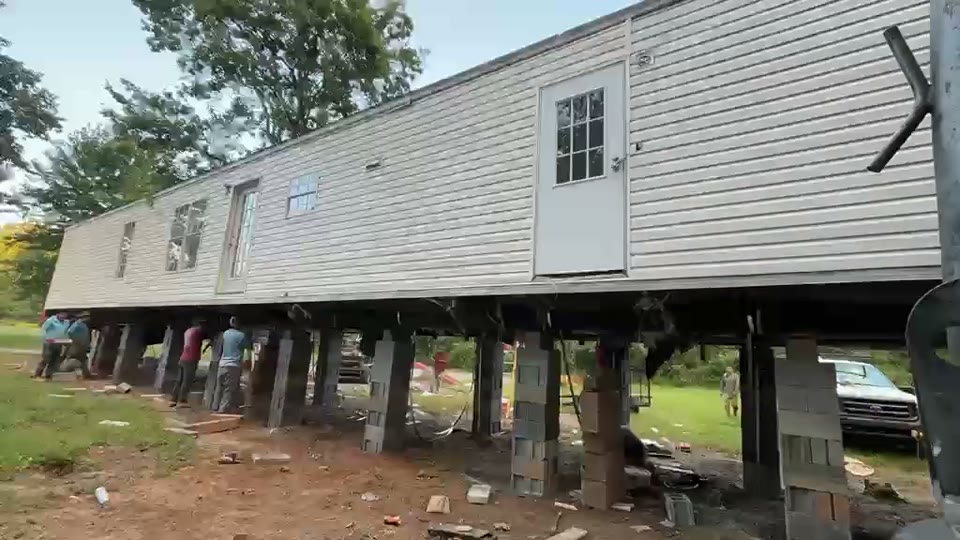
Permanent foundation versus piers. A home skirted to a poured concrete or brick perimeter foundation may need foundation demolition before it can be lifted. That is a separate cost line from the move — get it into the scope conversation early.
New site's permit readiness. The destination needs a setup permit from the local jurisdiction before the home can be blocked and leveled. Utilities, soil bearing, setbacks, and flood zone all affect whether that permit issues in days or months. Starting the new-site permit before the old site is cleared is almost always the right sequence.
The permit sequence no Buncombe County move skips
Three documents have to be in hand before a manufactured home moves in North Carolina, and they have to arrive in the right order. Out of sequence, the home sits on a transport rig while paperwork catches up — at day rates the owner is paying.
| Document | Issued By | Timing | Key Detail |
|---|---|---|---|
| County tax clearance | County tax office (current location) | Before transport | All taxes current; lienholder sign-off required if home is financed |
| NCDOT oversize transport permit | NCDOT — Publication MH-2 | Before moving day | Covers route approval; mountain roads in Buncombe County may require a scout drive |
| New-site setup permit | Destination jurisdiction | Before placement | Required before blocking, leveling, or utility connections begin |
The full step-by-step for handling each document is at the NC mobile home moving permit guide.
Storm history and what HUD Wind Zone I means at the new site
Buncombe County has recorded 19 federal disaster declarations over 1973-2026, including a Winter Storm in 2026, a Tropical Storm in 2024, and hurricane-category events in 2023, 2021, and 2020. That record shapes how any manufactured home installed in this county must be anchored.
Buncombe County falls in HUD Wind Zone I under 24 CFR 3280.305. Wind Zone I defines the minimum anchorage and tie-down system required at setup. The data plate inside the home shows the wind zone it was designed for — a home designed for Zone I must be set up to Zone I specifications or better at the new location. A set-up contractor licensed through the NC Manufactured Housing Board (NCDOI) confirms that match before the first pier goes into the ground. The NOAA National Weather Service maintains current severe-weather guidance for residents in mountain counties like Buncombe.
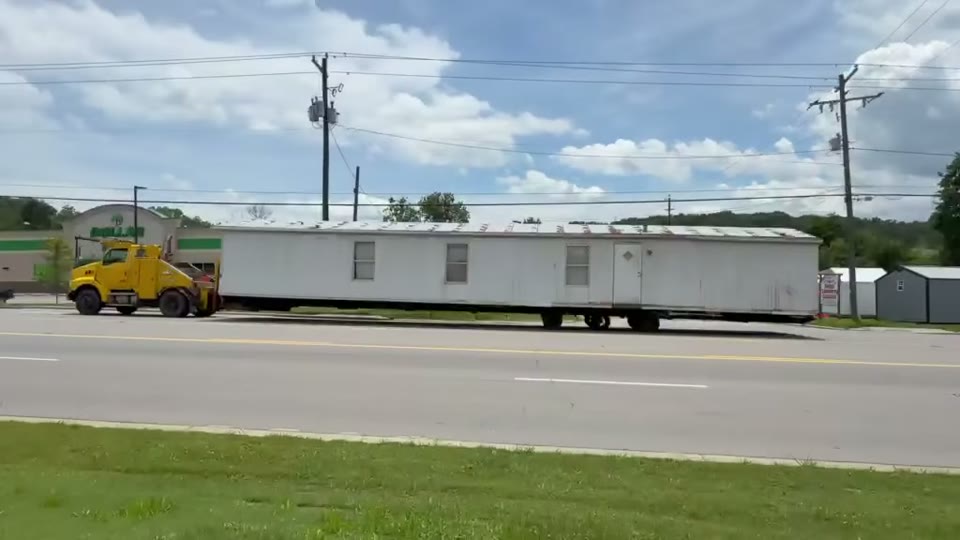
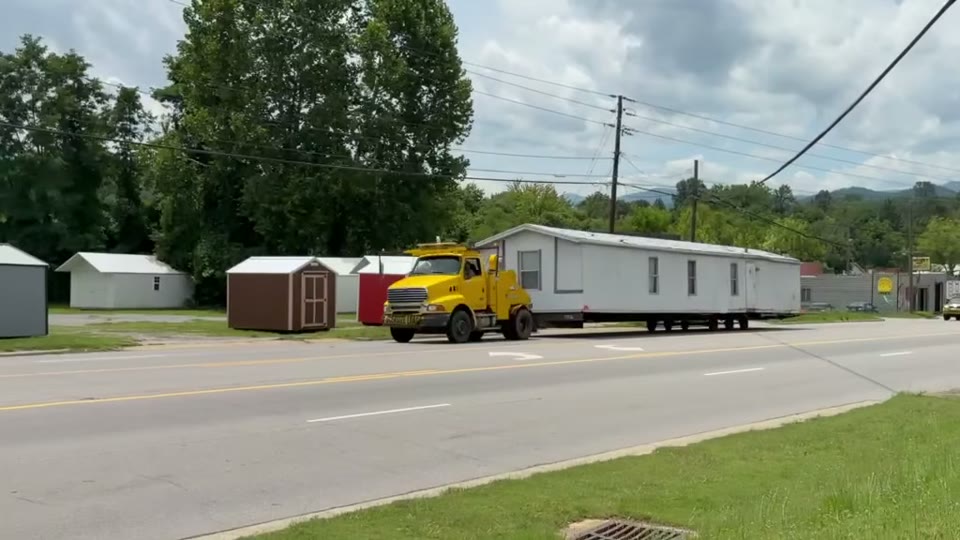
Mountain terrain adds road constraints that coastal moves never face: low-clearance bridge crossings on older county roads, weight-posted hollow-fill approaches, and switchbacks that a 70-foot transport rig cannot navigate. Route planning in Buncombe County is as important as the lift itself.
How age and condition change the calculation
Most manufactured homes can be moved regardless of age if the steel frame is structurally sound. Age becomes a gate at the destination, not the origin: lenders at the new site often restrict financing on homes built before specific HUD-code milestones, and some parks or land-lease communities set their own maximum age for incoming homes.
Condition is a separate question from age. A 1985 single-wide with a dry frame, intact floors, and a sound roof can sometimes move more safely than a newer double-wide with long-term moisture damage at the marriage wall. A structural walk-through settles the condition question; a calendar date does not. The full NC rules on age limits and what structural standards apply are covered at how old a mobile home can be to move it in NC.
What a licensed crew handles that the homeowner cannot
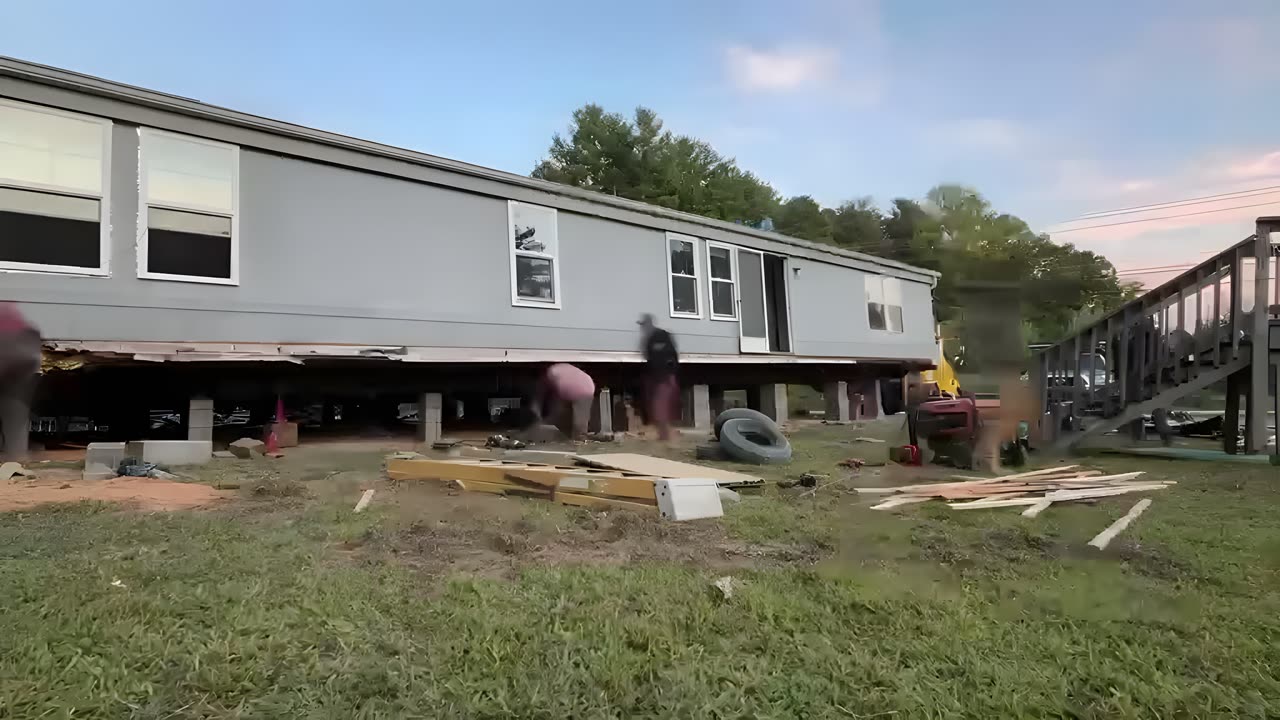
NC requires a licensed set-up contractor for any manufactured home installation — the license is issued through the NC Manufactured Housing Board under NCDOI. The set-up contractor handles blocking and leveling, the tie-down and anchorage system matched to HUD Wind Zone I requirements, utility connections, and the final inspection that leads to the jurisdiction's certificate of occupancy.
The transport crew and the set-up crew are typically separate operations. The transport crew manages the NCDOT permit, the running gear, and the road move. The set-up crew takes over once the home reaches the new site. Coordinating those two timelines — and confirming the new-site permit is ready before transport day — is where most Buncombe County moves stall. For the terrain-specific logistics throughout western NC's mountain counties, mobile home moving in western NC covers what to expect from route planning through final inspection.