What settles mobile homes in Rosman's terrain
Rosman sits at the confluence of the North Fork and West Fork of the French Broad River, tucked into one of the narrower valleys in Transylvania County where US-64 and NC-215 meet the ridge wall. The mountains above Rosman catch more precipitation than most of western North Carolina, and the floodplain soils below — heavy clay over gravel in places, silt in others — drain slowly after storms. 16 federal disaster declarations over 1993-2026 tell the longer story: hurricanes in 2021 and 2023, a tropical storm in 2024, a fire event in 2025, and a winter storm in 2026 have each moved soil, saturated pads, and left standing water under skirting for weeks at a time. Most manufactured homes in the Rosman area are 1970s and 1980s single-wides on rural lots where the original installation was never engineered for this kind of recurring saturation. Freeze-thaw cycles in January and February finish what the wet falls start — a home that arrived level can be noticeably off in under a decade without maintenance re-leveling.
Signs that a re-level cannot wait
Four indicators matter here. Doors that used to close flush and now stick or leave a visible gap on one side — usually the low corner. Floors that have developed a visible slope toward an outside wall, enough to roll a marble without pushing it. Gaps opening between the skirting and the ground that weren't there last season, especially on the uphill side where drainage pressure concentrates. And cracks at the marriage line on a double-wide, particularly where the two sections meet at the ridge or at the floor joint.
Any one of these can reflect normal minor settling if it stopped. When two appear together, or when a gap that was hairline in October has opened by an inch come spring, that is active movement — not maintenance settling but a pier or pad that has failed. Shimming over a failed pad holds for a season at most; the right answer is replacement before the frame takes a permanent set.
What the work actually covers
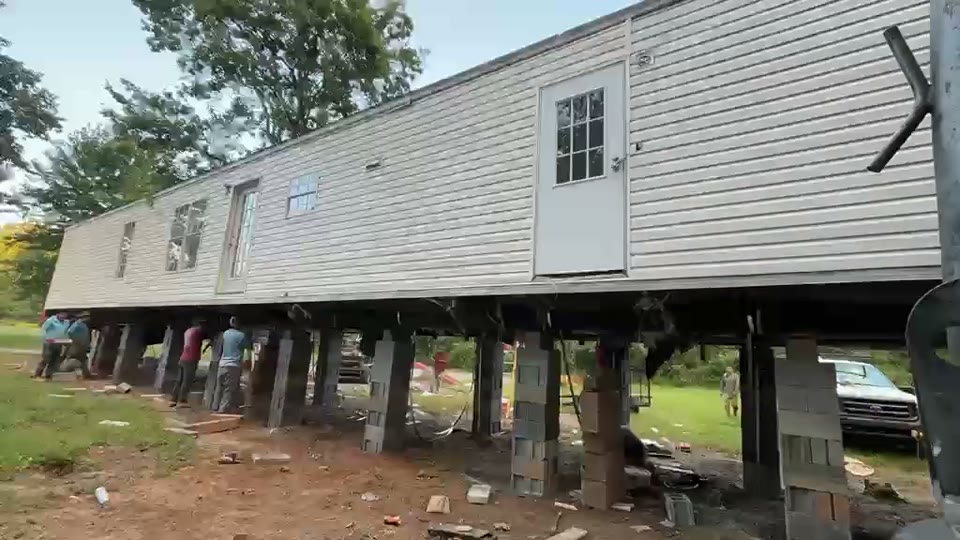
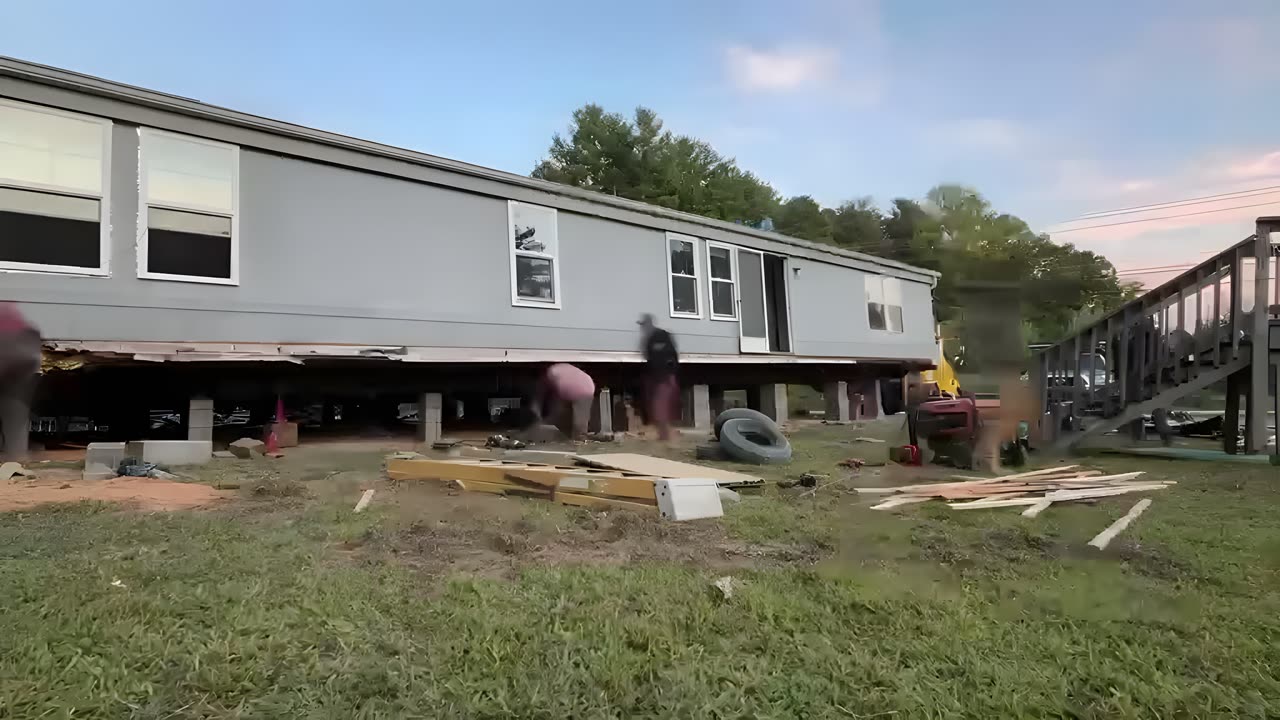
A proper re-level starts with frame deviation measurements at every pier location — not a visual check, an actual recorded number. The crew marks the low corners, identifies any cracked, sunken, or soft piers, and either shims to tolerance or replaces compromised supports before any shimming begins. On a double-wide, marriage-line beam support is a separate and critical step: that center beam carries roughly half the roof load and settles at a different rate than the outer perimeter piers. Skipping marriage-line re-support on a double-wide produces a job that looks level on the floors but isn't carrying load correctly.
The NC Manufactured Housing Board licenses and regulates manufactured housing installers; their standards apply to re-leveling work that involves pier replacement or anchor adjustment, not just new installations. Transylvania County falls in HUD Wind Zone I under 24 CFR 3280.305 — the HUD Manufactured Housing program defines zone requirements — which governs anchor spacing and tie-down load for every new set and re-set in this county. See the re-leveling guide for what a compliant job covers from frame measurement through final anchor documentation.
The cost picture for Transylvania County
For statewide comparisons and the factors that move prices up or down, the NC leveling cost guide has the full breakdown. For Rosman-area jobs specifically:
| Scope | Typical range |
|---|---|
| Routine re-level, single-wide | $400 – $1,200 |
| Routine re-level, double-wide | $700 – $2,000 |
| Partial pier or pad replacement added to re-level | $1,500 – $2,500 |
| Full pier and pad replacement | $2,500 – $5,000 |
The low end of each range assumes accessible piers with good clearance, no drainage excavation, and a home that has only drifted a few inches from original level. Rosman's slope terrain and clay-heavy soil push many jobs toward the middle of the range. Any quote that doesn't include a recorded before-and-after frame measurement is not scoped for mountain terrain — it's priced for a flat subdivision lot.
Transylvania County permitting for moves and new placements
Re-leveling an existing home in place typically does not require a new county permit. Moving the home changes that picture entirely. A new placement in Transylvania County requires health department sign-off on the septic system, a parcel map or survey establishing the site, a county-assigned address, and the Manufactured Home Permit Application. The installer is responsible for calling the county to schedule the final setup inspection once the work is ready — the county does not automatically follow up.
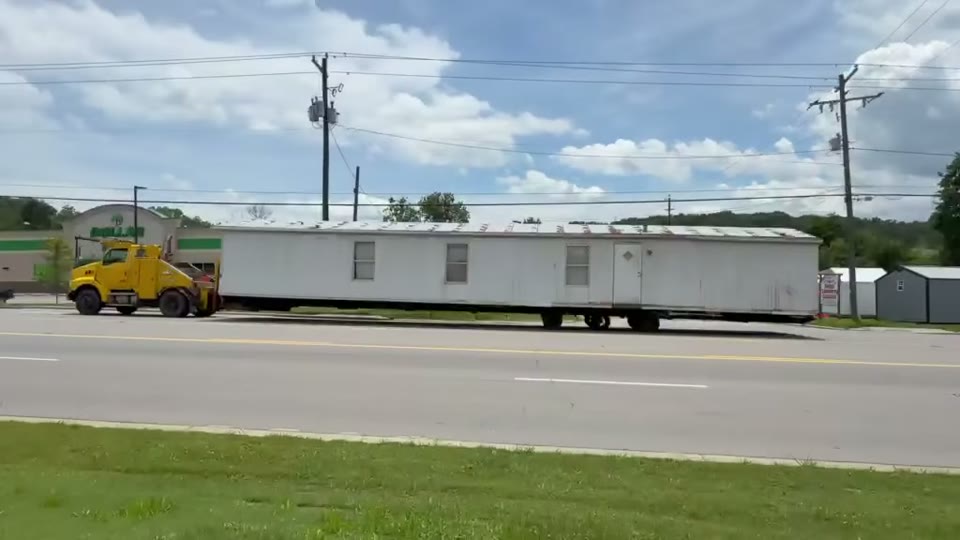
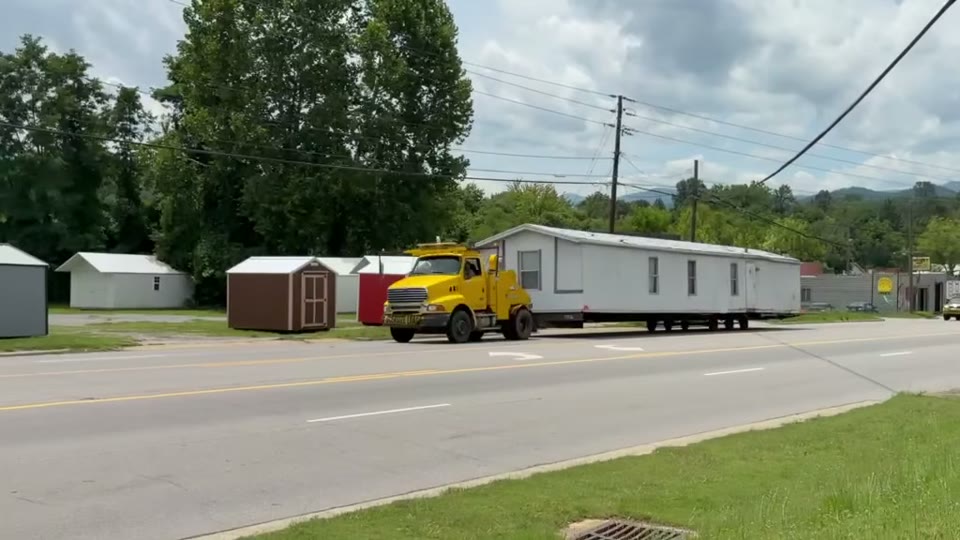
Before any move begins, two state-level permits must be in hand: an oversize and overweight move permit from NCDOT under Publication MH-2 for the road portion, and a tax-paid moving permit under NCGS Chapter 105, Article 18 to release the home from its existing tax site. Both must be secured before the home leaves the lot — not applied for on the day of the move. If you are planning a relocation rather than an in-place re-level, the Rosman mobile home movers page covers the full permit sequence and what to expect on move day.
What to ask before you hire
Ask for documentation of NC Manufactured Housing Board licensing — a general contractor's license does not cover manufactured housing installation or re-leveling, and the two licenses are not interchangeable. Ask specifically how the crew handles marriage-line deviation on a double-wide, since that step requires different equipment and judgment than single-wide shimming. Ask whether they provide a written record of frame measurements before and after the job: a crew that doesn't document can't demonstrate compliance with installer standards, and you lose your paper trail if the home moves again in two years. Finally, ask how they plan to address slope drainage if your lot has any grade — a home re-leveled on wet, draining clay without addressing where the water goes will be back out of level within a season or two.