Valley lots, NC-107 access, and the WCU rental corridor
Cullowhee sits in a narrow Tuckasegee River valley where most side-road lots connect to the outside world by way of NC-107 — a two-lane state road that runs tight between ridge and river for miles. Western Carolina University anchors the community, and decades of enrollment growth drove manufactured housing density up and down the valley: single-wides on steep carved pads, older double-wides on shared easements, homes that have sat on the same concrete blocks since WCU was considerably smaller than it is now. When one of those units comes off a lot — to clear space for a replacement, to retire a deteriorated rental, or to satisfy a lender — the access geometry is the first thing worth scoping. A tow rig that handles an open county road job in half a day can spend most of one threading a narrow easement without clipping a bank or a utility pole. That access question is not separate from what the job costs. It is what drives costs toward the top or bottom of the range — and on tight valley lots, the demolition path is often the only one available.
Two ways a home comes off a Cullowhee lot
Whether a home leaves whole or gets taken down on-site depends on three things: structural condition, whether the road geometry allows a full haul, and whether the unit has any relocation value given its age and state.
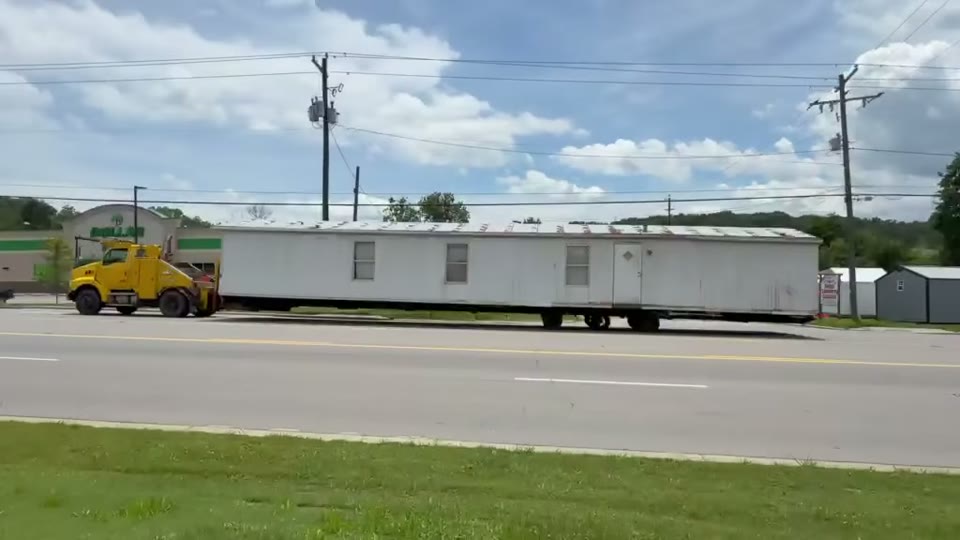
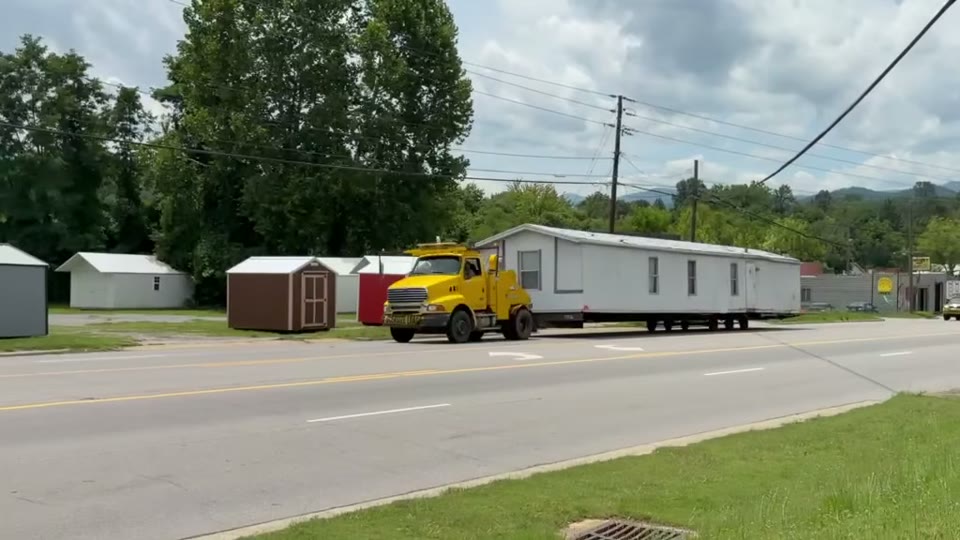
Intact removal means the home is de-skirted, disconnected from all utilities, axle-loaded or dolly-equipped, and hauled under an NCDOT oversize/overweight permit. North Carolina's Publication MH-2 governs the dimensions, routing, and flagging requirements for any mobile or modular home moved on NC roads. A home that rolls out can sometimes be resold or repositioned on another site, and that residual value can reduce the net cost to the owner.
Demolition and debris removal is the realistic path when the structure has deteriorated past safe hauling, when a low-clearance bridge or a tight easement blocks a full rig, or when there is no relocation market for the unit. Teardown means materials get sorted: steel framing recycles, wood and insulation go to a licensed landfill. Any appliance containing refrigerant — HVAC equipment, a refrigerator left in place — must be managed in compliance with EPA regulations before demolition begins. This is a federal requirement, not a contractor option. Demolition jobs almost always cost more than a clean haul-off, but on many Cullowhee corridor lots with tight access they are the only realistic path forward.
What removal typically costs around Cullowhee
Typical ranges below reflect Jackson County market conditions for jobs in and around the Cullowhee corridor. Difficult road access and older homes with more debris volume push toward the top of each range; a newer unit on an accessible lot with good road clearance pushes toward the bottom. See the full NC mobile home removal cost guide for how Jackson County compares to other western NC markets.
| Scope | Typical range |
|---|---|
| Single-wide, intact haul-off | $3,000 – $5,500 |
| Single-wide, demolish and remove debris | $4,500 – $7,000 |
| Double-wide, intact haul-off | $6,000 – $10,000 |
| Double-wide, demolish and remove debris | $9,000 – $15,000 |
| Appliance/refrigerant recovery (per unit) | $75 – $200 |
Jackson County permits and the sequence that matters
Jackson County Permitting and Code Enforcement handles permits for work on unincorporated parcels, and the order matters: a land development permit comes first, before physical work begins. After that, the county requires documentation of an approved sewage disposal method — virtually every manufactured home in the valley sits over an existing septic system, and that system must be either properly abandoned or documented for reuse. A utility letter from any community utility serving the lot is required where one applies, and zoning sign-off is needed for lots inside a zoning district.
Four municipalities run their own permitting processes inside their limits: Sylva, Dillsboro, Webster, and Forest Hills each have independent planning jurisdiction. If the property address falls inside any of those towns, the permit path runs through the town, not the county.
Moving a home on public roads adds a separate NCDOT oversize permit under Publication MH-2. Before any tow, North Carolina requires a tax-paid moving permit under NCGS Chapter 105, Article 18 — the county tax office issues this once it confirms that property taxes on the manufactured home are current. Both owner and contractor carry exposure if the move proceeds without one.
For homes being relocated to a new site rather than scrapped, installer licensing through the NC Manufactured Housing Board governs the setup work at the destination. Jackson County falls in HUD Wind Zone I under 24 CFR 3280.305, which sets the anchoring and tie-down specifications that any reinstalled home in this county must meet.
Leaving the lot ready: utilities, grade, and the next home
When the home leaves or comes down, two conditions determine whether the lot is actually ready for what follows: utilities and grade. Live service lines left open after removal — electric, water supply, sewer connections — are a safety hazard and a permitting obstacle for any replacement unit. Each needs to be properly capped or abandoned under the relevant utility authority's requirements, and the county will not process a new permit until that documentation is in order.
Grade matters more on Jackson County valley lots than almost anywhere else in the region. This county has seen 17 federal disaster declarations spanning 1973-2026, including Hurricanes in 2020, 2021, and 2023, a Tropical Storm in 2024, and a Winter Storm in 2026. A bare, rough lot in the Tuckasegee corridor drains badly under those conditions, and erosion from a poorly finished removal site creates downstream problems with neighbors and county drainage requirements. Getting grade and drainage right at the end of the job — not after the next weather event — is part of what separates a finished removal from one that just moved the problem.
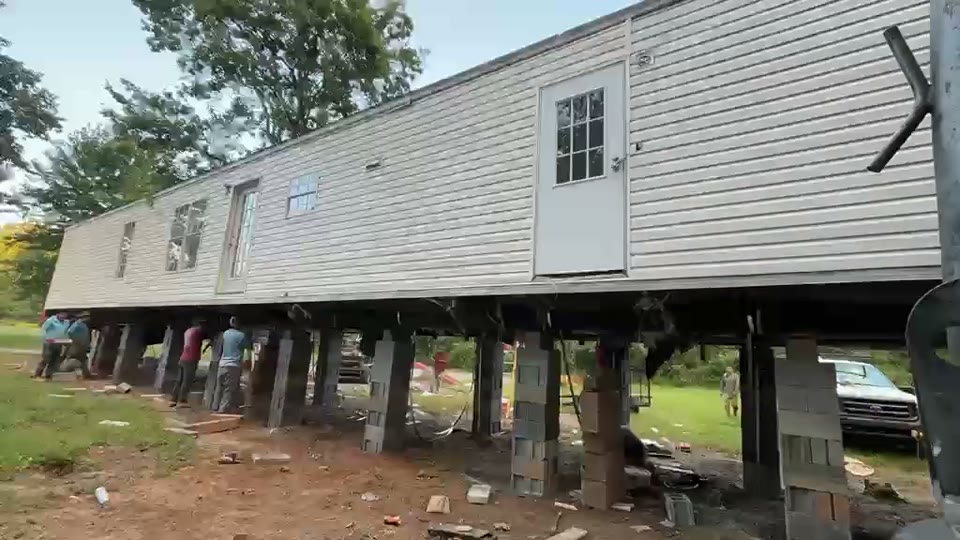
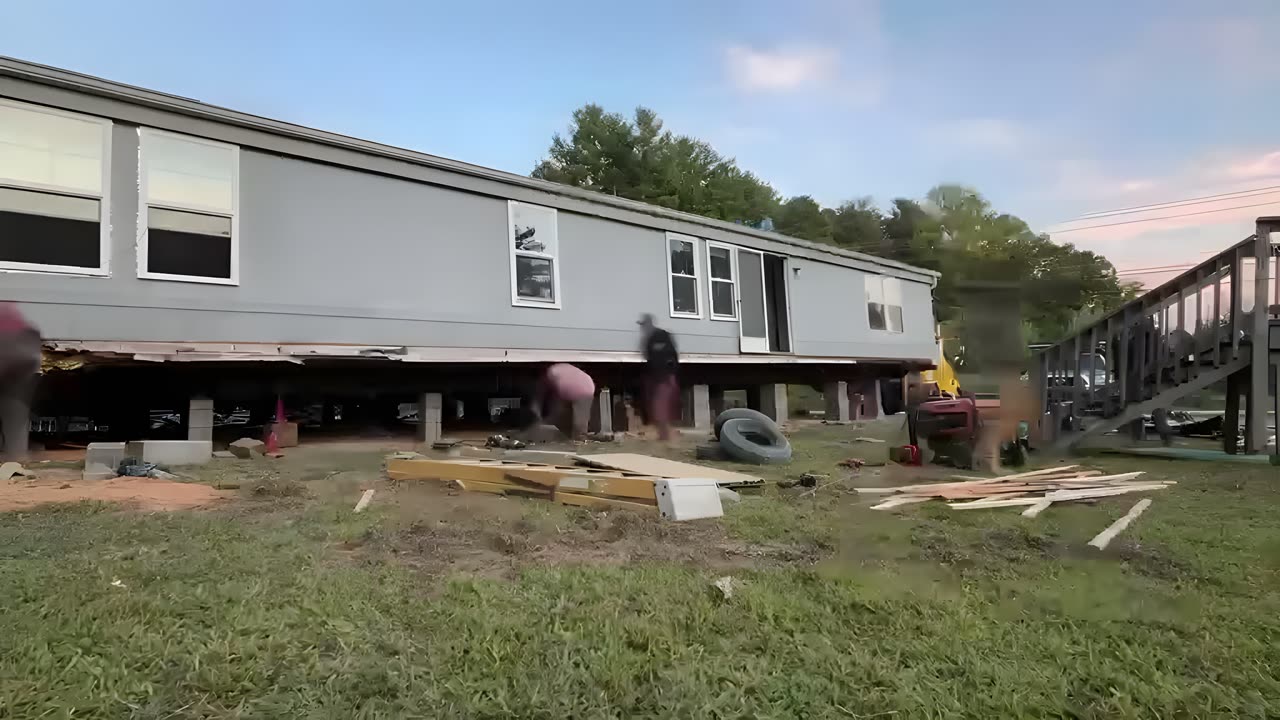
The concrete or block pads the home rested on may stay if a replacement unit is planned on the same footprint; if not, they typically come out as part of the debris load. For homes that cannot roll, mobile home demolition and removal covers teardown specifics in detail. When the plan is to bring a new or used home onto the same lot, mobile home movers in Cullowhee NC covers the site prep and setup side of that work.