A Cherokee lot is not a typical Swain County lot
Cherokee is one of the more unusual places in western North Carolina to place a manufactured home. The community runs along US-441 and US-19 at the gateway to Great Smoky Mountains National Park, and most of it sits on the Qualla Boundary — trust land held by the Eastern Band of Cherokee Indians. That distinction creates a permitting layer that does not exist anywhere else in the state: the Eastern Band has its own land-use authority, and installation work on a tribal lot requires sign-off from the tribe separately from anything Swain County requires. Before any home moves to a Cherokee address, the owner should contact the Eastern Band directly to understand what the tribe requires for that specific parcel. Tribal trust land and fee-simple land follow different approval paths, and assuming one process covers both is how move-day delays happen.
The county side runs in parallel. Like all North Carolina counties, Swain County operates under the installation and licensing framework administered by the NC Manufactured Housing Board, which governs contractor licensing and mandates inspections for new installations. Because Swain County's permit office steps were not independently verified for this page, call the office before move day to confirm what documents are required for your lot type. The full sequence from siting to final inspection is covered in the setup and installation guide.
The work on the lot: piers, blocking, leveling, and anchoring
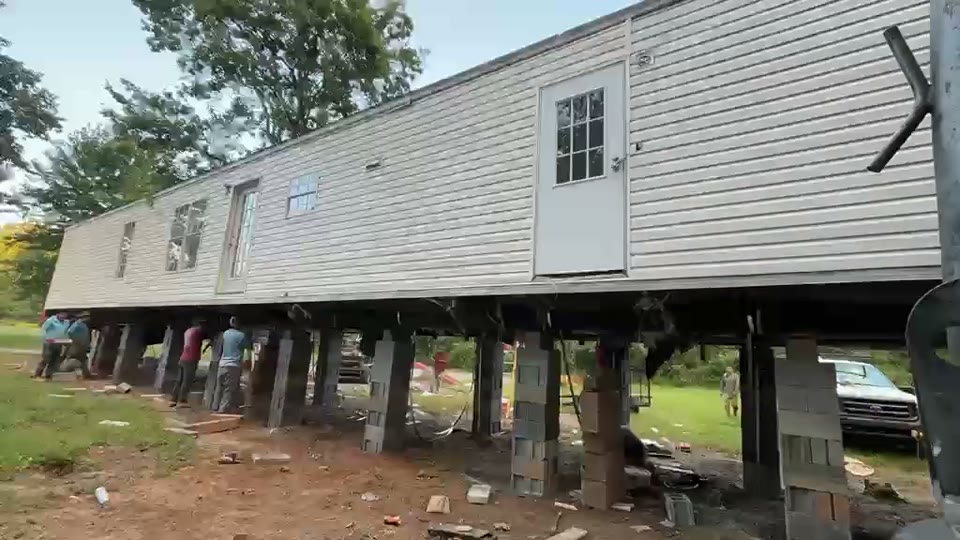
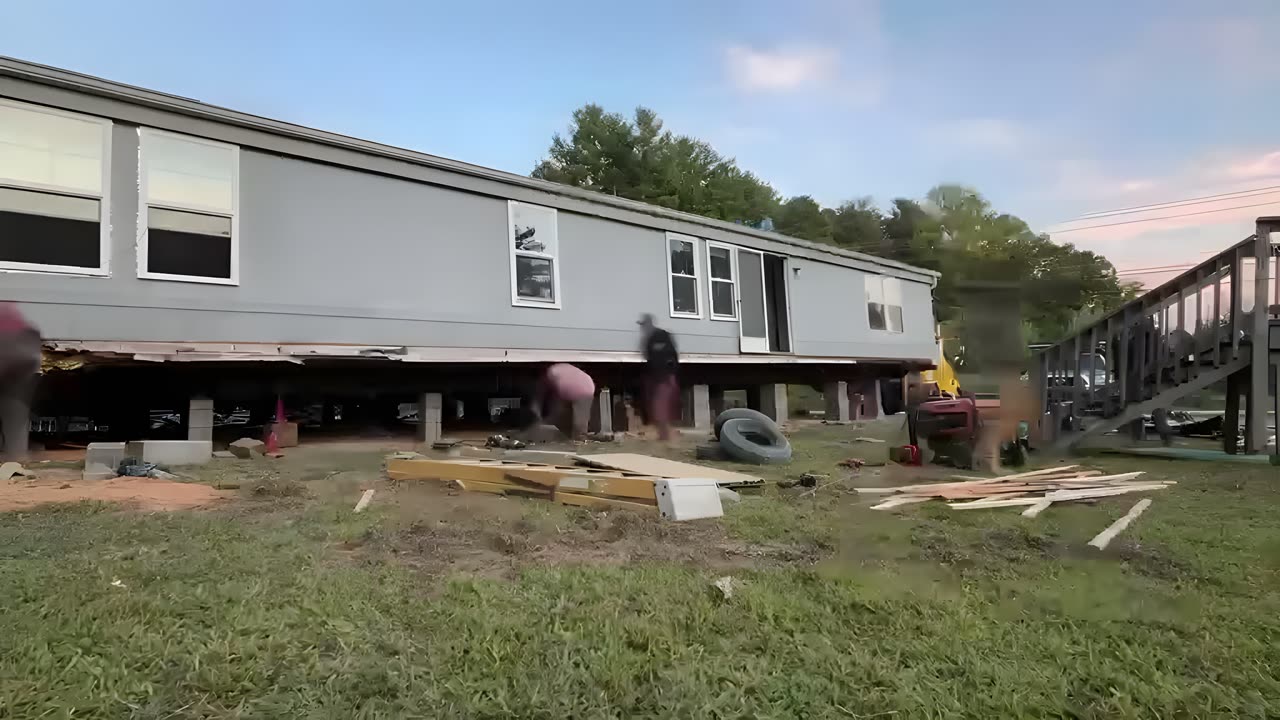
Once the home arrives on site, installation runs as an ordered sequence. The foundation goes in first — concrete piers or footings set on a prepared pad — then the home is positioned and blocked at the perimeter and at the marriage wall on a double-wide. Leveling follows, and on Cherokee-area terrain this is where mountain lots earn their reputation. A lot that reads flat by eye can carry a measurable grade across the full width of a double-wide, and each pier has to be adjusted precisely to keep the home true.
Anchoring comes after leveling. Swain County falls in HUD Wind Zone I (24 CFR 3280.305), the minimum federal wind load classification. Zone I is still a real engineering requirement: strap count, angle, and anchor spacing must match the home's own installation manual, which is the controlling document under the federal standard. The HUD Office of Manufactured Housing Programs publishes the underlying standard for owners who want to read the original spec. Utility connections — water, sewer or septic, and electric service — and skirting follow once the home is anchored and the inspection is complete.
What installation costs near Cherokee
The table below shows typical market ranges for Swain County. For a full statewide line-item breakdown, see the NC installation cost guide.
| Scope | Typical range |
|---|---|
| Single-wide set (piers, blocking, leveling, anchoring) | $1,500 – $3,000 |
| Double-wide set (includes marriage wall blocking) | $3,000 – $6,000 |
| Pad prep or site grading, if needed | $500 – $1,500 additional |
| Skirting — vinyl, per linear foot | $8 – $15 / ft |
| Utility connections (per trade, varies by run distance) | Quoted separately |
Mountain lots with significant grade and tribal lots that carry additional EBCI requirements tend to push jobs toward the top of the single-wide or double-wide range. Pad prep is almost always quoted separately because the amount of work depends entirely on the site condition — a cleared, roughly level lot is a different job than a sloped or partially wooded one.
The road haul: what has to be in hand before move day
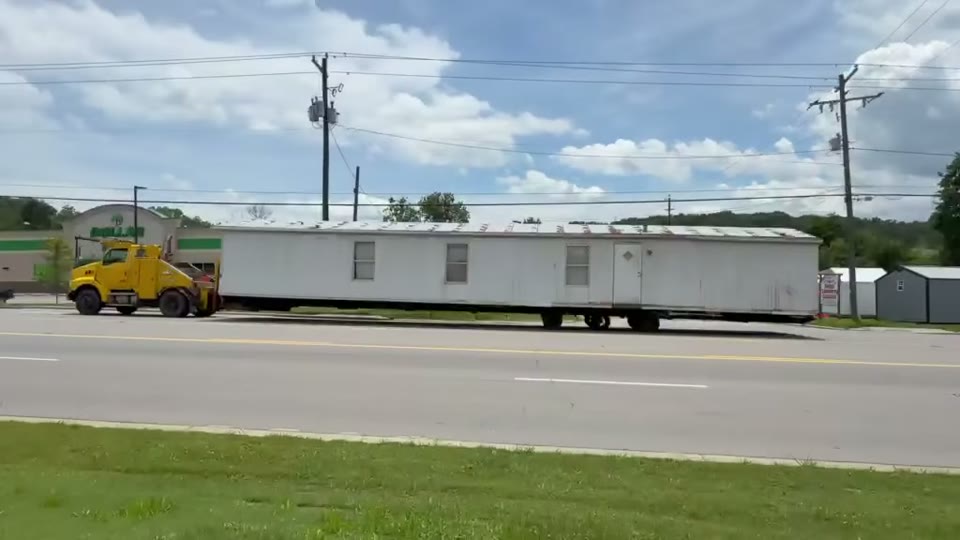
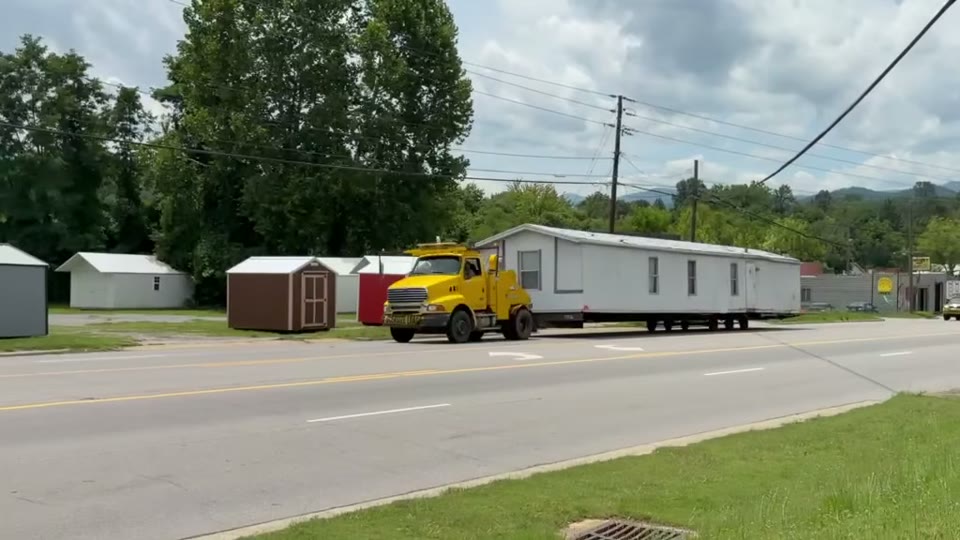
Getting the home to the site is its own regulatory step before installation begins. NCDOT Publication MH-2 governs manufactured home moves on North Carolina roads — route approval, required pilot cars, and permitted travel windows. The hauling contractor typically pulls this permit, but confirm it is secured before committing to a move date.
Separately, NCGS Chapter 105, Article 18 requires a tax-paid moving permit before a manufactured home changes location. The owner obtains it through the county tax office by showing that property taxes on the home are current; it must travel with the home during the move. Missing this permit can stop a move on the road or delay the county inspection on the receiving end — it is an owner responsibility, not the hauler's, and it is worth confirming early.
Storm history and what it means for a site here
This corridor of western North Carolina carries a serious weather record. Swain County has seen 15 federally declared disasters across 1993-2026, including Hurricane (2020), Hurricane (2022), Tropical Storm (2024), Fire (2025), and Winter Storm (2026). The geography explains much of it: the Oconaluftee River valley and the ridgelines around Cherokee funnel moisture from tropical systems tracking through the southern Appalachians, and flood events in this drainage move fast. The NOAA National Weather Service publishes local hazard records for anyone evaluating a specific site.
The practical implication for a manufactured home: a unit anchored to HUD Wind Zone I spec, on a pad with positive drainage, at a finished floor elevation that sits outside a mapped flood zone, performs very differently through these events than one that is not. Siting is as consequential as the anchoring hardware, and both decisions are made before the inspector visits. A pad that drains toward the home rather than away from it is the kind of detail that shows up on the third storm, not the first.
After installation: leveling on a mountain lot is not set-and-forget
On Cherokee-area terrain, installation is a starting point, not a permanent state. Seasonal soil movement — frost heave at higher elevations, wet-season settlement in filled areas, the gradual creep of any sloped lot — opens gaps between a home and its piers over years. The early signs are easy to overlook: a door that sticks slightly in spring, a crack forming at a drywall corner, water pooling toward one interior wall. Catching these early keeps the repair scope small. The Cherokee leveling guide covers what to watch for and when re-leveling makes sense before the problem compounds into a larger structural correction.
For any installation or re-leveling work, contractor licensing in North Carolina is verified through the NC Manufactured Housing Board. Checking a contractor's active license status before signing takes a few minutes and confirms the crew is authorized under state law to perform the work.