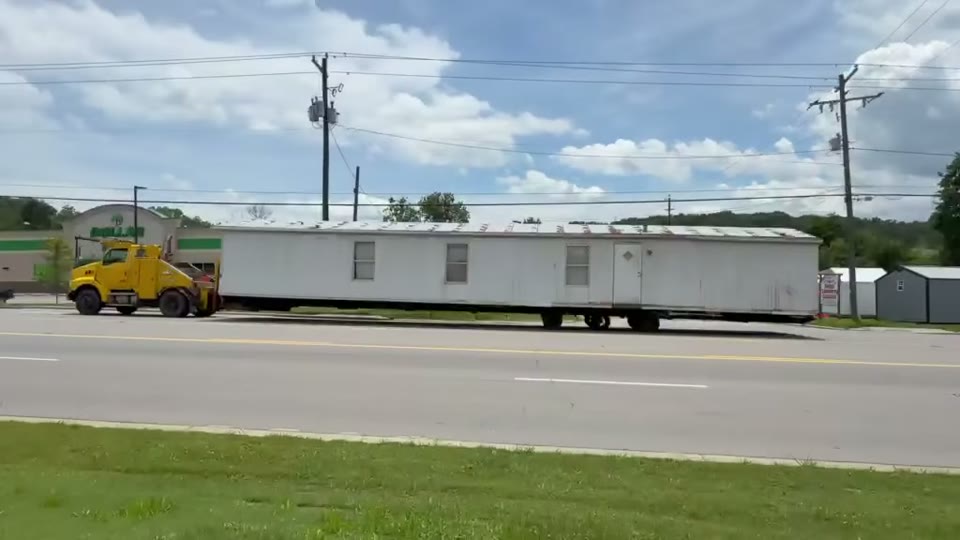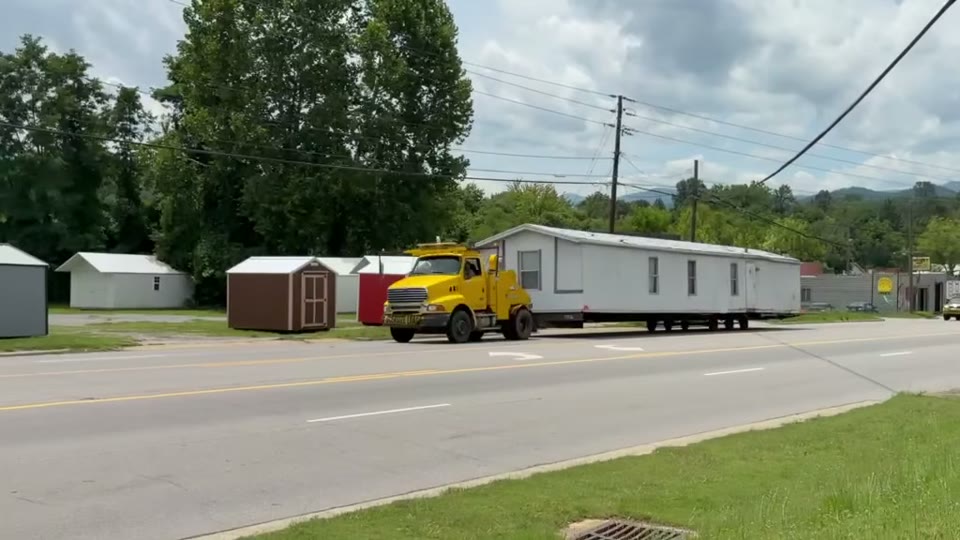
What mountain clay and elevation do to mobile home piers
The ridge lines north and west of Asheville NC are scenic and hard on mobile home foundations in equal measure. Buncombe County's soils tilt heavily toward clay, a material that swells when it absorbs rain from a wet spring or a saturated hurricane season, then contracts and pulls away from pier stacks when summer heat dries it back out. That expansion-and-contraction cycle exerts lateral pressure on piers over multiple seasons without any dramatic single event. Elevation adds a second mechanism: at the heights common along the French Broad watershed and the ridges above Weaverville and Black Mountain, genuine freeze-thaw cycles push soil upward each winter and let it drop in spring, so a pier set to spec at installation absorbs small amounts of heave each season and rarely fully recovers.
Those two forces are why the question of how often should a mobile home be leveled has no single calendar answer in this county. The soil type, the lot's slope, the drainage pattern, and the storm history all combine to set the actual interval for any given site.
Reading the signs before the floor tells you first
The first signals are almost always in the doors. A door that latched cleanly in one season and now binds at the top or gaps at the corner is settlement showing up in the frame. Windows follow the same pattern: a sash that sticks on one side or a gap that appears where the unit was tight points to racking from uneven pier movement. Walk the floor: a soft bounce over a span that used to feel solid means a pier has dropped or blocking has compressed. A marble rolled down a hallway that picks up noticeable speed where it used to roll slow tells you the floor pitch has changed since installation.
Later-stage signs include drywall cracks at window corners and ceiling seam separations. By the time drywall is cracking, the underlying movement has been accumulating for at least one full season — the soft floor and the sticky door came first. Catching it at the door-and-window stage costs far less than repairing the drywall afterward.
A homeowner's pre-call walkthrough
From outside, sight along the roofline from a corner of the home. A bow in a ridge that was straight at installation is a reliable sign of differential settlement. Check the skirting line at grade: a wave or gap where it used to sit flush against the ground shows gross movement. Step back and look at the long walls for a banana shape in the profile that was not there before.
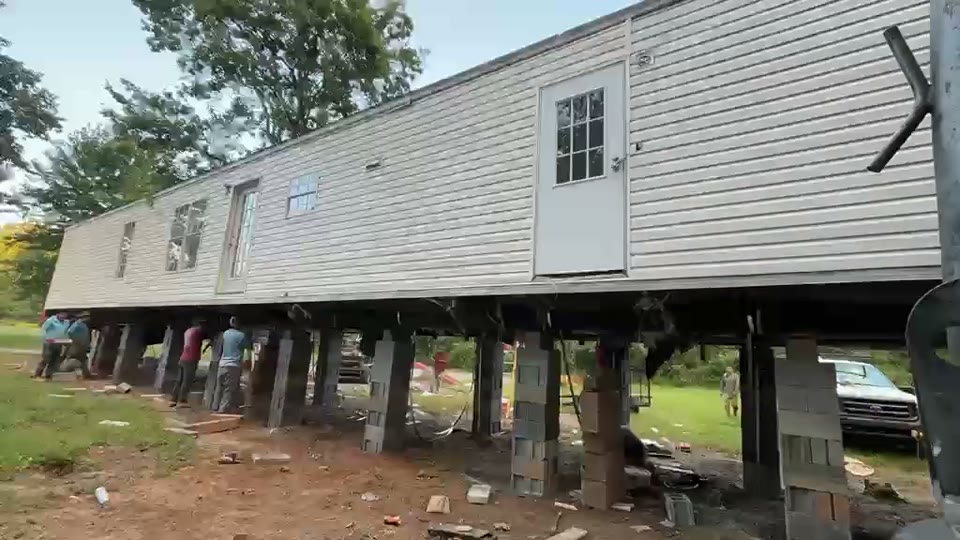
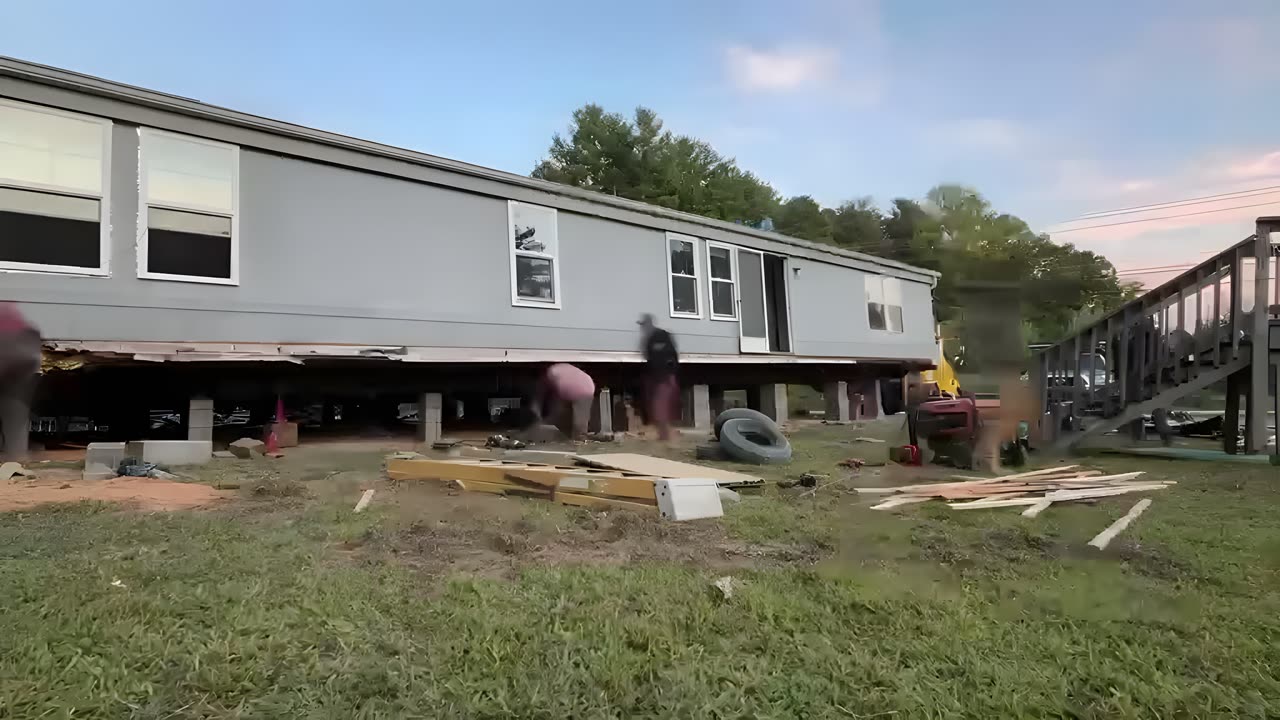
Under the home, and only if the crawl space is dry, well-lit, and has safe clearance, look at the pier stacks without touching them. Blocks that have tilted laterally, wood blocking compressed to a thin wafer, or adjustable steel piers leaning off vertical are signs the support system needs professional attention. Do not attempt to push, adjust, or add blocking to any existing pier stack; disturbing one pier transfers load unpredictably to the ones beside it.
If anything you find raises a question, a mobile home leveling inspection in Asheville NC is the appropriate next step rather than a guess from the exterior walkthrough alone.
When a crew is required and what NC rules say
North Carolina licenses manufactured housing installers through the NC Manufactured Housing Board, which operates under the NC Office of State Fire Marshal. Any work that involves adjusting, replacing, or resetting the pier and blocking system falls under the installation standards those rules govern. The licensing requirement exists because improperly re-leveled homes have failed during subsequent weather events, and the consequences are not limited to property damage.
If any part of the anchoring or tie-down system is disturbed during a re-level, it must be restored to the applicable standard. Buncombe County falls in HUD Wind Zone I under 24 CFR 3280.305, the federal setup standard administered by the HUD Office of Manufactured Housing Programs. Zone I specifies the minimum anchor count and tie-down design for this part of North Carolina. A crew working in this county should confirm the zone and the anchor configuration before starting; that confirmation is part of the job, not an optional extra.
For a full picture of what a proper re-level covers, see the mobile home re-leveling service page.
Typical re-leveling costs in Buncombe County
Prices here are driven more by site conditions and scope than by home size. A double-wide on a flat, well-drained lot with solid original piers costs considerably less than a single-wide on a ridge slope where blocking has compressed and anchors need inspection. The table below reflects typical regional market ranges — not rates from any specific company.
| Scope | Typical Range | What Drives It |
|---|---|---|
| Routine re-level, all piers intact, flat site | $350–$700 | Labor and adjustment only; no material replacement |
| Re-level with partial blocking replacement | $700–$1,200 | Compressed or rotted blocking; mountain humidity is a factor |
| Re-level with partial pier replacement | $1,200–$2,200 | Settled or cracked piers; common on slope lots in this county |
| Full support-system reset, slope lot | $2,000–$3,500 | Significant differential settlement or post-storm scope |
| Anchor and tie-down inspection or repair (added scope) | $300–$800 added | Required if anchors disturbed; HUD Zone I standard applies |
For state-wide context on what moves these numbers, the NC mobile home leveling cost page covers line-item variation by region and the factors that push a job from a routine re-level into a full reset.
Why Buncombe County's storm record shortens the leveling cycle
Buncombe County carries 19 federally declared disasters across 1973-2026, a record that includes Winter Storm (2026), Tropical Storm (2024), and back-to-back hurricane events in 2023, 2021, and 2020. Each of those events pushed substantial water into soils that drain slowly on clay-heavy lots. Saturated clay loses its bearing capacity temporarily, and piers stable in a dry summer can shift a noticeable amount by November after a wet hurricane season. A re-level inspection after any major storm event is not overcaution; it is the appropriate response to confirmed ground changes.
Timing matters: movement that begins in saturated fall soil often presents most clearly in late winter, after freeze-thaw finishes what the water started. Homes on north-facing hillside lots anywhere in the county, common in the neighborhoods north of the Swannanoa River and along the ridge approaches off the Blue Ridge Parkway, are exposed to both mechanisms at once and deserve inspection on a shorter interval than the county average.