What the set actually costs on Buncombe County lots
Ridge lots above Haw Creek, hollow parcels off Leicester Highway, and steep-grade sites outside Black Mountain make up much of Buncombe County's rural manufactured housing stock. A graded pad in an established Swannanoa Valley community is the exception, not the rule — and the difference between a prepared flat pad and a sloped raw lot is often the difference between the low and high end of any set quote.
| Scope of work | Typical Buncombe range | What drives it |
|---|---|---|
| Single-wide set, flat or prepared pad | $1,500 – $2,200 | minimal pier height, clear vehicle access |
| Single-wide set, sloped or difficult lot | $2,200 – $3,000 | tall downhill piers, tight road approach |
| Double-wide set, flat or prepared pad | $3,000 – $4,500 | joining labor, section alignment |
| Double-wide set, sloped or difficult lot | $4,500 – $6,000 | steep grade, pier height, access equipment |
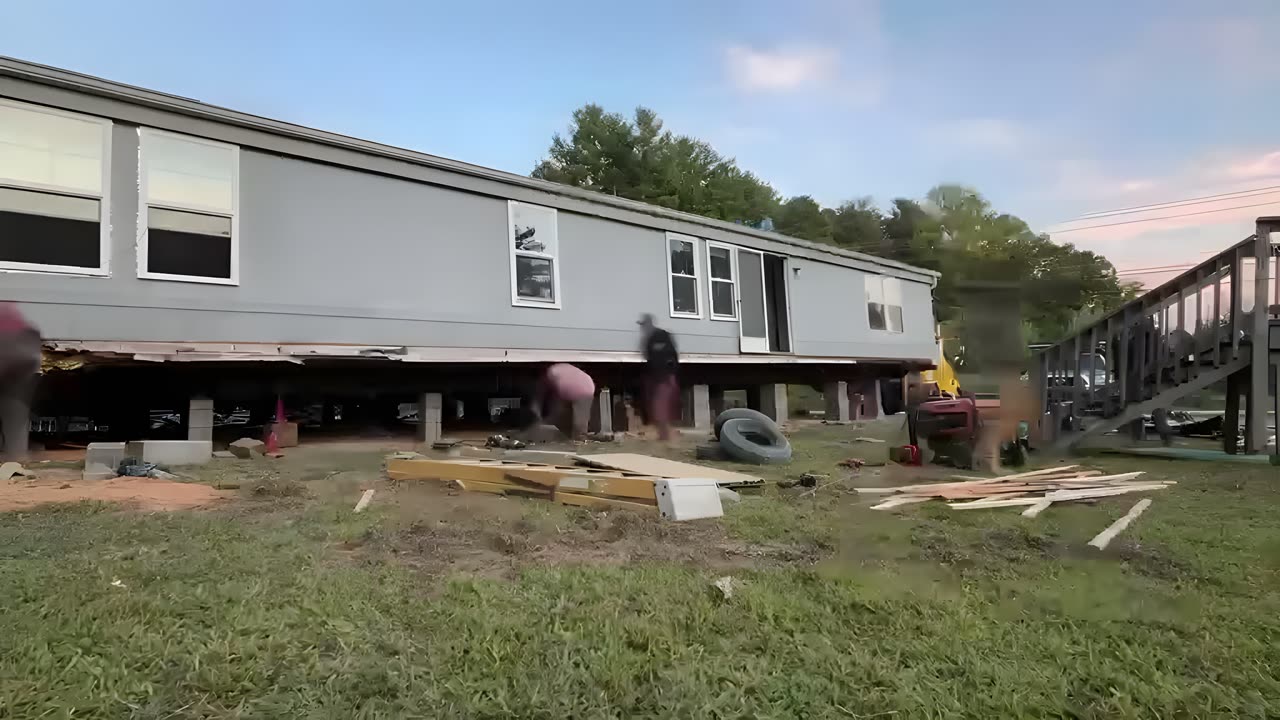
These are market ranges for properly licensed work on accessible sites. They cover blocking, leveling, and the anchor system required by state code. Skirting, transport, utility connections, and site prep are separate line items quoted independently. A number given before a contractor walks the lot is an estimate built on assumptions that may not match your parcel.
For homeowners comparing prices across the state, Buncombe County's terrain and corresponding labor intensity push set costs toward the higher end of what is typical in North Carolina generally. A quote from a Piedmont market will not include the pier height, access complexity, or storm-history context that makes proper anchoring non-negotiable here.
Why grade and access push the number on this terrain
The French Broad and Swannanoa Valley corridors hold most of Buncombe County's established manufactured home communities — sites where decades of prior development produced graded pads with paved or packed-gravel access. A buyer placing a home on a raw lot along a ridge above Weaverville or on a back parcel accessible only by a steep county road is looking at a different scope of work, and the quote should reflect that.
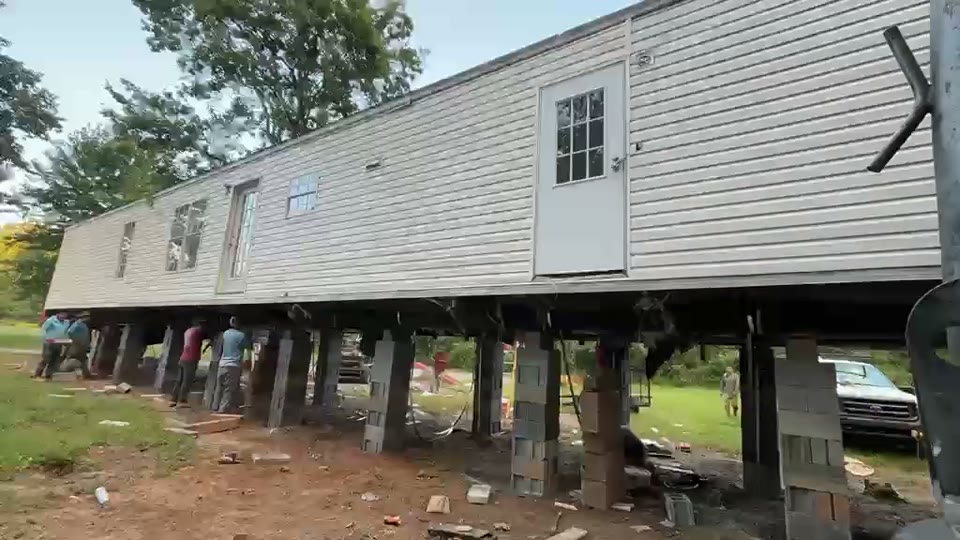
Slope changes the set in two ways. First, pier height: on a grade, the downhill side of the home needs pier stacks tall enough to bring the chassis to level while the uphill side may sit only a course or two above grade. Taller stacks mean more block, more mortar, longer leveling time, and a harder anchor geometry. Second, access: a transport carrier navigating a tight curve off a mountain two-lane, or backing into a site with a steep entry cut, adds time and sometimes additional equipment to both the transport and the set.
Buncombe County is designated HUD Wind Zone I under 24 CFR 3280.305, the federal standard governing minimum wind-load design for manufactured housing. A tie-down system installed to Wind Zone I requirements is not optional — it is a condition of a properly permitted install. On sloped lots, the anchor angles are more demanding, and cutting corners there is precisely the kind of shortcut that becomes visible after a storm. Buncombe County has seen 19 federally declared disaster events over 1973-2026, among them Hurricanes in 2023, 2021, and 2020, a Tropical Storm in 2024, and a Winter Storm in 2026. The National Weather Service records how consistently this corner of the Blue Ridge sees weather severe enough to stress structures — a Wind Zone I anchor installation is the floor, not an upgrade.
Permits, licenses, and the code stack before setup begins
North Carolina regulates manufactured housing installation through the NC Manufactured Housing Board, a division of the Office of State Fire Marshal. Contractors performing set work in Buncombe County must hold a current state installation license, and each job requires a state installation permit before the first block is placed. This is separate from any county-level permit; homeowners who assume a local building permit covers both are sometimes surprised to learn the state installation permit is an independent step.
Federal standards flow from the HUD Office of Manufactured Housing Programs, which sets construction and safety requirements for all manufactured homes built after June 15, 1976. The home's HUD data plate, found inside a cabinet or closet, specifies the wind zone the home was designed to meet. Confirm the data plate shows at least Wind Zone I compliance before signing anything — a mismatch between the home's design wind zone and Buncombe County's designation is a problem that surfaces at inspection, not before.
Two additional permits apply to any move. NCDOT regulates oversize load transport through Publication MH-2, which governs route approval, time-of-day restrictions, and escort requirements for manufactured home sections on NC roads. Separately, a tax-paid moving permit under NCGS Chapter 105, Article 18 is required to confirm property taxes are settled before the home moves. Both are typically coordinated by the contractor or dealer, but confirming both are in hand before the truck is scheduled prevents a last-minute delay.
Getting to the lot: what transport adds in Buncombe County
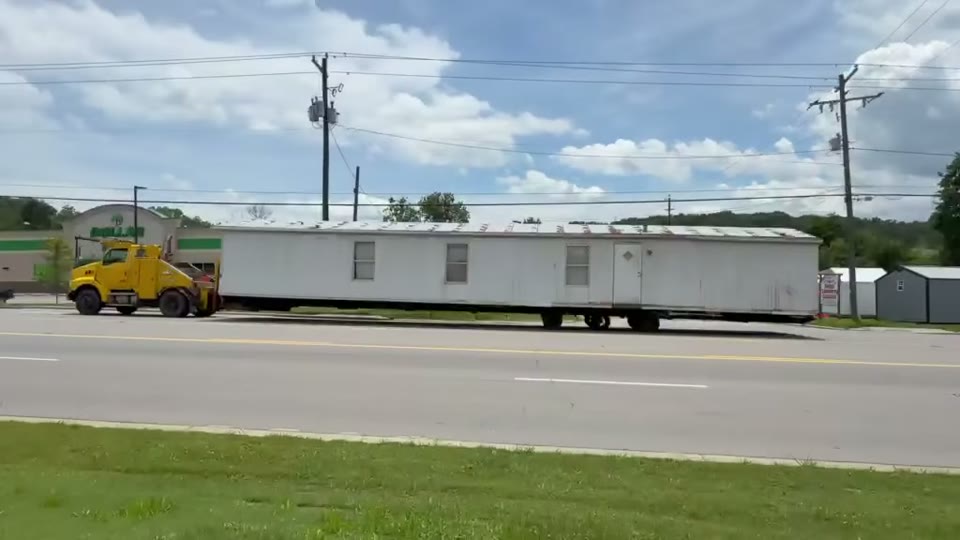
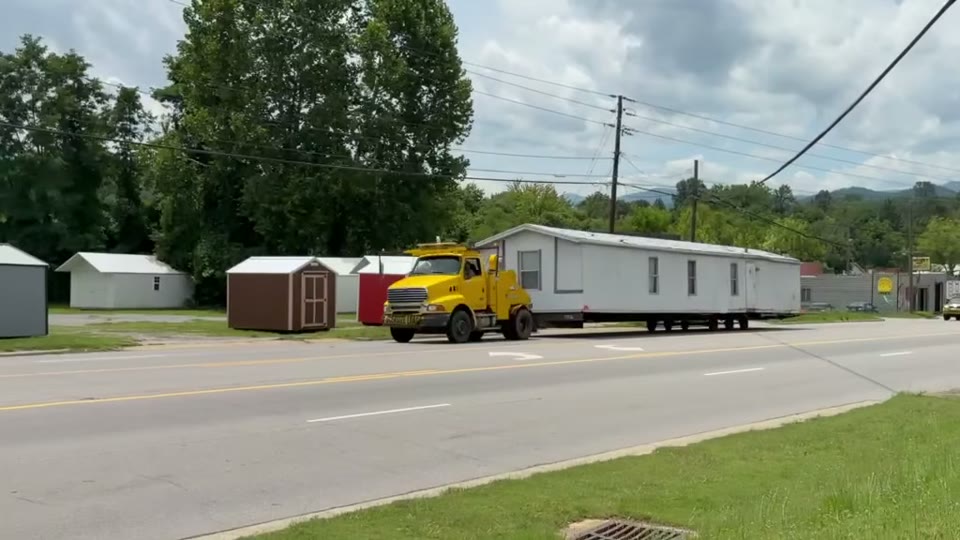
Transport from a dealer lot to a Buncombe County parcel is a separate cost from the set and carries its own logistics. Routes through Asheville NC's mountain corridors — US-70 through the Swannanoa Gap, NC-63 in the Leicester area, or secondary routes off I-26 toward Weaverville — introduce constraints that do not exist on flatland transport jobs. Low-clearance bridges, overhead utility lines requiring a utility standby, and tight radius turns on county roads all add time to the move and can require escort vehicles or advance route surveys that increase the total transport cost.
A double-wide move involves two separate permitted loads, each requiring its own permit and often its own escort arrangement. The sections must arrive, be positioned, and be aligned before the joining work begins, and on a sloped site that sequencing takes longer to execute cleanly. A transport quote from a Piedmont or flatland county will not translate to Buncombe County routes without verification.
The best approach is to have the transport scope confirmed by the same crew handling the set — they know the route constraints and can provide an accurate picture of the full move before you commit. Separating transport and set to two different contractors can create scheduling friction and unclear responsibility if something goes wrong on arrival.
What to confirm before any contract is signed
Three questions cut through most of the uncertainty in this market before any contract is signed.
First, ask for the contractor's state installation license number and verify it is current with the NC Manufactured Housing Board. Licensed work carries accountability that unlicensed work does not; this is not a formality in a regulated trade.
Second, ask for an itemized scope — set, tie-downs, skirting, transport, and site prep should each appear as separate line items so you can compare bids accurately. A low headline price that omits the anchor system or the site gravel is not a competitive bid; it is an incomplete one.
Third, ask how pier count changes are handled once leveling begins. On sloped Buncombe County lots, the downhill side of a home can require more pier height than any pre-visit estimate captured. A price-per-pier clause keeps that adjustment honest when it happens.
For a complete walkthrough of what setup day involves, see the mobile home set up and installation guide. Comparing Buncombe County pricing to other NC markets? The statewide installation cost page shows how this market sits relative to others. If you are working through site selection and zoning questions, the mobile home installation Asheville NC overview covers what to confirm before committing to a parcel.