What Jackson County Permitting and Code Enforcement requires first
Most manufactured-home lots in Jackson County sit outside municipal limits — ridge-side parcels along the Tuckasegee River corridor, cleared sites in the Scotts Creek and Caney Fork watersheds — but the county's permit stack is still three steps deep before a tractor-trailer ever backs onto the site. Jackson County Permitting and Code Enforcement (jacksonnc.org) handles the local side, and a single land development permit application opens the queue for every other local approval that must bundle with it.
| Filing | Required? |
|---|---|
| Land development permit (Jackson County Permitting and Code Enforcement) | Yes — gates all other local approvals on the site |
| Approved sewage disposal method (Environmental Health) | Yes — new septic system or documented connection to an existing system |
| Utility letter or connection approval | Yes where a community utility serves the lot; coordinated through the land development process |
| Zoning sign-off (county or municipality) | Yes inside any zoning district — verify whether your parcel falls within one |
| NCDOT oversize vehicle permit (Publication MH-2) | Yes — required for all road moves regardless of distance |
| County tax moving permit (G.S. 105-316.1) | Yes — property taxes on the home must be confirmed current before any move |
| NC Manufactured Housing setup permit | Yes — required for all new installations under state authority |
Road permits: NCDOT Publication MH-2 and the tax moving clearance
Two state-level filings govern the road move itself, and both must be in hand before the home leaves its current location.
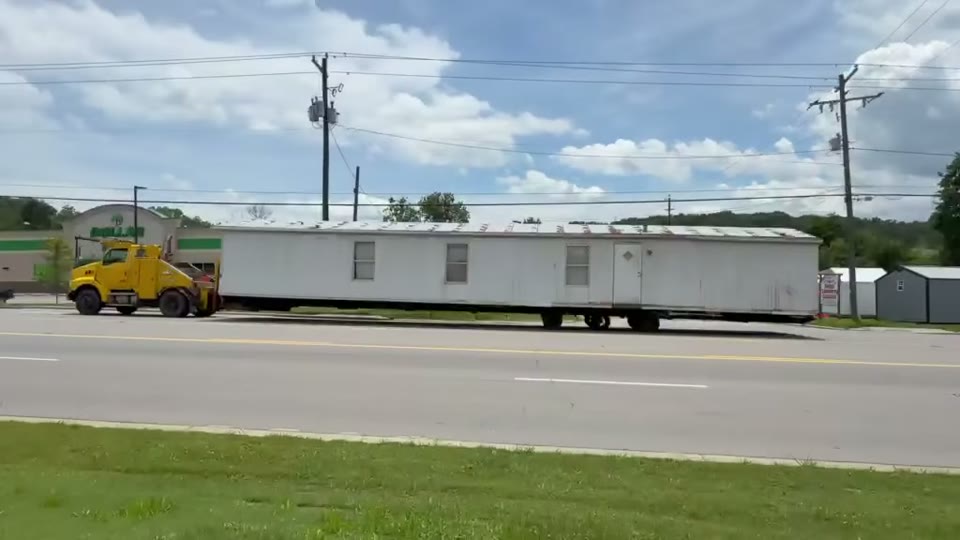
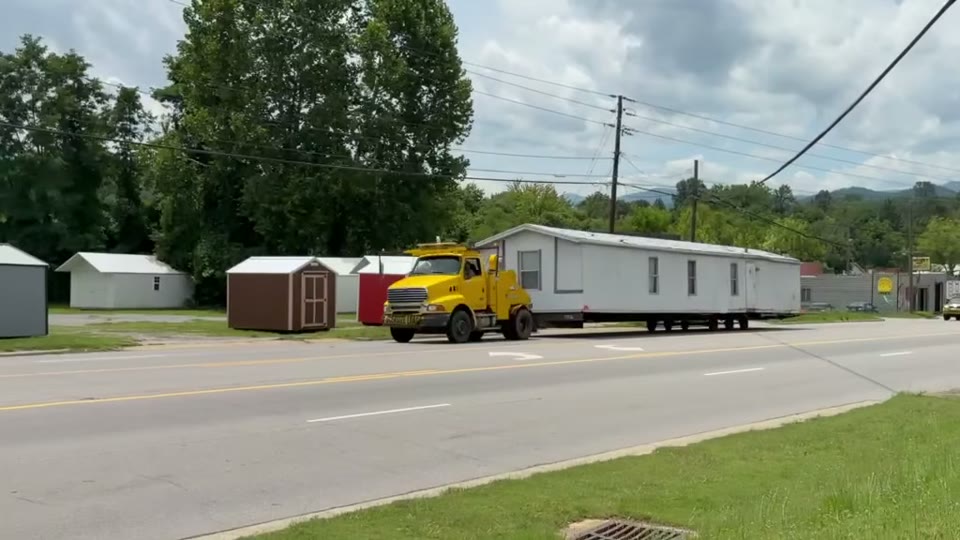
The NCDOT oversize permit is issued under Publication MH-2 and authorizes the oversize load on North Carolina roads. The permit specifies the approved haul route, permitted travel windows, and escort requirements. Moving a double-wide through Jackson County's mountain terrain — narrow two-lane roads, tight curves on US-441 through Dillsboro, the grades on the approaches into Sylva — typically requires at least one pilot vehicle, and route selection meaningfully affects total haul cost. The moving contractor ordinarily pulls this permit because the filing names the vehicle and the specific route; confirm that responsibility is spelled out in the contract before signing. For the full NCDOT process, see the NC mobile home moving permit guide.
The county tax moving permit is required under NCGS Chapter 105, Article 18 (G.S. 105-316.1). The Jackson County Tax Office must verify that all property taxes on the home are current before issuing the clearance. If taxes are owed, they must be paid in full first — there is no waiver path. This is a tax compliance document, not a fee for the move itself, but its absence creates a public record gap that title researchers and lenders will find in any future transaction. Moving without it exposes both the homeowner and the mover to penalties under state law.
Setup standards after arrival: HUD Zone I and the NC Manufactured Housing Board
The permit process does not end when the truck parks. Every manufactured home installed in North Carolina must comply with the installation standards administered by the NC Manufactured Housing Board (NC Office of State Fire Marshal), and the home itself must carry a valid HUD data plate from its original manufacture confirming it meets the federal construction and safety standard.
Jackson County falls in HUD Wind Zone I under 24 CFR 3280.305. Zone I is the baseline structural standard for the home's construction, but anchoring and tie-down requirements are site-specific: slope, soil bearing capacity, and exposure conditions on a mountain parcel in this county can require more robust anchoring than the zone minimum. Jackson County has accumulated 17 federal disaster declarations across 1973-2026 — including hurricanes in 2020, 2021, and 2023, a tropical storm in 2024, and a winter storm in 2026. That record is a practical argument for inspecting tie-down installations carefully, not treating them as a paperwork formality.
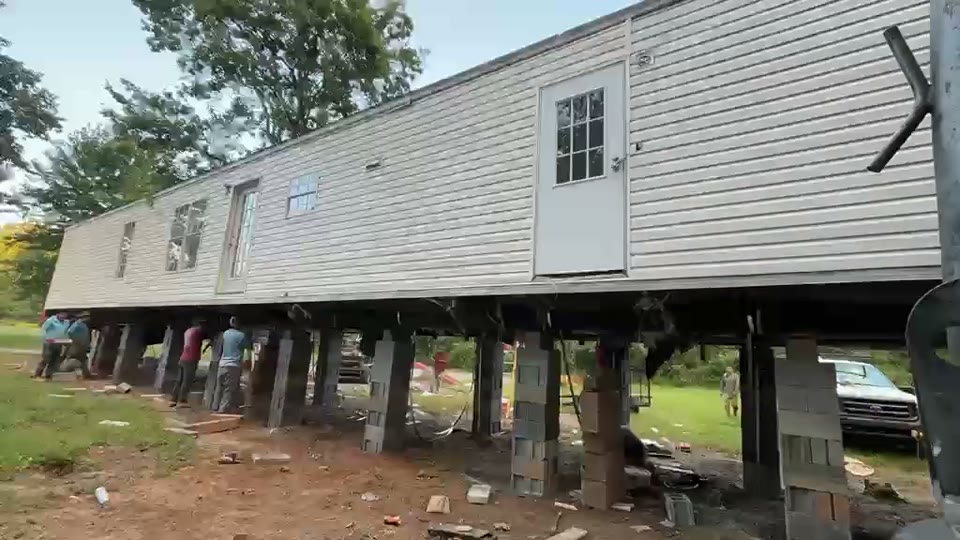
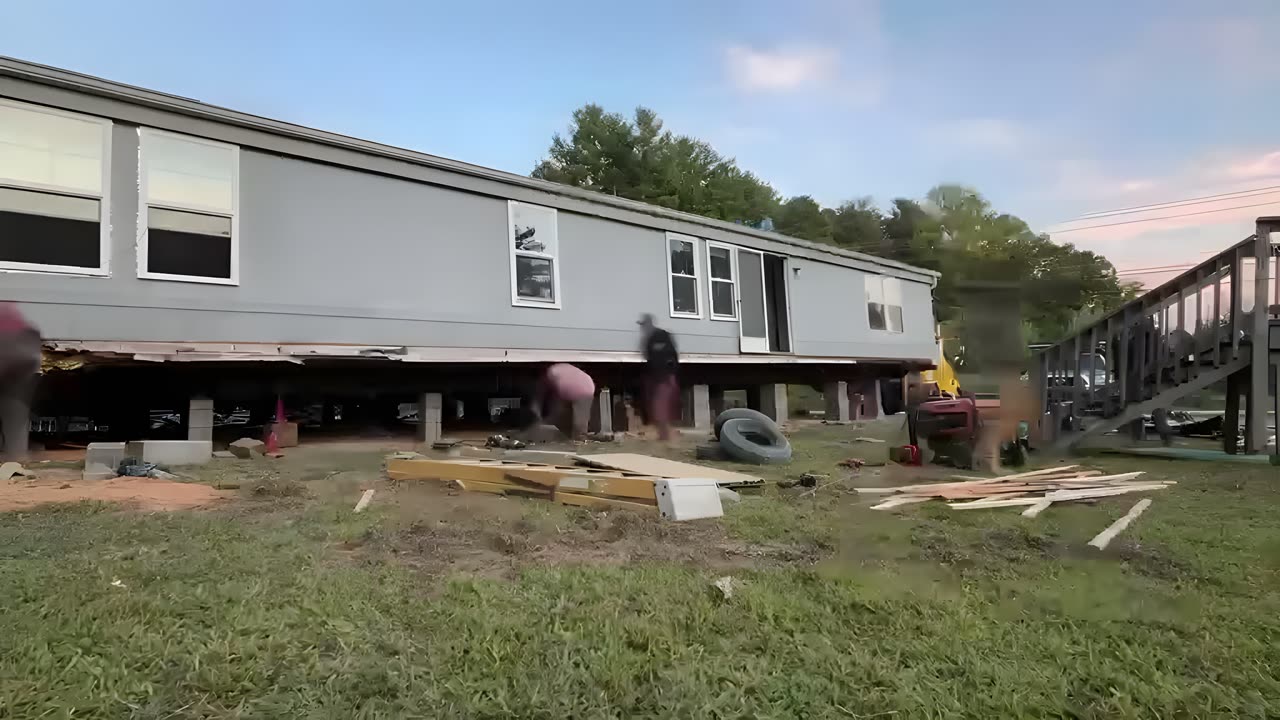
The setup permit is closed out with a state inspection before the home can be occupied. Typical setup costs in western NC — foundation piers, tie-down and anchoring systems, utility connections, skirting, steps — run in the $3,500–$9,000 range for a standard single-wide, with double-wides and sites requiring significant slope work or difficult access running higher. For what the installation process involves step by step, see NC mobile home set-up rules and the full setup and installation guide.
Sylva, Dillsboro, Webster, and Forest Hills: where the county permit alone is not enough
Inside the incorporated limits of Sylva, Dillsboro, Webster, or Forest Hills, the county land development permit does not cover the complete approval picture. Each of these municipalities maintains its own zoning ordinance, and some operate their own development review processes that run parallel to or in place of the county's. A parcel inside Sylva's town limits sends the zoning sign-off step through Sylva's planning and zoning desk rather than through Jackson County Permitting and Code Enforcement. Dillsboro, Webster, and Forest Hills each govern their own zoning jurisdictions independently.
The practical consequence: determining which jurisdiction controls a given parcel requires checking municipal boundary status before starting the permit process. A lot on the edge of Sylva or near the Dillsboro boundary can sit inside or outside town limits depending on exactly where the corporate limit runs, and a county approval does not substitute for a municipal one. Manufactured housing is permitted across many areas of all four municipalities, but setback requirements, minimum lot sizes, and applicable design standards vary by local ordinance. Contact the relevant town hall or planning office directly before committing to any site inside those limits. The NCDOT oversize permit and the county tax moving permit apply at the destination regardless of whether it sits in the county's unincorporated area or inside a municipality.
What a gap in the permit record costs
Three events push an incomplete permit record into the open: resale, when the buyer's lender or inspector requests the setup permit and finds no record; titling or refinancing, when the lender or the DMV title process asks for documentation of a legal installation; and an insurance claim, when damage near an unpermitted installation draws scrutiny to the underlying work.
The county tax moving permit under G.S. 105-316.1 is a public record. Title researchers check tax permit issuance as part of manufactured home transactions in North Carolina, and a home that moved without one carries a chain-of-title question that typically has to be resolved at cost and delay during due diligence. The absence of a setup inspection record raises the same kind of question about whether tie-downs and utility connections were ever reviewed.
The permit fees are a modest fraction of a project that typically totals $5,000–$20,000 or more when move and setup costs are combined. The inspection records those fees produce are what protect the transaction at every downstream point. For what a fully compliant Jackson County installation looks like, see NC mobile home set-up rules.