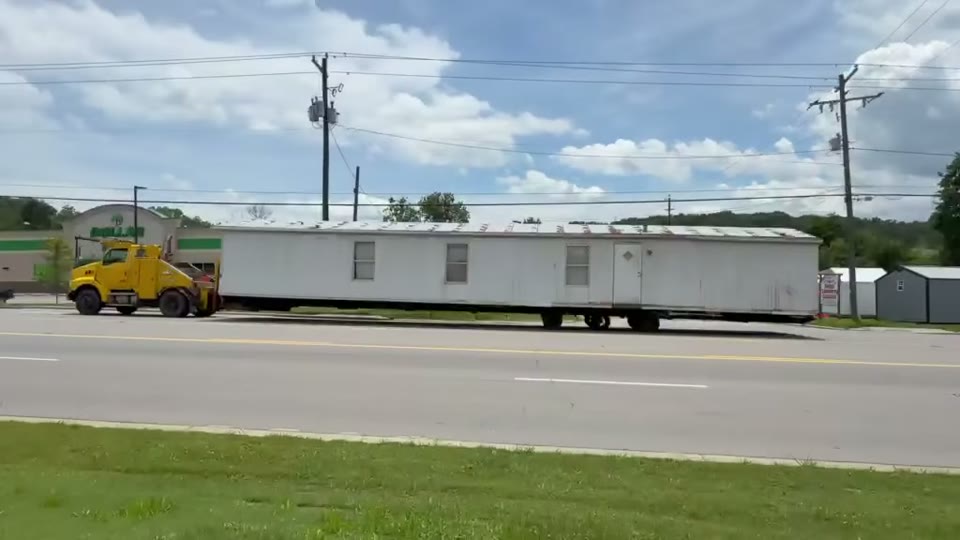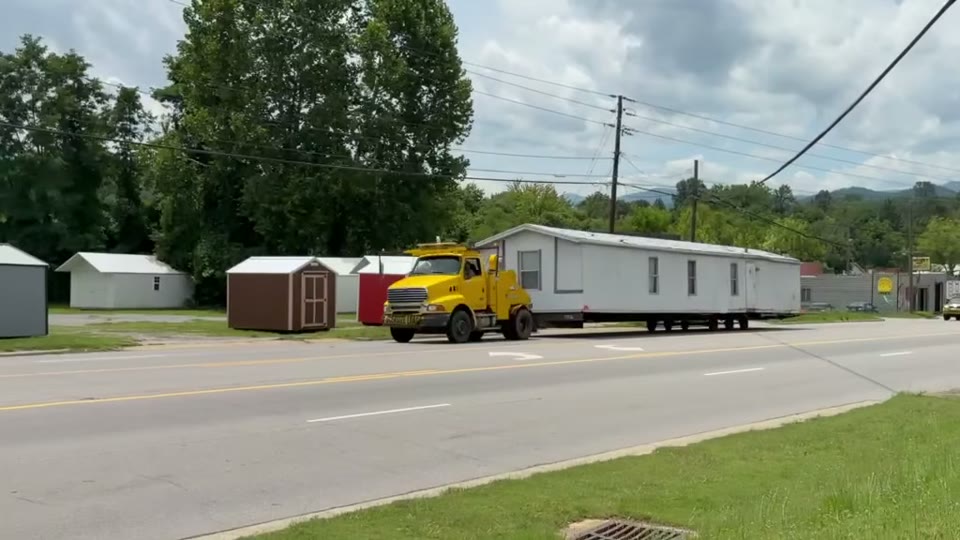
The drainage question that comes before the jacks
Transylvania County ranks among the wettest counties in North Carolina by annual precipitation. The French Broad River begins its run near Rosman and the Davidson River cuts east through Pisgah National Forest before turning toward the US 64 corridor. That water has to go somewhere, and for a mobile home sitting on concrete pier pads in clay-heavy soil, it goes under the chassis. The pads absorb it, the soil beneath them softens, and a home that was perfectly installed can be measurably out of level within a few wet seasons.
That pattern is why any honest leveling job in this county starts with a drainage walkthrough: where does the uphill runoff collect, where does it pool under the chassis, and has the lot grading shifted since the original setup? Transylvania County has seen 16 federal disaster declarations over 1993-2026, including hurricanes in 2021 and 2023, a tropical storm in 2024, and a winter storm in 2026. Each event saturated the same clay-heavy ground that pier pads depend on for stability. Fixing drainage and regrading the lot belongs in the same scope as the lift itself — see what a complete job covers at mobile home re-leveling.
Signs the level has shifted
The most reliable tells live in the doors and floors. A door that drags in summer but latches fine in winter is usually thermal movement; a door that stopped latching on one side and the gap has only grown is structure. Floors that flex or bounce in the kitchen or main hallway, baseboards pulling away from the floor along an exterior wall, and cracks at the corners of windows or interior door frames are all worth investigating. On a double-wide, the marriage wall is the early-warning system: any visible gap, ridge, or soft spot where the two sections meet is a chassis-level problem, not a trim or caulk issue.
Cold or warm floor spots during heating season can also signal that HVAC duct runs under the chassis have separated at a joint — a direct consequence of chassis movement that often goes undiagnosed for years before anyone connects it to settlement. If ducts are involved, that adds to the scope, and it is worth flagging before work starts rather than discovering it mid-job.
What leveling work costs in the Brevard area
The full statewide cost breakdown is at mobile home leveling cost in NC. For Transylvania County jobs, the table below covers the common scopes:
| Scope | Typical Range | What pushes toward the top |
|---|---|---|
| Single-wide re-level, piers intact | $400–$1,200 | High pier count, difficult site access |
| Double-wide re-level, piers intact | $700–$2,000 | Marriage wall alignment, pier count, access |
| Partial pier and pad replacement | $2,500–$3,500 | Failed pads, softened soil, added blocking |
| Full pier and pad replacement with re-level | $3,500–$5,000 | Full chassis work, drainage remediation included |
The factor that most reliably pushes a Brevard-area job toward the top of its range is not the size or age of the home — it is drainage. A lot with a French Broad tributary at the back edge, or a natural hollow that channels runoff under the chassis, will likely need French drain work or regrading as part of the job. That is a legitimate line item, and any quote that omits it on a visibly wet lot is giving you an incomplete number rather than a competitive one.
How a leveling job actually runs
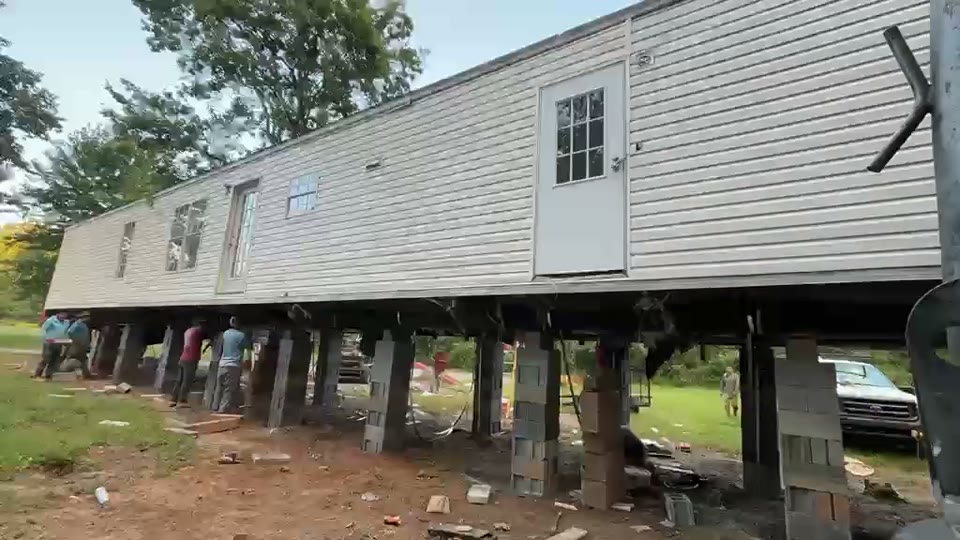
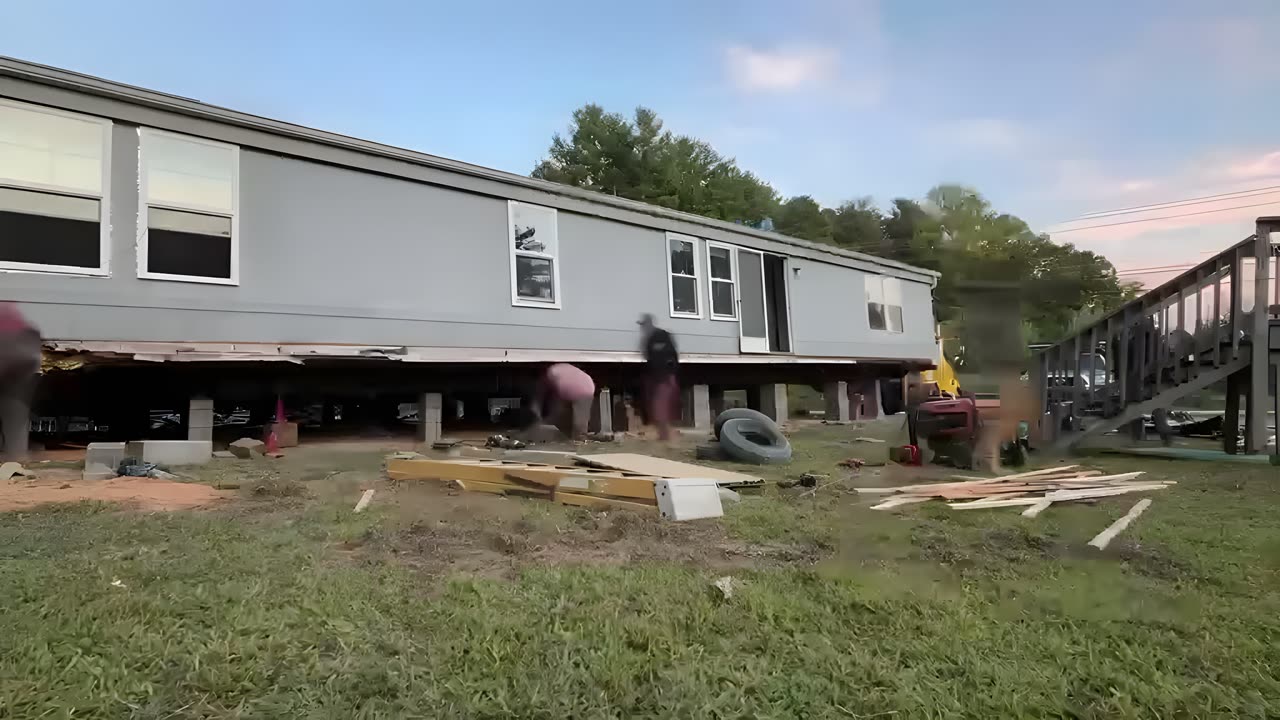
The crew assesses overall chassis pitch using a transit or digital level, identifies which piers have dropped or shifted, and checks pads for cracking, spalling, or lateral movement. Hydraulic bottle jacks go under the main I-beams — the structural members of the chassis — not under skirting channels or siding rails. Once the chassis is back to correct pitch, typically within a quarter inch per ten feet of run, piers are re-stacked or replaced using interlocking concrete blocks and load-bearing pads shimmed to the corrected final grade.
On a double-wide, marriage wall alignment gets a separate check after chassis work is complete, because the two sections can shift independently and correcting one can move the other. Tie-down straps and anchor augers are inspected as part of any leveling visit — if anchors are corroded or have pulled from the ground, they come up in the assessment. Transylvania County is classified as HUD Wind Zone I under 24 CFR 3280.305, and anchor systems must meet that standard. The National Weather Service tornado safety guidance for mobile homes is direct about the risk that inadequately anchored homes carry during high-wind events. What a full anchor audit and new setup covers is on the mobile home set-up and installation page.
Choosing a leveling crew in Transylvania County
Three questions worth asking before you book anyone: first, have they worked on the specific pier system under your home — a home on concrete-block-and-pad piers is a different job than one on metal stand systems, and not every crew works both equally well; second, does the quote include a drainage walkthrough or only the lift itself; and third, what is their process when they find a failed pier mid-job rather than in the initial walkthrough. The second question matters most on Transylvania County lots. A crew that skips the drainage conversation on a visibly wet site is pricing you a repair that is likely to repeat.
Manufactured housing installation work in North Carolina is regulated by the NC Manufactured Housing Board, which sets installer licensing requirements and the inspection process for setup and re-installation work. The HUD Office of Manufactured Housing Programs sets the federal construction and safety standards that govern how homes are built and installed, including the wind zone, anchoring, and support system requirements that a leveling job directly touches. Knowing those standards exist is useful when evaluating what a bid includes and what it leaves out.