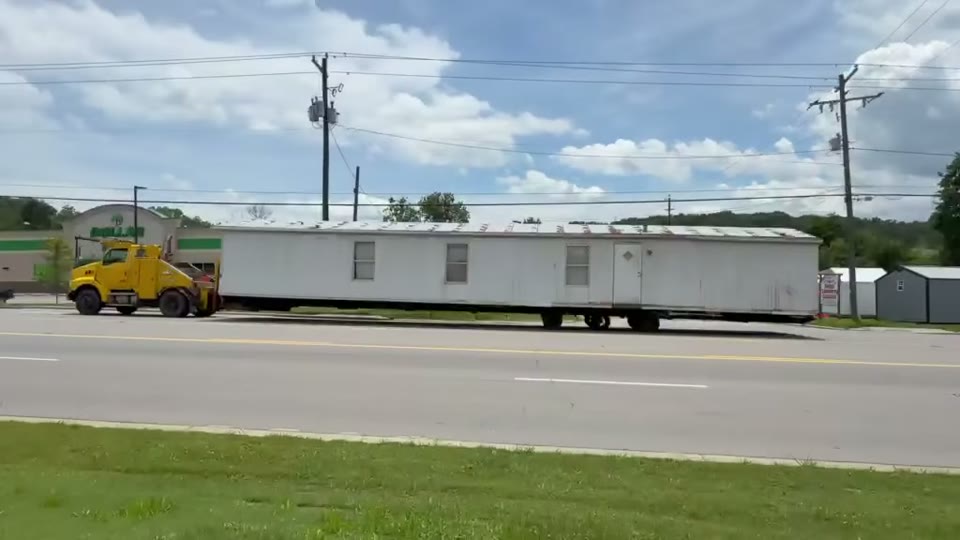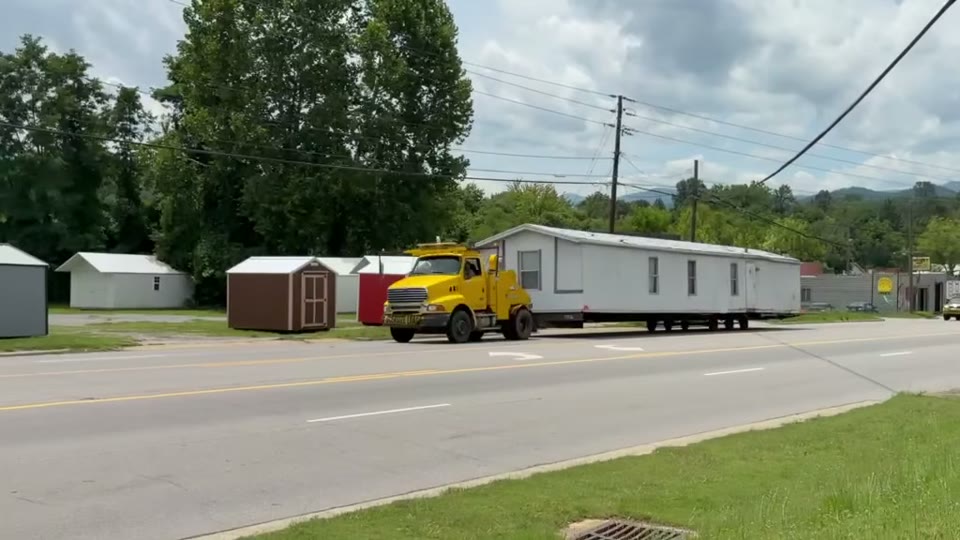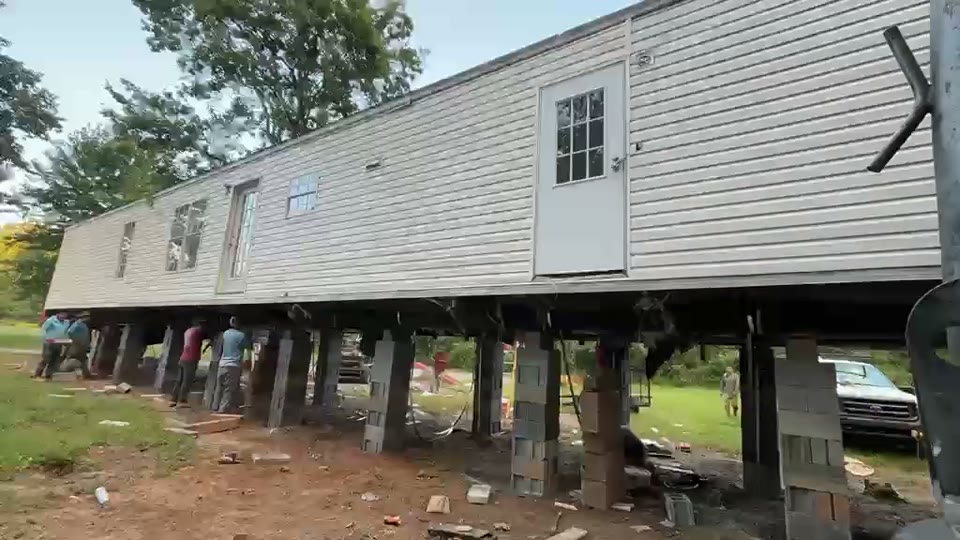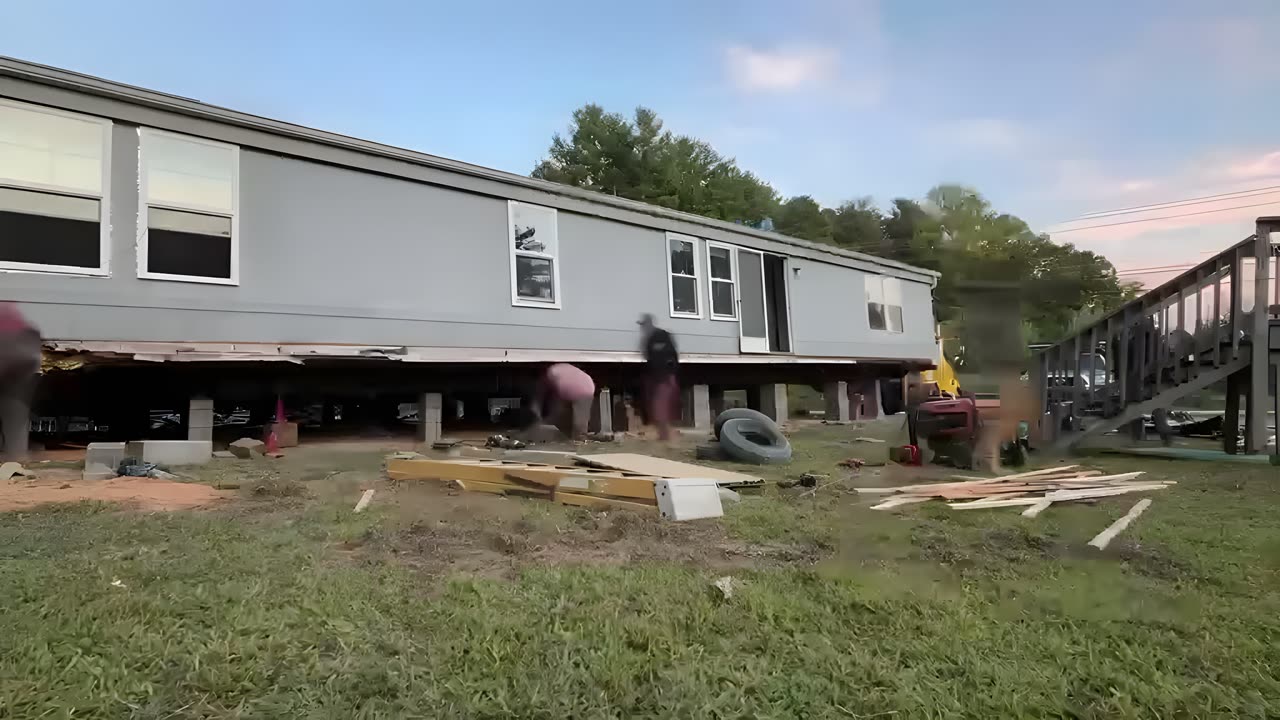
The three-credential chain NC requires before wheels turn
Buncombe County's ridge-and-hollow terrain — French Broad River corridor lots, steep grades above Asheville NC, secondary roads threading through older manufactured-home communities in the mountain valleys — concentrates the consequences of hiring a mover who is missing part of the state's credential chain. North Carolina does not operate on an honor system for manufactured home moves; each step is regulated by a different authority, and a gap in any credential can stop the job mid-road or void a claim after a storm.
A fully compliant NC move requires three credentials before the home moves, plus a required inspection after setup:
| Credential | Who Obtains It | What Happens Without It |
|---|---|---|
| NC Manufactured Housing Board contractor license | The mover must hold it before any paid work | Move is unlawful; work may be uninsurable |
| NCDOT oversize load permit (Publication MH-2) | Mover obtains a per-trip route permit | Home can be stopped and impounded on the road |
| Tax-paid moving certificate (NCGS Ch. 105, Art. 18) | Homeowner obtains from county tax office before move day | Move cannot legally begin |
| County setup and anchor inspection | Homeowner schedules after installation is complete | Cannot legally occupy; insurance gap at storm claims |
No single document covers all four requirements. A mover with only the NCDOT road permit but no board license is operating outside state law. The chain is only complete when all elements are in place before the home moves.
The NC Manufactured Housing Board license, explained
The central licensing authority for anyone paid to move, install, or set up a manufactured home in North Carolina is the NC Manufactured Housing Board, administered by the Office of State Fire Marshal. State law requires any person or company performing manufactured housing work for compensation — transporting, anchoring, and installing — to hold the board's appropriate license classification.
The board issues multiple contractor categories. A mover who transports a home on public roads and completes the setup at the destination must hold a classification covering both scopes. The board maintains a public licensee directory searchable by company name, individual name, or license number. A mover who cannot or will not provide their board license number is unlicensed regardless of what their signage says — there is no legitimate reason to withhold it.
For Buncombe County, federal installation standards make the board license doubly important. The HUD Office of Manufactured Housing Programs sets minimum requirements for manufactured home installation under 24 CFR 3280, including tie-down and anchoring requirements at setup. Buncombe County falls in HUD Wind Zone I under 24 CFR 3280.305, the classification that sets the minimum anchor pattern a licensed installer must follow. An unlicensed installer who skips the county inspection leaves the home out of federal compliance and the homeowner exposed if a claim is filed after a storm.
How NCDOT's oversize permit governs the road move
Every manufactured home transported on North Carolina public roads is classified as an oversize load. NCDOT administers this through its oversize/overweight permit program; the publication governing mobile and modular home moves specifically is NCDOT Publication MH-2. The permit is route-specific — NCDOT approves which roads the load can travel, during what time windows, and whether a pilot car is required.
For moves in and around Buncombe County, the Appalachian road network adds constraints that Piedmont moves do not face: bridge weight ratings, low-clearance spans along mountain corridors, and the routing restrictions for wide loads on secondary roads in and around Asheville NC. Pilot car rules, restricted travel windows (oversize loads are frequently limited to daylight hours and certain days of the week), and bridge postings are all spelled out in the route permit. A route that looks direct on a map may be unavailable for the width of a double-wide section.
The mover obtains the NCDOT permit, not the homeowner. A licensed mover who does this work routinely pulls the route permit as part of scheduling. If a mover suggests the homeowner handle the road permit, that is a sign the mover is not familiar with the process. For a full walkthrough of what the permit sequence involves, see our NC mobile home moving permit guide.
The county tax certificate and Buncombe County setup inspection
Before a manufactured home can legally leave its current location in North Carolina, the homeowner must obtain a tax-paid moving certificate under NCGS Chapter 105, Article 18. The certificate, issued by the county tax office where the home is currently titled, confirms all property taxes are paid and current. For moves originating in Buncombe County, the county tax office in Asheville NC issues this certificate. When taxes are current, it is a routine step — complications arise with back taxes, title disputes, or ownership questions. Securing it early, before finalizing a move date, avoids a last-minute delay that pushes back the entire schedule.
After the home reaches its new site and installation is complete, Buncombe County's inspections department must inspect the setup before the home can be occupied. The inspection confirms the anchoring and tie-down system was installed to code. In Wind Zone I — Buncombe County's classification under 24 CFR 3280.305 — the minimum anchor pattern is federally mandated and county inspectors enforce it. A home installed without a completed inspection cannot legally be occupied, and the missing inspection record creates an insurance gap that is especially consequential given this county's documented storm exposure.
How to check a mover's credentials before you sign anything
Knowing the credential chain only protects you if you verify it. Each piece requires a different check.
Board license: Ask the mover for their NC Manufactured Housing Board license number and classification. Search it yourself in the board's online directory — do not rely on a license card photo, which may be expired or altered. An active license in the correct classification for both transport and installation is what you are looking for.
NCDOT oversize permit: This is a per-trip document issued for your specific move. A properly prepared mover will have it before move day. Ask to see it — the permit will show the approved route, load dimensions, travel restrictions, and pilot car requirements.
Tax-paid certificate: This document is in the homeowner's name. You obtain it from the Buncombe County tax office before giving the mover a start date — it is your confirmation that the move can legally begin.
Insurance: Ask the mover for a certificate of liability insurance covering the home during transport. This is separate from the board license and road permit. If the home is damaged in transit, the mover's liability coverage is the recourse, and a mover who will not provide proof of it is telling you something important. For a full pre-hire checklist, see our guide to choosing a mobile home mover.
Why Buncombe County's storm record raises the stakes on every move
Mountain counties in western North Carolina carry a weather exposure that surprises buyers from flatter regions. Buncombe County has accumulated 19 federal disaster declarations over 1973-2026, including hurricanes in 2023, 2021, and 2020, a tropical storm in 2024, and a winter storm in 2026 — events that have tested manufactured home anchoring systems and exposed the gaps left by unlicensed installation. The connection to the credential chain is direct: a licensed installer knows the HUD Wind Zone I anchor requirements for Buncombe County, is accountable to the NC Manufactured Housing Board if the work fails, and will not skip the county inspection that creates the documentation record.
When an improperly anchored home sustains damage in a storm, the homeowner discovers the insurance gap at the worst possible moment. An insurer investigating a wind or water damage claim can scrutinize whether the installation was permitted and inspected. An uninspected setup in a county with 19 federal declarations over 1973-2026 is a legitimate basis for a coverage dispute. The credential chain is not bureaucratic overhead — it is the paper trail that keeps a claim paid.
For residents moving a manufactured home anywhere in the mountain counties of western NC — the ridge and valley country surrounding Asheville NC — the verification steps above are the baseline, not the premium approach. See our western NC mobile home moving guide for what moves in this terrain typically involve and what to expect from mountain road conditions and permit timelines.