What Waynesville homeowners actually pay for leveling
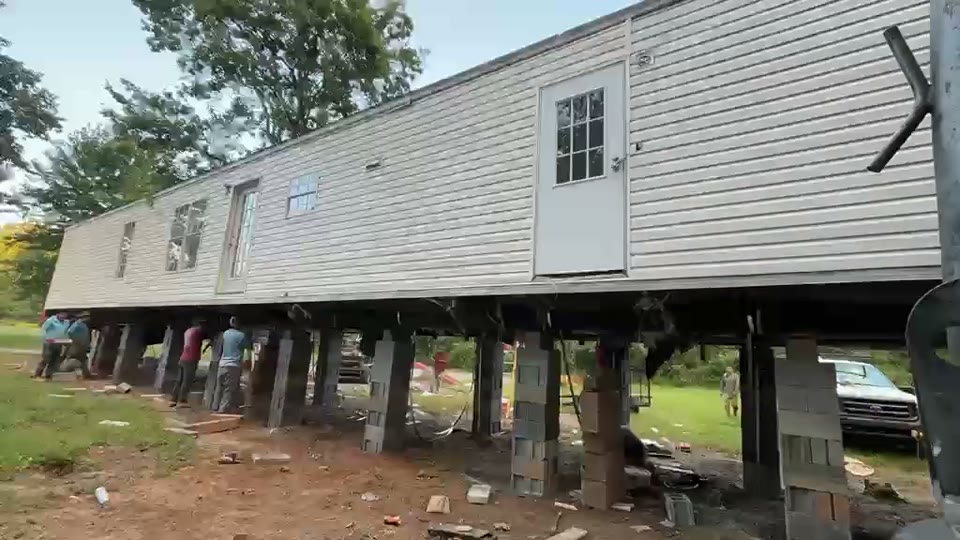
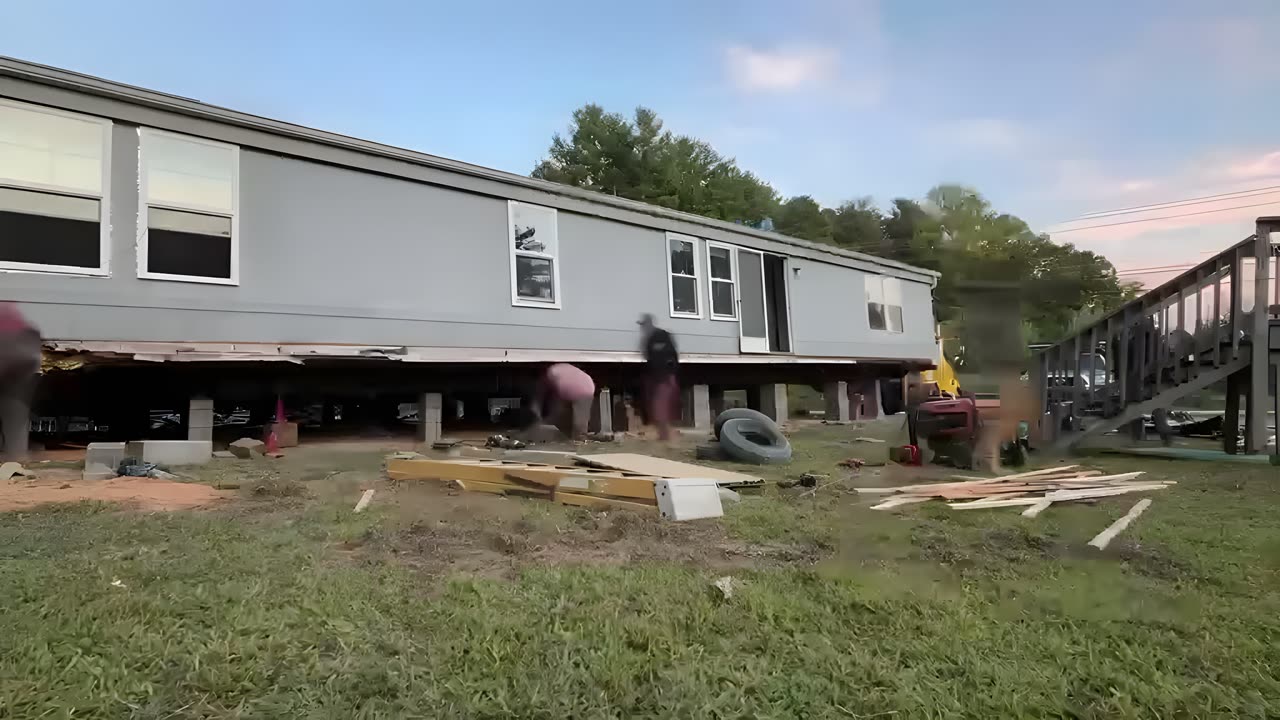
Haywood County manufactured homes don't sit on flat Piedmont clay. Waynesville proper occupies a narrow valley hemmed in by the Balsam Range and the Great Smoky Mountains, and most of the county's manufactured housing spreads from there onto creek-bottom clearings, sloped ridge cuts, and graded fills that shift under load in ways no original install fully anticipated. That geography shows up in leveling quotes almost immediately: a job that looks routine from the driveway can reveal moisture damage or failed footings the moment a crew crawls underneath.
| Scope of work | Typical Waynesville range | What drives it |
|---|---|---|
| Shimming / minor re-level, single-wide | $400 – $700 | Degree out of level, access under home |
| Full re-level, single-wide | $700 – $1,200 | Pier count, soil moisture, pad condition |
| Re-level, double-wide | $700 – $2,000 | Span, marriage-wall stress, anchor disturbance |
| Pier or pad replacement | $2,500 – $5,000 | Number of failed supports, footing depth, soil saturation |
Most cost guides list only single-wide and double-wide without separating minor shimming from a full re-level — which is why bids on similar homes can look wildly different. The distinction matters here because Haywood County's terrain means you often don't know which category you're in until someone has been underneath. A pier sitting in saturated creek soil reads the same as a pier on solid ground right up until it doesn't hold.
These are working ranges for this market, not quotes from any contractor. A bid delivered before a crew has walked the perimeter and inspected the underside is guesswork. In western NC, soil conditions change across short distances, and a number that doesn't account for what the ground is doing under your specific pad is how a repair turns into a replacement job eighteen months later.
How Haywood County's terrain and weather shape the final bill
Most leveling jobs that escalate in Haywood County trace the same pattern: water accumulating beneath the home faster than the site drainage was designed to handle. Haywood County has recorded 19 federally declared disaster events spanning 1973-2026, the majority of them tied to storms and flooding. The county's recent federal incident record includes hurricanes in 2020, 2021, and 2023, a tropical storm in 2024, and a winter storm in 2026 — each one pushing sustained rainfall down the ridge systems surrounding Waynesville into the valley floors and creek bottoms where a significant share of Haywood's manufactured homes are sited.
Two specific terrain conditions amplify moisture damage here beyond what comparable flatland jobs see:
- Creek-adjacent pads along the Pigeon River corridor and Jonathan Creek sit in soil subject to seasonal water-table rise. Fine-grained soil under a pier loses bearing capacity gradually as it saturates, then fails suddenly — often with no visible symptom until the floor reads noticeably out of level or interior doors stop latching cleanly.
- Ridge-cut fills on the slopes rising above Waynesville compact unevenly over time. A fill that reads firm and dry in summer can hold months of accumulated moisture after a wet fall, and a single hard freeze cycle accelerates the settling in ways that show up as floor movement the following spring.
A leveling scope that skips drainage doesn't address the root problem; it defers it. What looks like a $700 shim job can become a $4,000 pier replacement when water is never controlled. After any significant storm event, a crawl-space inspection is worth completing before problems compound. Our re-leveling guide covers what to look for between service calls and what early pier movement actually looks like before it becomes a structural problem.
Permits, HUD standards, and contractor licensing in NC
Manufactured homes in North Carolina are regulated under federal HUD construction and safety standards, with state-level licensing administered through the NC Manufactured Housing Board (under the NC Office of State Fire Marshal). Any contractor performing manufactured housing installation, re-leveling, or structural set-up work in Haywood County is required to meet that board's licensing requirements. That framework is how North Carolina maintains accountability for manufactured housing work quality — it applies to a re-level on a home that has been on its pad for decades just as it applies to a new install.
Haywood County falls in HUD Wind Zone I under 24 CFR 3280.305, the baseline federal wind-load designation for North Carolina. That designation matters directly for any leveling job that disturbs the anchoring system. Per the HUD Office of Manufactured Housing Programs, homes must be installed and anchored to the specifications for their designated zone. A re-level that moves the home off its piers and does not re-verify the tie-down configuration leaves the home out of compliance with federal installation standards, regardless of how level the floor reads when the crew pulls out.
Whether a specific job requires a permit depends on scope. Work limited to shimming that doesn't touch the structural support or anchoring system sits in a different regulatory category than a full pier replacement or anchor re-installation. When the scope is in question, the NC Manufactured Housing Board is the authoritative source on what triggers a permit requirement in this state. A contractor who treats that question as optional on structural work is worth scrutinizing before you sign.
What to ask before any leveling crew starts work
Three questions protect most Haywood County homeowners before money changes hands on a leveling job:
- Ask about moisture before anyone quotes a price. A legitimate crew walks the perimeter, checks site drainage, and inspects underneath the home before committing to a number. If the first question is your budget rather than your ground condition, that order tells you something. In a county with repeated flood and hurricane events, treating moisture as an afterthought is how a $700 shim job becomes a $4,000 pier replacement.
- Verify contractor licensing with the state board before signing. The NC Manufactured Housing Board maintains the statewide license database for set-up and manufactured housing contractors. A legitimate contractor's license should be easy to confirm there — if it isn't, that is material information worth having before any work begins on your home.
- Compare the quote against the Haywood County range above. If a bid runs below the lower end of the table, ask what scope it excludes. Creek-bottom footing depth and moisture mitigation are the two items most commonly absent from low bids in this county, and they tend to reappear as change orders once the crawl space is open. How a contractor explains a low number reveals as much as the number itself.
One more practical point: the leveling scope and the drainage scope are almost always quoted separately in this market. Getting both assessed at the same time — even if you address them in sequence — gives you the full cost picture before committing to either piece of the job.
Wondering how Waynesville compares to other parts of western NC? The full NC mobile home leveling cost guide covers how prices vary across the mountain counties. For the broader picture of what leveling services cover in this area, see mobile home leveling in Waynesville NC.