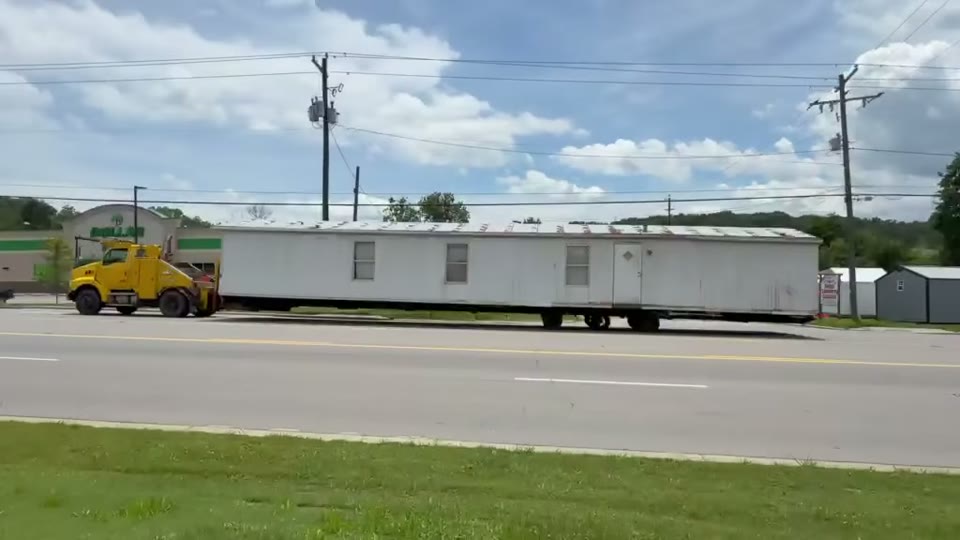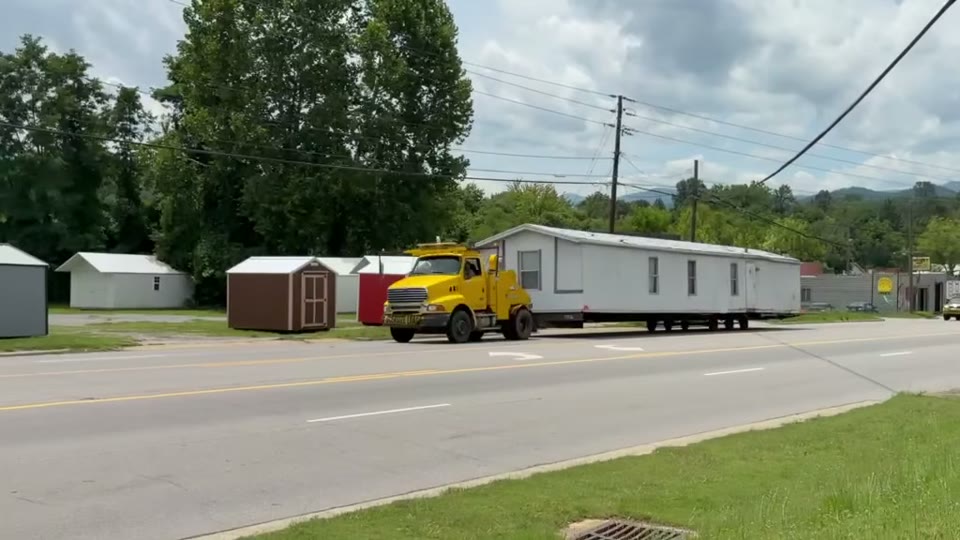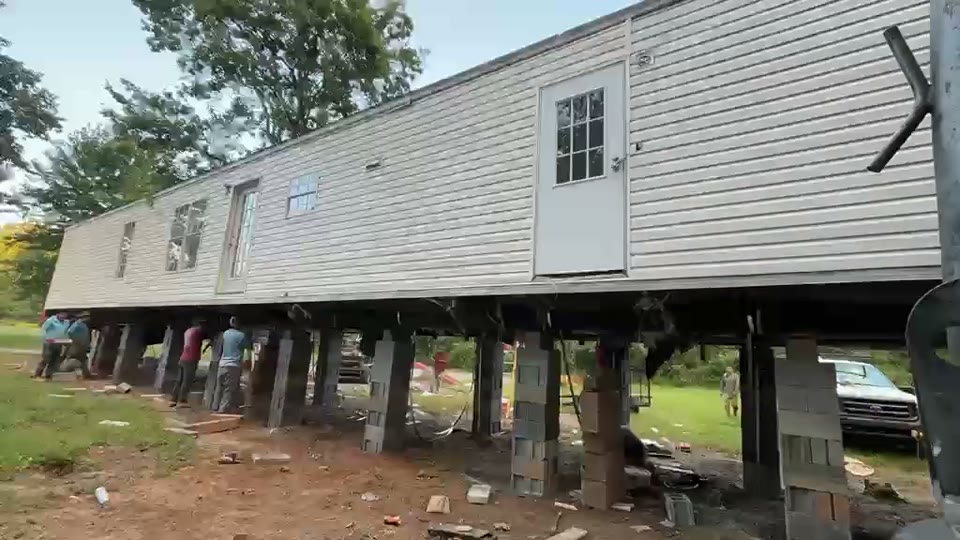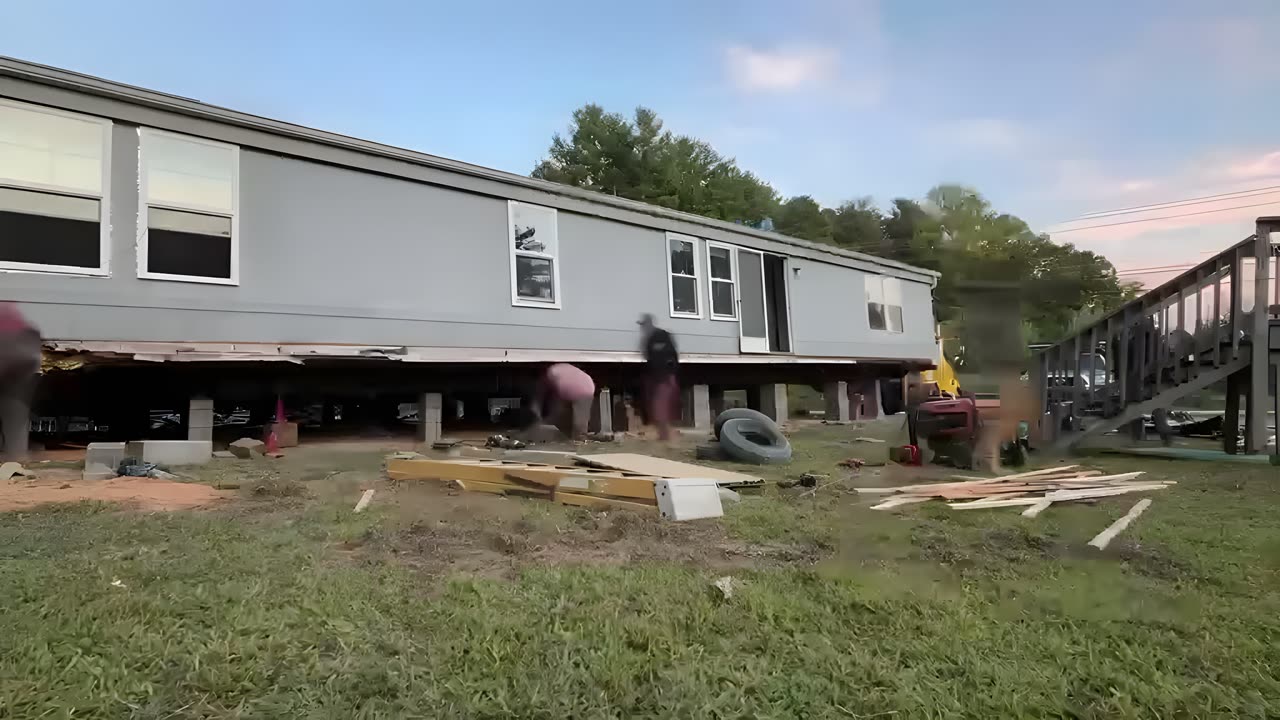
At the foot of the grade, a lot has to be cleared
Old Fort sits where the piedmont runs out. The I-40 Old Fort grade climbs sharply east of town, US-70 threads through the valley alongside it, and manufactured homes have occupied lots along both routes for decades. McDowell County logged 524 permitted manufactured housing moves between 2019 and 2026 — a number that reflects how often these homes change hands, relocate, or come down entirely on properties where access roads were never built with a wide-load transport run in mind.
Clearing one of these lots is a two-question job. Can the home still roll? If the structure is sound, the frame is intact, and the road from the property to a main route can handle an oversize permit load, hauling it out intact preserves the most value and leaves the cleanest site. If it cannot — and many older homes in McDowell County are past that point — the work becomes on-site demolition, and the question shifts to how efficiently the materials come off the lot and where they go. This page covers both paths: the removal process, what it typically costs in the Old Fort area, what the state requires before move day, and what the lot should look like when the crew leaves.
Roll it out or break it down
A home that qualifies for transport must meet dimensional and structural standards for a permitted move on North Carolina roads. The NCDOT Publication MH-2 governs oversize and overweight permits for manufactured homes, covering routing, escort requirements, and width and height limits. If the home meets those standards and finds a buyer or a receiving site, this path typically costs less overall and recovers material value from the structure itself.
A home that cannot roll goes to on-site demolition. The crew separates materials by type where feasible — metals and usable framing to recycling, the rest to a licensed disposal facility. Manufactured homes built before 1980 may contain asbestos-containing materials; U.S. Environmental Protection Agency NESHAP regulations require a certified asbestos survey before demolition of those homes begins. Skipping that step is not a shortcut. It is a liability and a remediation cost that arrives later at a higher price than the survey would have been.
If you are weighing which path applies to your specific home, the full demolition and removal guide covers what a structural assessment looks for and how asbestos testing is sequenced before work begins.
What removal costs in McDowell County
Cost tracks three main variables: home size, whether it hauls out intact or comes down on-site, and lot access. A mountain property with a narrow pull, a soft shoulder, or a long distance off US-70 adds equipment time and rigging that a flatland bid never accounts for. The statewide removal cost breakdown covers the broader picture; the table below reflects typical ranges for the Old Fort area.
| Scope | Typical Range |
|---|---|
| Single-wide, accessible lot, haul intact | $3,000 – $5,000 |
| Single-wide, tight access or partial demo required | $4,500 – $7,000 |
| Double-wide, accessible lot, haul intact | $6,000 – $9,500 |
| Double-wide, remote lot or full on-site demolition | $9,000 – $15,000 |
| Asbestos survey (add-on, pre-1980 homes) | $300 – $700 |
| Lot grading and pad clearing (add-on) | $800 – $2,500 |
Utility disconnection, debris removal beyond the structure, and any engineering required for steep-lot access are typically quoted as separate line items. A job requiring a crane to extract a home from a tight holler above the valley prices differently from one with clear access to a paved road.
What the state requires before move day
Two state requirements move before the home does. First, a tax-paid moving permit under NCGS Chapter 105, Article 18 confirms that property taxes on the home are current before it leaves the county. A manufactured home still carried on a vehicle title through the NC DMV must have that title surrendered or transferred as part of the removal. These two steps run on different timelines — allow room at the start of the project, not the end.
McDowell County's own permit requirements for demolition were not independently verified for this page. Call the county permit office in Marion before move day to confirm whether a removal or demolition permit is required for your specific job and site conditions.
The NC Manufactured Housing Board, under the NC Office of State Fire Marshal, licenses the contractors and inspectors who work on manufactured homes in North Carolina. If this removal is followed by a new home installation on the same lot, the installer must meet current anchor and tie-down standards — McDowell County falls in HUD Wind Zone I under 24 CFR 3280.305, setting the minimum anchoring requirements for any manufactured home installed here. Utilities come down before the home moves, and a licensed electrician must handle the service disconnect. Each utility has its own sequencing requirement, and this step is consistently underestimated in removal timelines.
Storm history and what it leaves behind
McDowell County sits on the eastern slope of the Blue Ridge, where Atlantic moisture systems push inland and stall against the escarpment. The county has seen 19 federally declared disaster events spanning 1973-2026, including hurricane impacts in 2019, 2020, and 2023 and a tropical storm in 2024. Each of those events pushed water and wind at manufactured homes that were engineered for a different baseline assumption. Many homes came through intact; others took on enough damage to make removal the practical next step rather than repair.
Flood and wind events accelerate the deterioration that makes a home un-rollable: floor systems soften, frames corrode, tie-down connections fail transport standards. If a recent storm event is part of why this home is coming down, that history affects the demolition scope and may be relevant to insurance and title documentation. The NOAA National Weather Service maintains storm history for western North Carolina that can support insurance documentation when needed.
Leaving a clean, legal lot
The end state of a removal job is a lot that is structurally clear, legally clean, and ready for what comes next — whether that is a new manufactured home, site-built construction, or returning the land to open use. That means the structure is gone, old piers or concrete runners are removed or confirmed sound for reuse, utilities are properly capped at the supply point, and disturbed soil is graded to drain away from the building footprint. On a McDowell County hollow lot, drainage away from the pad matters more than it does on flat ground; a site that drains poorly becomes a foundation problem for the next home before it is ever set.
If a replacement home is already in view, sequencing the removal and delivery together reduces the time the lot sits open and avoids mobilizing separate crews twice. A mobile home mover serving Old Fort can coordinate both sides of that handoff. For lots with existing concrete piers, verify with the new home's installer whether the foundation meets current standards before the home arrives — installing on a substandard base is a common and expensive mistake to correct after the fact.