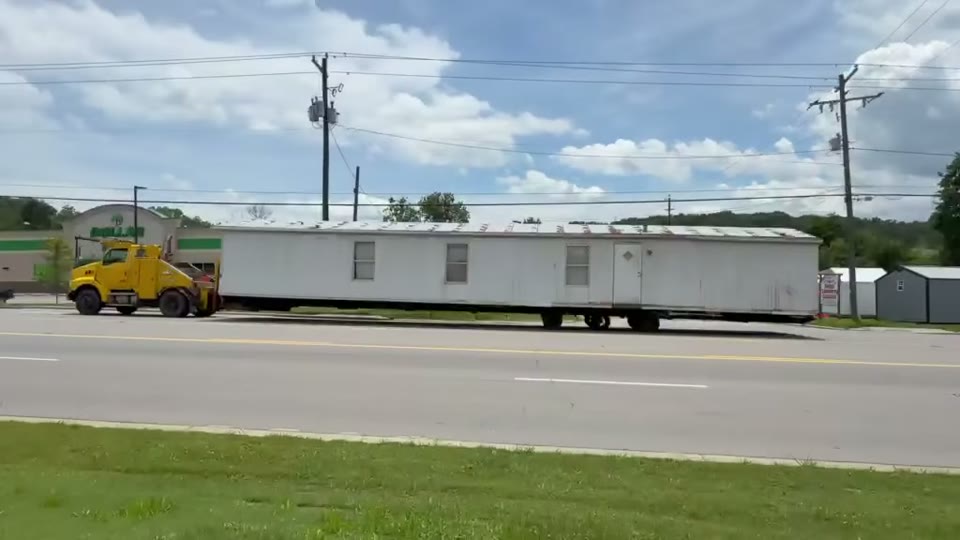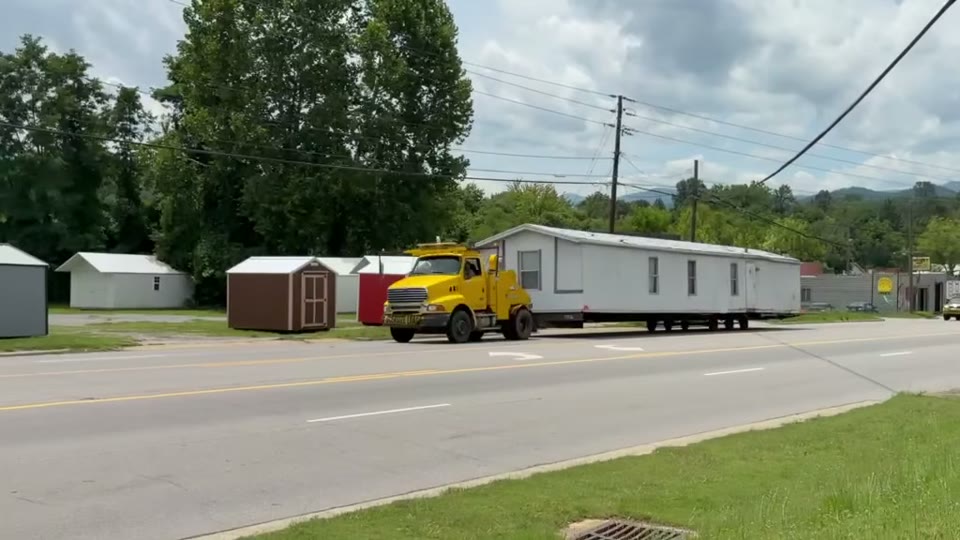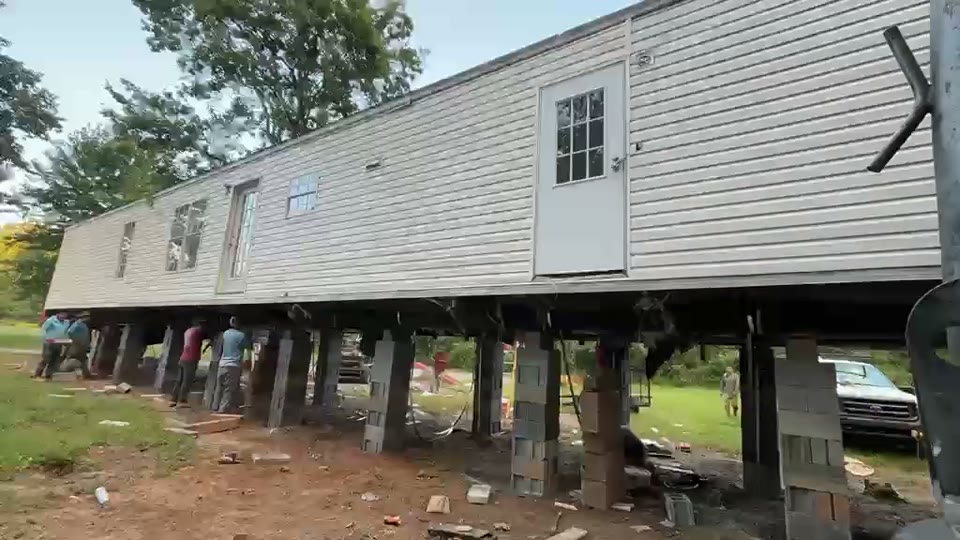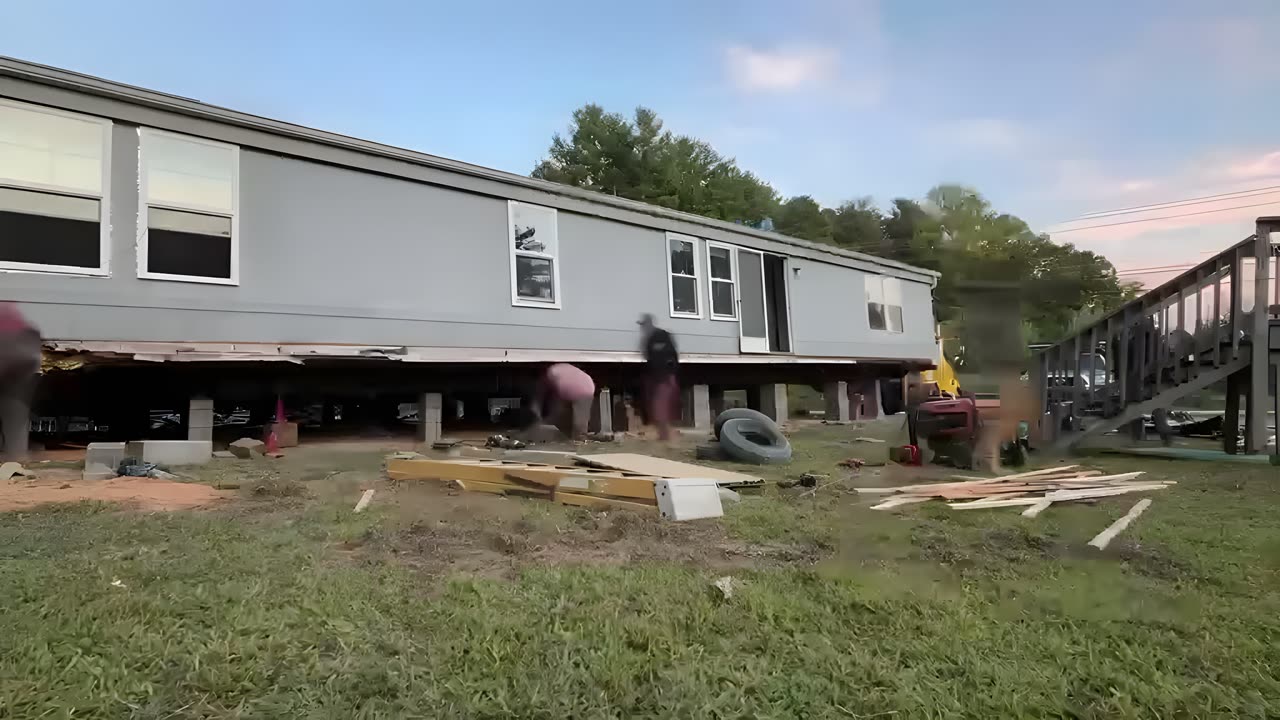
After the haul: what a Swannanoa lot actually requires
Swannanoa runs east from Asheville NC along US-70 and I-40, following the Swannanoa River between ridgelines before opening into the valley between Asheville and Black Mountain. Most buildable parcels here sit on relatively flat ground compared to steep-cut homesites above the ridge — which simplifies site prep but does not eliminate it. Floodplain proximity, drainage slope toward the river, and access constraints off the highway corridor all shape what a set costs on a specific parcel.
Mobile home installation in Swannanoa covers everything that happens once the transport has cleared the road permit and the home sits on your lot: grading the pad, placing and pouring concrete piers, blocking and leveling to factory spec, installing the anchor system, rough-in for water, sewer, and electric, and closing the perimeter with skirting. Those line items have a sequence, a county permit for each major stage, and a state-licensed installer running the work. The full overview of what each phase involves is on the set-up and installation guide; this page covers the Swannanoa lot and Buncombe County permit side specifically.
The Swannanoa price picture
Valley-floor lots in Swannanoa typically land at the lower end of the Buncombe County range because site prep is simpler than on ridge or slope lots. Drainage work, extended utility runs, or tight access off US-70 can push a job toward the top of the range. The full county cost breakdown is at NC mobile home installation costs.
| Scope | Typical Range |
|---|---|
| Single-wide set (piers, blocking, leveling, anchoring) | $1,500 – $3,000 |
| Double-wide set (piers, blocking, leveling, anchoring) | $3,000 – $6,000 |
| Utility rough-in (water, sewer, electric) | Add $800 – $2,500 |
| Vinyl skirting | Add $400 – $1,200 |
| Site grading or drainage correction | Add $500 – $2,000 |
These are typical market ranges. A flat, utility-served lot on the valley floor will land near the lower end; a lot needing drainage work or a long utility trench will not. Any estimate that does not break out site prep as a separate line is missing a number.
Permits: Buncombe County, NCDOT, and the tax clearance
Most Swannanoa lots fall under Buncombe County Permits and Inspections (35 Woodfin St., Asheville NC) rather than a town building department — Swannanoa is an unincorporated community. Lots that cross into Asheville NC city limits or into Black Mountain town limits use those municipalities' own building departments instead; if your parcel address says Swannanoa but the property abuts either town, confirm jurisdiction before filing.
The county manufactured home permit requires utility documentation before it issues: a utility letter or meter receipt for municipal water and sewer, or a county-issued well authorization and septic authorization for properties on private systems. The Metropolitan Sewerage District covers sewer service for much of the valley corridor; Asheville NC city water serves lots on the western end. Further east toward Black Mountain, private well and septic is more common.
Two state permits precede the county permit. The transport crew needs an oversize/overweight permit under NCDOT Publication MH-2 before the home moves on a state road. Separately, a tax-paid moving permit under NCGS Chapter 105, Article 18 requires county tax clearance before the move is legal — the tax office confirms all property taxes on the home are paid before the permit issues. The installer must hold a valid license through the NC Manufactured Housing Board; that license number is required on the county permit application.
Zone I anchoring and Buncombe County's storm history
Buncombe County falls in HUD Wind Zone I under 24 CFR 3280.305 — the baseline designation that still requires a full engineered anchor system. For a Swannanoa lot, that means ground anchors driven to spec and over-the-top straps connected to the home's frame at manufacturer-specified spacing, all placed before skirting closes the perimeter. The county inspector checks anchor placement as part of the installation inspection; a setup with missing or incorrectly placed anchors does not pass.
The weather history here explains why anchoring is treated as a hard requirement. Buncombe County has recorded 19 federal disaster declarations over 1973-2026, including Hurricanes in 2020, 2021, and 2023, a Tropical Storm in 2024, and a Winter Storm in 2026. Swannanoa's position along the Swannanoa River places these lots in a flood and wind corridor that amplifies storm exposure; Zone I spec is the code floor, not the practical ceiling, for a home on this stretch. The NOAA National Weather Service office covering western North Carolina monitors this watershed closely.
Leveling precision ties directly to how anchors perform over time. A home that settles unevenly loads the anchor straps in ways the original placement did not account for. The Swannanoa leveling page covers re-leveling triggers and what the inspection looks for after a storm event.
What to confirm before a crew starts on your lot
Three checks matter before work begins on a Swannanoa installation. First, confirm the home has its HUD data plate and certification label — the data plate lists the wind zone, thermal zone, and roof load zone the home was built for, and the Buncombe County inspector will look for it. A home without a certification label triggers a separate compliance review through the HUD Office of Manufactured Housing Programs before the county will issue a certificate of occupancy.
Second, confirm the installer's NC Manufactured Housing Board license is current. The Board's license lookup is public; a permit examiner will catch an unlicensed installer before the permit issues, but confirming it yourself avoids a work-stoppage mid-installation.
Third, confirm the utility documentation is in hand before the permit application goes in. The county does not issue the manufactured home permit without it, and waiting for a utility letter or septic authorization after filing adds days to the schedule. For lots on Metropolitan Sewerage District service, a connection authorization letter works; for lots on private septic, the county environmental health authorization is the document.