What the set costs here, and what moves the number
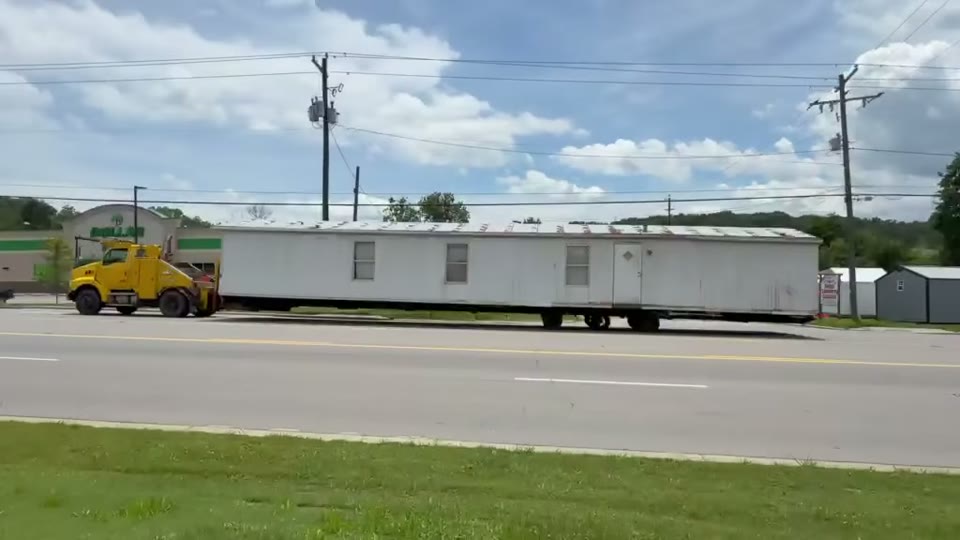
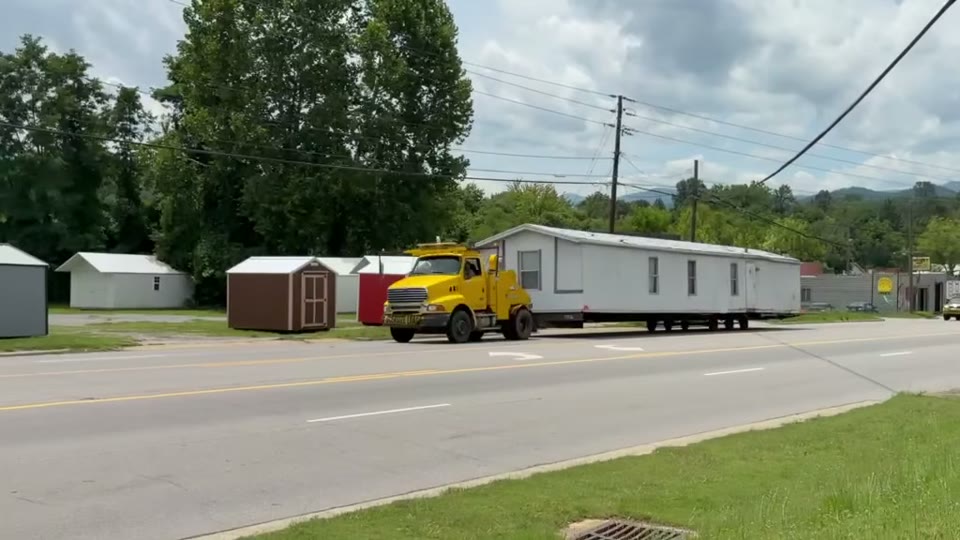
For a standard single-wide, mobile home installation in Old Fort NC runs $1,500 to $3,000. A double-wide set runs $3,000 to $6,000. Both ranges cover the work that begins once the hauler's truck is gone: concrete pads, blocking, shimming, leveling, and the tie-down anchoring required by federal manufactured-housing code. Site preparation, utility connections, and skirting are priced separately and depend on your specific lot. McDowell County recorded 524 manufactured-home permit pulls from 2019 through 2026 — a consistent pace that reflects how widely the county relies on manufactured housing across its valley and ridge communities. The full McDowell line-item table lives on the mobile home installation cost NC page.
Old Fort sits at the eastern foot of the I-40 Old Fort grade, where the highway climbs nearly 1,700 feet toward the Blue Ridge plateau. The Catawba River valley widens here along US-70, and parcels around town range from relatively level valley-floor lots near the center to narrow roadside strips along the highway corridor to wooded, sloped ground on the surrounding ridgelines. A prepared level lot with utilities already stubbed nearby costs less to set; a sloped wooded parcel that needs grading, a septic run, and an electric service extended from a distant meter costs more.
Setup scope and price — what each piece costs
The set price covers the home's structural placement. Everything beyond the home's footprint — utilities, skirting, grading — is a separate scope. Here is how the pieces break out in this market:
| Setup scope | Typical range |
|---|---|
| Single-wide set (piers, blocking, leveling, anchoring) | $1,500 – $3,000 |
| Double-wide set (piers, blocking, leveling, anchoring) | $3,000 – $6,000 |
| Marriage wall joining (double-wide) | Included in double-wide set |
| Concrete pad upgrade or added pads | $150 – $500 per pad |
| Basic site grading | $400 – $1,200 |
| Utility hookups (water, sewer/septic stub, electric) | $500 – $2,000 |
| Skirting (vinyl, standard perimeter) | $600 – $1,500 |
A prepared, level lot with utilities stubbed near the home's landing zone comes in toward the low end of each range. A sloped wooded parcel requiring grading, a long septic run, and an electric service from a distant meter pushes toward the top. Unusual pier depth, rocky substrate, or an extended marriage-wall alignment on a double-wide adds time and cost above the base figures.
Piers, blocking, and leveling on Catawba valley ground
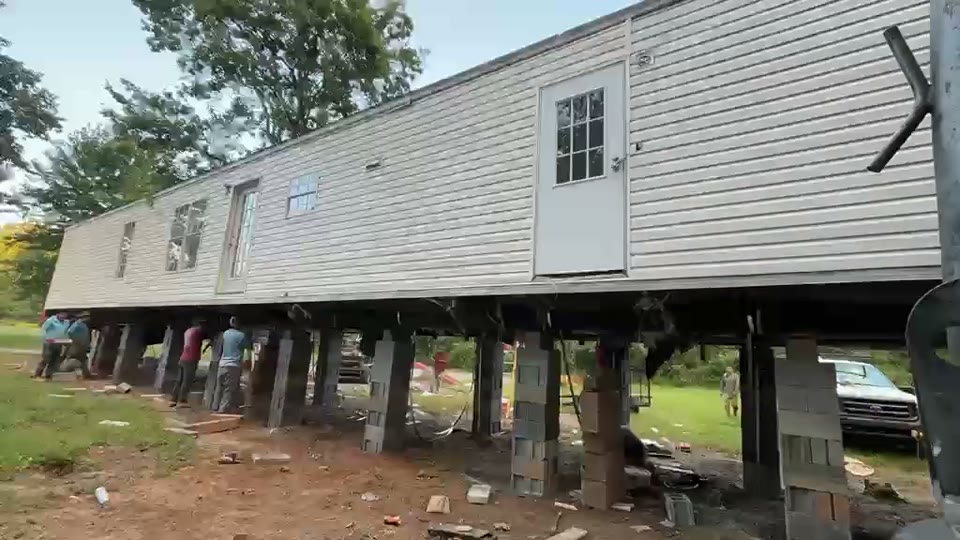
Piers and pads are the structural floor of every set. In the valley bottom around Old Fort, ground conditions are generally stable enough for standard concrete pads and adjustable steel stands. Lots on the rising terrain to the north and south of the valley vary more, and some in-town parcels on disturbed or backfilled ground vary as well. A site inspection before the haul is the only reliable way to know what the pier plan needs — the cost of getting that wrong shows up later in a floor you can feel tilting underfoot.
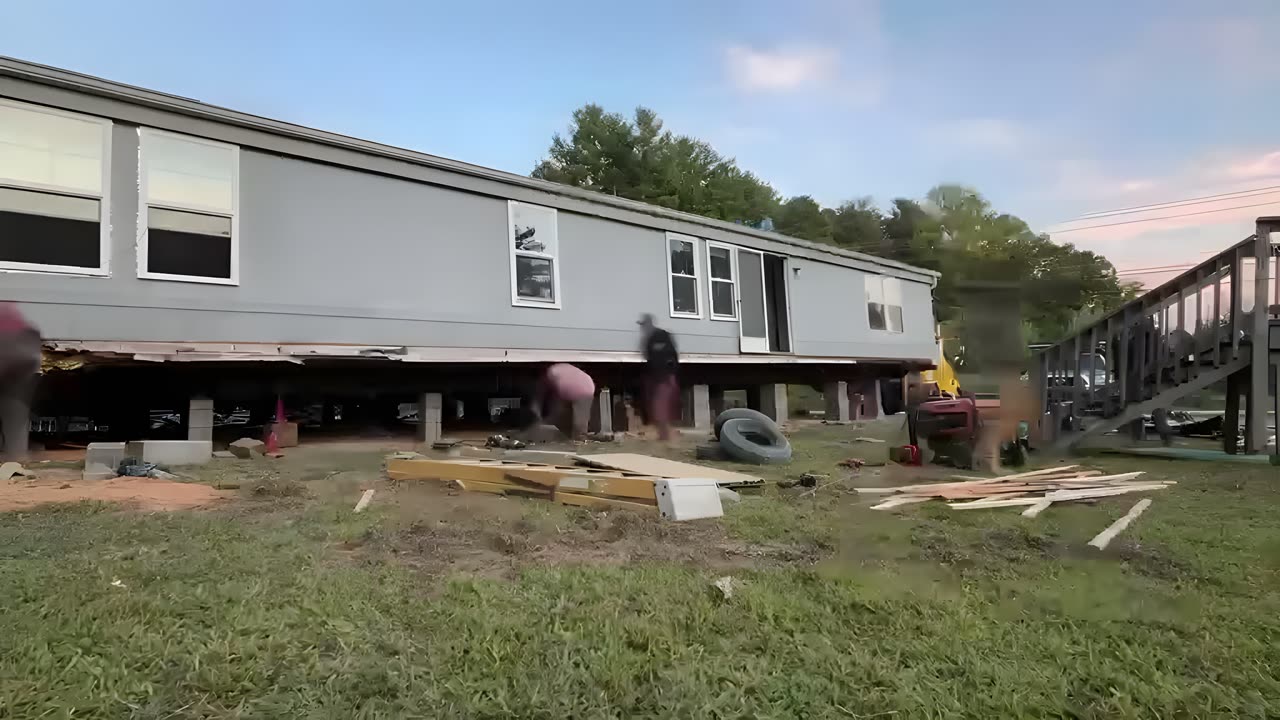
After pads are placed, blocking goes in and shimming brings the home level and square. On a double-wide, the marriage wall closes only after both halves are aligned and leveled together. A home that comes off a set even slightly out of plumb shows it immediately in sticky doors and sloping floors, and structurally over time. The mobile home set up and installation page covers the full sequence from pier placement through the final level check. If the home settles during its first season on newly graded ground — which happens — the mobile home leveling in Old Fort NC page covers re-level costs and what triggers the call.
Wind zone anchoring in McDowell County
McDowell County is designated HUD Wind Zone I under 24 CFR 3280.305, the federal standard for manufactured-housing construction and safety administered by the HUD Office of Manufactured Housing Programs. Wind Zone I is the baseline tier and sets the minimum number, placement, and hardware type for tie-down anchors. The specific anchor schedule — how many, at what spacing, attached to what hardware — comes from the manufacturer's installation manual for your home, not from a general rule of thumb.
On a single-wide, straps run from the frame to ground anchors along both long sides of the home. A double-wide adds marriage-wall fasteners connecting the two sections. In rocky ground, which appears on some of the slope lots in McDowell County, standard earth anchors are replaced with alternative hardware rated for that substrate. An installer licensed under the NC Manufactured Housing Board works from the manufacturer's anchor schedule and produces documentation the county inspector can verify against.
McDowell County has 19 federal disaster declarations on record spanning 1973-2026, with storm events including Hurricanes in 2019, 2020, and 2023, a Tropical Storm in 2024, and a Winter Storm in 2026. Anchoring installed to code before those events is not a formality — it is what keeps a home on its piers when the weather arrives.
Hookups, skirting, and the permit calls to make before move day
Utility connections close out the set after the home is anchored and level. A licensed electrician handles the service connection from the meter base to the home's distribution panel. Water and sewer follow the county's plumbing requirements; a lot with a septic system already in place finishes faster and cheaper than a lot that needs a new system permitted and installed before the home can legally occupy. In the rural stretches of McDowell County along the branch roads off US-70, utility run lengths vary enough that they should be confirmed during site assessment, not estimated at signing.
Skirting encloses the space between the home's floor frame and the ground. Vinyl skirting handles the freeze-thaw cycles Old Fort sees in most winters. Lots on north-facing slopes with long underbelly exposure sometimes benefit from insulated skirting instead.
On permits: the McDowell County permit office governs what is required for installation and hookup. We do not describe those steps because they can change — call before move day, not after. The haul itself is a separate matter requiring an oversize-move permit under NCDOT Publication MH-2. If the home carries a real-property title in NC, a tax-paid moving permit is required under NCGS Chapter 105, Article 18 before the home can legally move. Confirm both with the county and your title agent before scheduling the haul date.