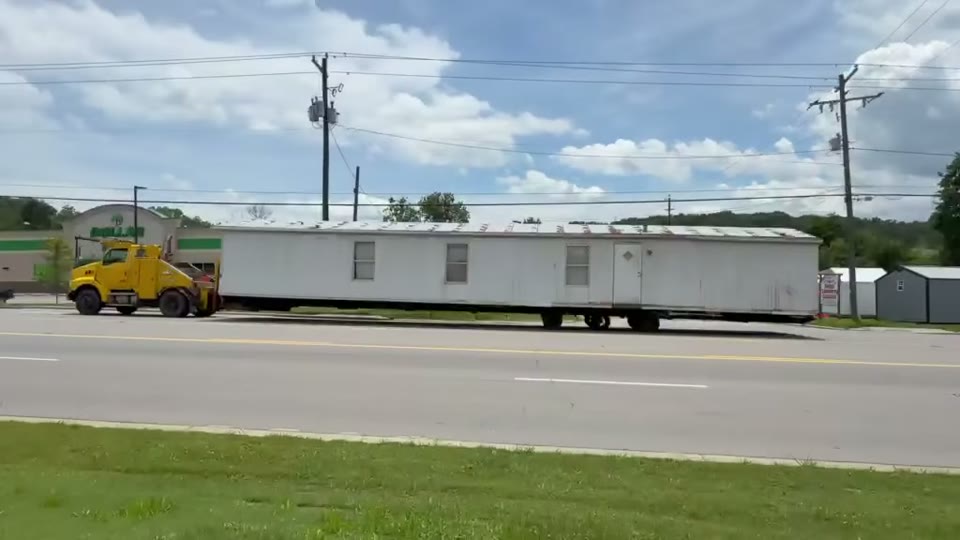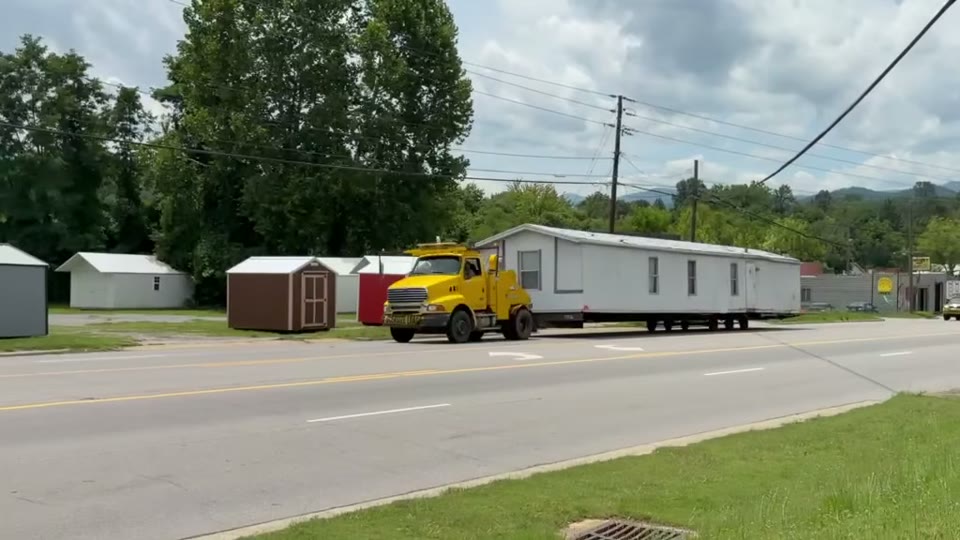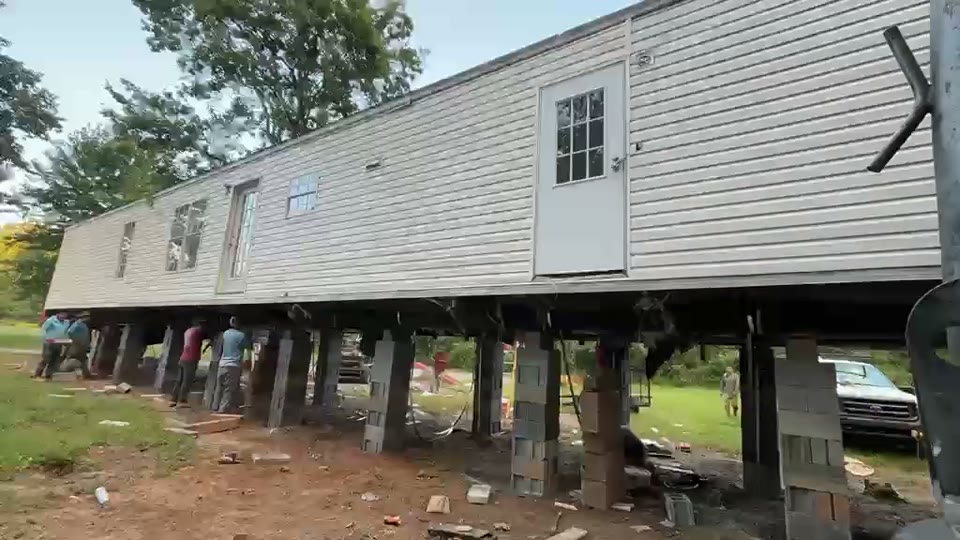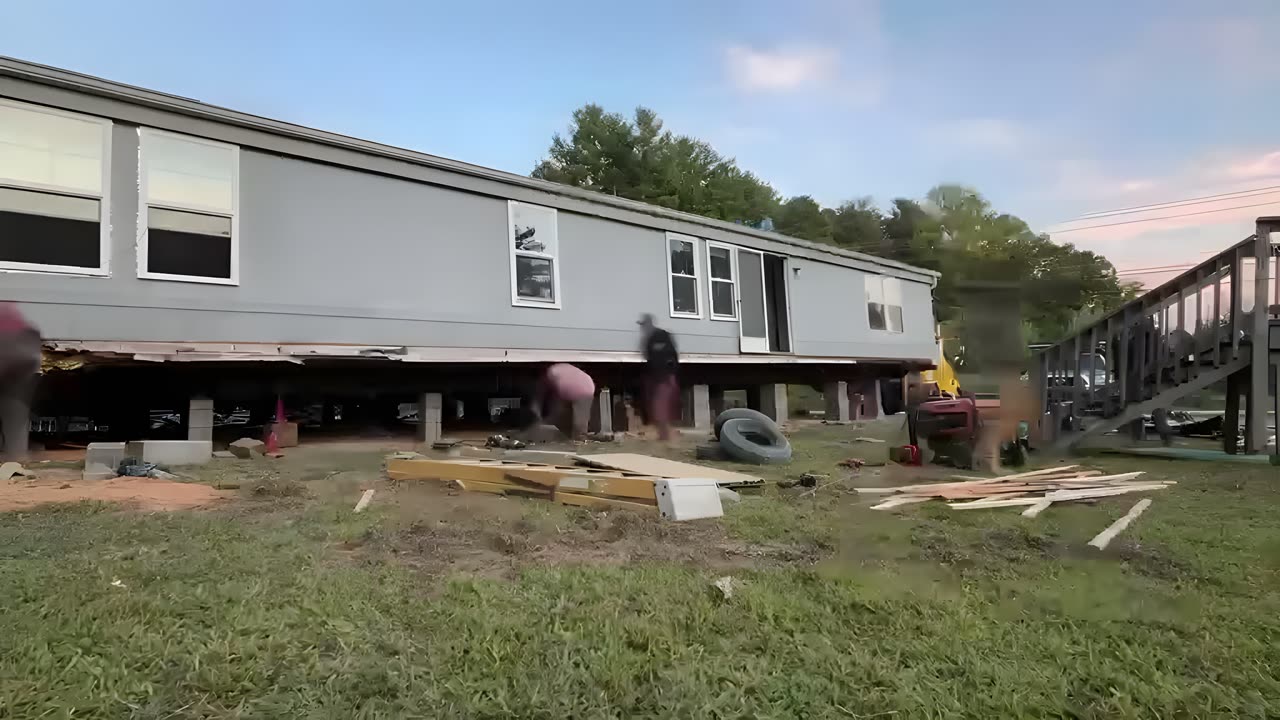
The site Fletcher hands you
The valley floor between Asheville NC and Hendersonville along I-26 and US-25 is where most of Fletcher's residential parcels sit, and it is not the flat, well-drained ground its map footprint might suggest. Asheville Regional Airport anchors the flattest part of that corridor; the residential land around it drops off ridgelines to the east and west, follows drainage tributaries of the French Broad River, and frequently arrives as a sloped or low-lying parcel that needs real site work before any concrete is placed.
Henderson County's soil shifts within this corridor: loamy fill near the highway interchanges and clay-heavy subsoil on the slopes rising toward Edneyville and Mills River. Clay swells in wet springs and shrinks in dry summers, and that movement works steadily against a pad that was not graded and drained correctly from the start. The full site-prep decision tree, including what goes under the runners before they are poured, is at mobile home foundation grading and footers.
Foundation types and what each costs in this market
Three foundation approaches are common for manufactured homes in Henderson County. The right one depends on the home's width, the slope of the lot, and whether the installation will be permanent. The ranges below reflect typical market conditions around Fletcher — individual jobs land within these bands based on site conditions, soil, and access.
| Foundation scope | Typical use case | Typical range |
|---|---|---|
| Graded pad + pier footers | Single-wide; sloped lots with anchor system | $2,000 – $4,500 |
| Graded pad + concrete runners | Double-wide; flatter pads | $4,000 – $8,000 |
| Full concrete slab | Permanent installation, double-wide or larger | $10,000 – $15,000 |
The factors that push a job toward the top of each range are steep slope, poor natural drainage, and clay or rocky subsoil that requires deeper excavation to reach below frost depth. A level lot with sandy loam and clean drainage runs toward the bottom. The compacted-base and vapor-barrier side of site prep is detailed at dirt pad for a mobile home.
Drainage, frost depth, and what the weather record teaches
Henderson County carries 16 federal disaster declarations across 1978-2026. The most recent events include Winter Storm (2026), Tropical Storm (2024), and hurricane-category storms in 2023, 2020, and 2019. Each of those events pushed water at sites graded before anyone was accounting for that volume of precipitation in this watershed. Before any footer goes in around Fletcher, drainage has to flow away from the home's perimeter on all four sides: an uphill swale on a sloped lot, downspout extensions well past the skirt line, and positive grade maintained after backfill settles over the first season. The call that comes after skipping this step is always more expensive than the step itself.
Frost depth at Fletcher's valley elevation — roughly 2,100 feet near the airport corridor — runs 8 to 12 inches through a hard Henderson County winter, and deeper toward the county's ridgelines. Footers poured above the local frost line will heave with freeze-thaw cycles, and that heave reads as an unlevel home by the following spring. Concrete runners and slabs that extend below frost depth avoid the cycle entirely. The NOAA National Weather Service publishes regional frost records that inform when late-season concrete pours in this area are and are not advisable.
Henderson County's permit sequence, step by step
The county process works in a specific order, and skipping a step creates delays that push the delivery date. Zoning clearance comes first — from Henderson County Planning for an unincorporated parcel, or from the Town of Fletcher planning office if the lot is inside town limits. Environmental Health issues a septic permit for a new system or an existing-system affidavit for a lot where a permitted system already serves the site. Water and sewer tap receipts document utility connections. The permit application is filed after all of those are in hand. State installation requirements — covering the foundation, blocking, and tie-down system — are governed by the NC Manufactured Housing Board, which operates through the NC Office of State Fire Marshal.
A home moving within Henderson County requires a moving permit from the County Assessor before it rolls — the tax-paid certificate required under NCGS Chapter 105, Article 18. That certificate travels with the home and is verified at the destination. For a move crossing county lines, an NCDOT oversize/overweight permit under Publication MH-2 is required before the home can travel public roads.
Wind zone and what Zone I means at installation
Henderson County falls within HUD Wind Zone I under 24 CFR 3280.305, the federal construction standard administered through the HUD Office of Manufactured Housing Programs. Zone I is the lightest wind-loading category, and it defines both the engineering target for homes built to that exposure and the minimum tie-down count and anchor spacing that must be met at setup. A home placed on a well-built footer but anchored below the Zone I specification will not pass state inspection, regardless of how solid the concrete is.
The anchor type — ground anchor, frame anchor, or over-the-top strap — is specified on the home's data plate and selected by the licensed installer during setup, not during the foundation pour. Getting the foundation right and getting the anchoring right are two separate steps that both have to meet specification for the home to be legal and insurable in Henderson County. Full installation details, including what the state inspector examines, are at mobile home installation in Fletcher NC.
Sequencing the work before delivery day
The most common and expensive mistake in Fletcher setups is scheduling home delivery before the site is ready. A home arriving at an unfinished pad — concrete still curing, grading incomplete, or a permit question still open — means the transport driver waits and the setup crew waits, with time-sensitive charges running. The correct sequence: complete zoning and Environmental Health approvals first, then grade and compact the pad, then pour the footers or runners, then allow proper cure time, then take delivery.
In Henderson County's fall and winter months, overnight temperatures can extend concrete cure time beyond what warm-weather schedules assume. Ground anchors should be set and tested before the home is blocked, not after. The mobile home installation in Fletcher NC page covers what happens after the pad is ready — blocking, leveling, utility connections, and the final state inspection that closes the permit.