North Buncombe clay and what it does under a home
Weaverville sits twelve miles north of downtown Asheville NC, in the valley where Reems Creek drains south toward the French Broad. The soil in that valley — and up the cut slopes where newer subdivisions have gone in along the I-26 corridor — is clay-heavy residual that swells in wet seasons and contracts as things dry out. That cycle is slow and invisible, but over years it tilts concrete block piers, sinks pad bases, and introduces the kind of chronic lean that a home carries for a decade before a door stops latching.
The manufactured home stock in North Buncombe County splits into two distinct situations. A home placed on a freshly graded lot in the last few years is still in its settling window — clay-heavy fill that hasn't fully consolidated keeps moving, and minor re-leveling in the first couple of years after placement is not unusual. An older home on a Weaverville ridge lot, placed in the 1980s or 1990s, is dealing with something different: original piers that have been under load for three or four decades, possibly without a single inspection. Both situations end up needing leveling, but for reasons separated by a generation of physics.
What an unlevel home shows you
The signals are consistent regardless of home age. A door that drifts open or clicks shut on its own means one corner of the frame has moved relative to the others. Floors that feel soft or bouncy near the centerline usually mean a middle support has dropped. In a single-wide, watch the long walls: cracks running parallel to the home's length rather than across it indicate the structure is bowing between supports. In a double-wide, a visible ridge or gap along the marriage wall — the seam where the two sections meet — often means one half has settled more than the other.
Season adds noise. Doors that swell tight in August and loosen in October are likely moisture, not movement. But a crack that appears in spring and hasn't closed by fall warrants investigation, and anything that changes noticeably within a single week is urgent — that pace suggests an active soil problem or a pier that has already failed, not normal cycling. More detail on what the leveling process actually corrects is at mobile home re-leveling.
What re-leveling costs around Weaverville NC
The table below reflects typical market rates for this area. Whether a job lands at the low end or the high end turns mainly on home size, how many supports need work, and whether existing pads can be shimmed or have to be replaced entirely. The full NC mobile home leveling cost guide has line-item breakdowns by scope.
| Scope | Typical Range |
|---|---|
| Single-wide, minor re-leveling (resetting shims on existing piers) | $400 – $800 |
| Single-wide, full re-leveling | $800 – $1,200 |
| Double-wide, minor re-leveling | $700 – $1,200 |
| Double-wide, full re-leveling | $1,200 – $2,000 |
| Pier or pad replacement (per failed support) | $150 – $350 each |
| Full pier & pad replacement, single-wide | $2,500 – $3,500 |
| Full pier & pad replacement, double-wide | $3,000 – $5,000 |
When piers or pads have failed rather than simply shifted, the job moves from re-leveling into replacement territory. That threshold — and which end of these ranges your home lands on — depends on how many supports need work and what condition the underlying pads are in.
How the work gets done
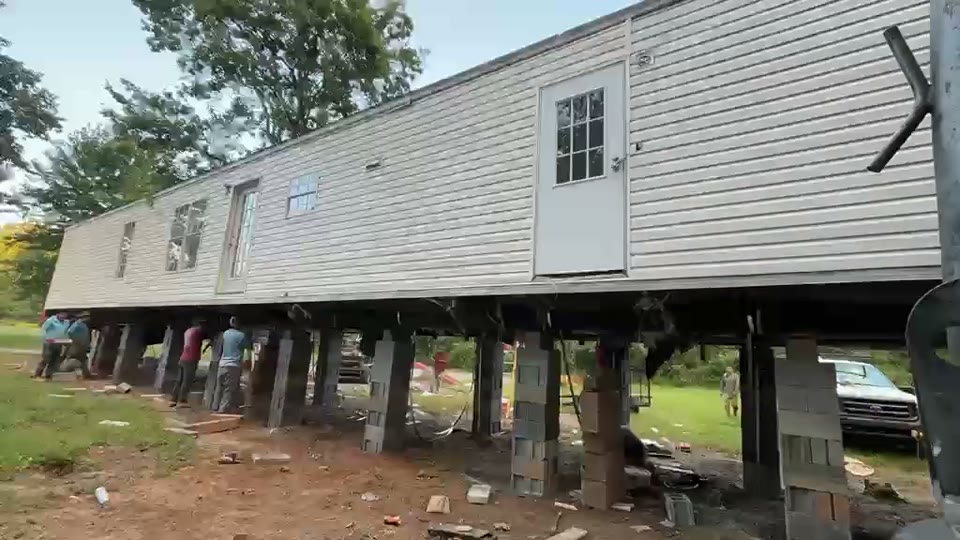
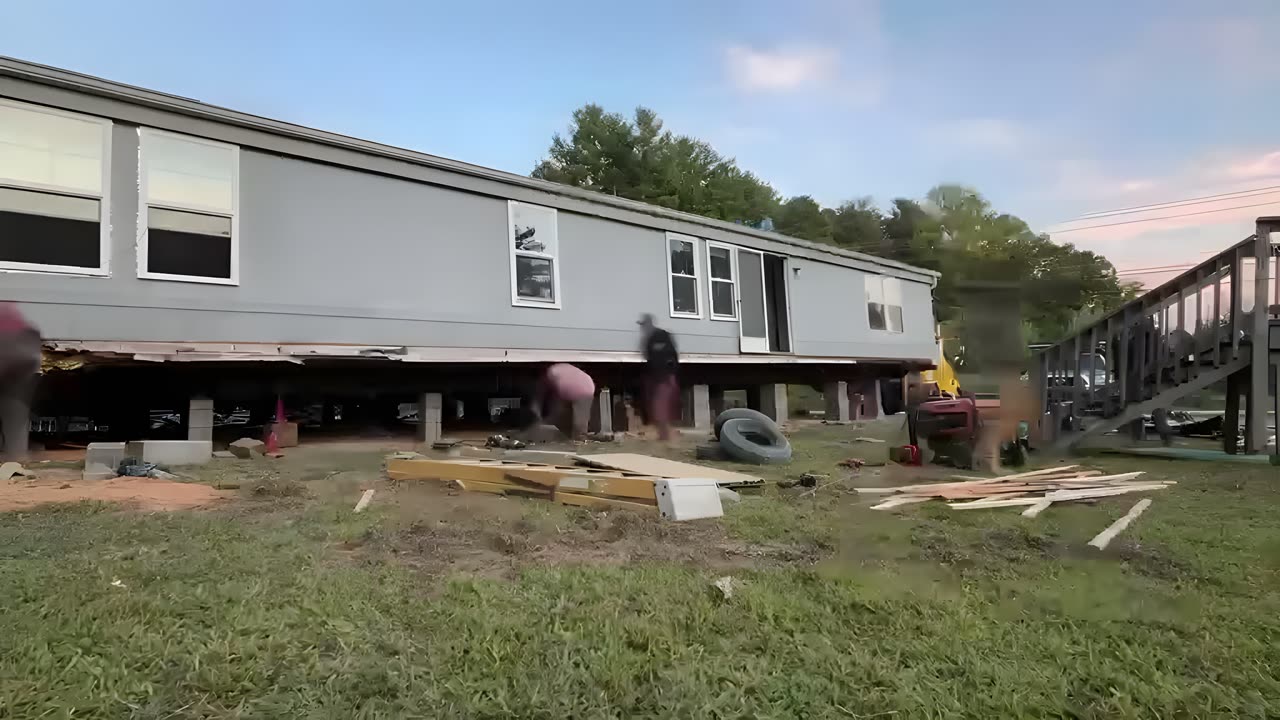
A leveling job on a manufactured home starts with a walk-under inspection: the crew checks each pier top for contact with the home's chassis or outrigger beams, looks for cracked or sunken pads, and marks the low points along the perimeter and under any center-line supports. Hydraulic bottle jacks go under the steel frame at those low points, and the home is lifted incrementally — fractions of an inch at a time — while shims are reset or replaced under each pier.
On a double-wide, both sections must be brought level to each other before the marriage-wall seam can be re-inspected for gaps or damage. Newer homes with intact, correctly-sized pads may only need a shim reset. Older homes often need pad replacements before the home will hold its level — that difference shows up clearly in the cost table above. The full setup context, including what a correctly installed home looks like from the ground up, is at mobile home set-up and installation.
Anchoring rules and storm history in Buncombe County
Manufactured homes in North Carolina fall under dual authority: federal HUD standards and state oversight through the NC Manufactured Housing Board, which operates within the NC Office of State Fire Marshal. Any leveling job that involves disturbing ground anchors or tie-down straps also triggers the anchorage requirements: Buncombe County sits in HUD Wind Zone I under 24 CFR 3280.305, which sets the minimum anchor count and strap configuration for manufactured homes placed here. If a strap has to come off to allow jacking, it must be re-set to that standard before the job is considered complete.
Buncombe County's federal disaster history explains why anchorage is not a paperwork formality. There have been 19 declared incidents spanning 1973-2026, with five in a recent cluster: Winter Storm (2026), Tropical Storm (2024), Hurricane (2023), Hurricane (2021), and Hurricane (2020). The National Weather Service mobile home guidance is direct on this point: manufactured homes are more vulnerable than site-built structures in high-wind events, and correct anchoring is the primary structural mitigation. A home that is both out of level and under-anchored is carrying two separate risk factors into the next storm season.
Questions worth asking before any crew starts
North Carolina contractors who re-level or install manufactured homes must hold a license from the NC Manufactured Housing Board — it is worth verifying that credential before any work begins. The distinction between re-leveling (shimming and adjusting existing supports) and full pier-and-pad replacement is also worth clarifying upfront: they carry different labor and material scopes, and a quote that doesn't specify which one you're getting is incomplete.
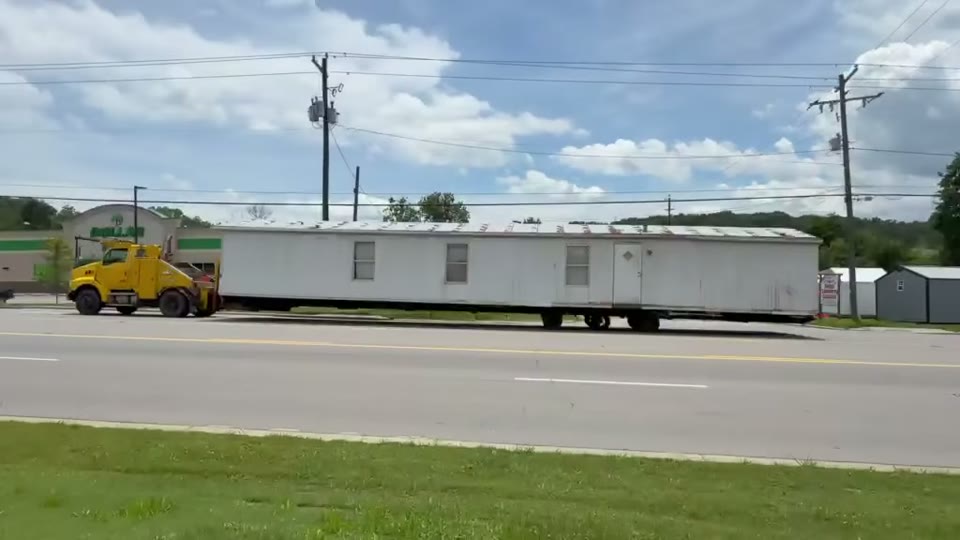
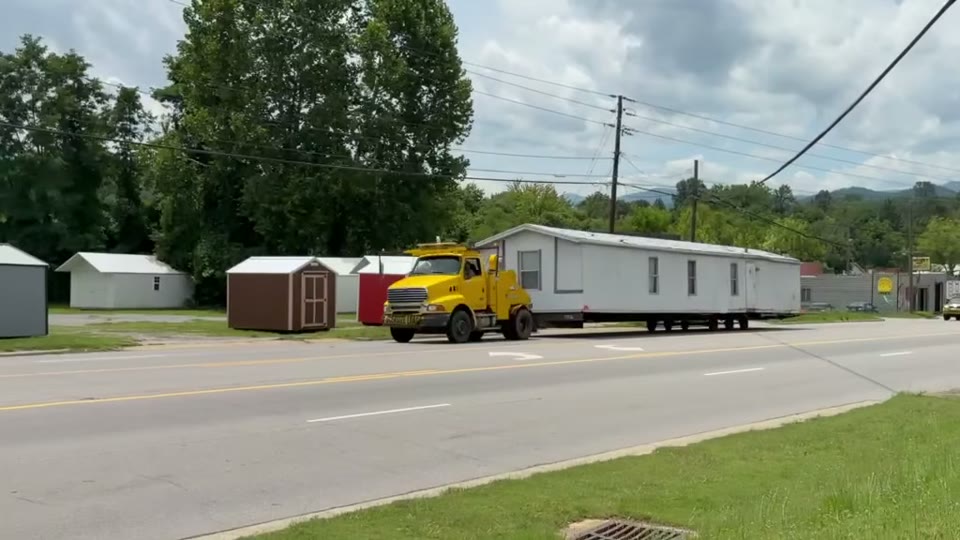
Three questions that separate thorough crews from careless ones: How many piers are you inspecting versus how many are you assuming are fine? If any anchor straps need to come off, how are they being re-set to code? And if you find pad failures under the home, does the quoted price cover that, or does it trigger a separate charge? For homes that also need to be moved to a new site, the NCDOT MH-2 permit publication covers oversize movement requirements in North Carolina — leveling on an existing site doesn't require a move permit, but relocation before leveling does.