Two problems, one floor
Transylvania County gets more annual rainfall than almost any other mountain county in North Carolina, and most manufactured homes here sit on ground that responds to that water over time. A home on a Brevard-area lot that has never been re-leveled can shift two inches over a decade, slowly enough that no single month feels dramatic, but steadily enough that the kitchen door that once closed with two fingers now takes a shoulder. At the same time, the bathroom floor in that same home might have a soft patch that has nothing to do with the home's position on its piers at all.
Mobile home floor leveling as a search term covers two distinct repair categories. The first is re-leveling: adjusting the home's position on its pier system so it sits plumb and level again. The second is subfloor repair: replacing or reinforcing the wood decking beneath the flooring surface that has rotted, delaminated, or absorbed water. Both feel like floor problems when you are standing on them. Only one involves moving the home off its piers.
What each failure looks like, and what you can check yourself
A subfloor problem usually appears in one location. Press firmly with your foot on the suspect area: spongy give without any slope is almost always a failure of the floor decking material, typically OSB or particle board that has absorbed moisture and lost its rigidity. Common sources include a slow plumbing leak, a failed toilet flange seal, or a vapor barrier in the crawl space that has torn or pooled. If you can access the underside of the home through the skirting, look for staining or discoloration on the bottom of the floor decking directly above the affected area. Moisture damage usually stays close to its source.
A settlement problem reads differently. Set a round object on the floor in several rooms; if it rolls consistently toward one end of the home, the home has moved. Doors that stick on the same side of the house support that diagnosis. Under the skirting, look for a visible gap between the top of a concrete block pier and the steel chassis beam above it, or for a pier that has cracked, tilted, or sunk into the soil. A home that has moved significantly will also show stress at its roof-wall seams and around window frames. For help reading tilt patterns across rooms, the mobile home floor sloping guide covers what each pattern suggests about which pier location has failed.
Both problems can exist in the same home. A home that has settled toward one corner allows water to pool there instead of draining away, which accelerates subfloor damage in that same area. When both are present, re-leveling comes first. There is no lasting subfloor repair in a home that is still moving.
What repairs typically cost in this area
Cost varies by how far the home has moved, how many piers need replacement versus adjustment, and whether subfloor work is also needed. The table below shows typical market ranges for the Transylvania County area. The NC mobile home leveling cost page has a full scope-by-scope breakdown with line-item detail.
| Scope | Typical Range | Notes |
|---|---|---|
| Minor re-level, 1–3 piers adjusted | $300–$700 | Small settlement, relatively flat lot |
| Full re-level, all piers reset | $800–$2,000 | Whole-home leveling; slope lots add cost |
| Pier replacement (per pier) | $150–$400 | Cracked, tilted, or sunk block stacks |
| Subfloor repair, localized section | $500–$1,500 | Water-damaged decking near a plumbing source |
| Full subfloor replacement | $1,800–$4,500 | Severe rot or widespread delamination |
| Combined re-level and subfloor repair | $2,200–$6,000 | Settlement caused secondary moisture damage |
Slope lots in Transylvania County frequently require more pier resets per job than a flat-ground installation would, and any job where the soil under pier pads has shifted may need soil correction alongside the pier work. A quote that does not address soil condition at each pier location should be treated as preliminary until that assessment is done.
What re-leveling involves, and what North Carolina requires
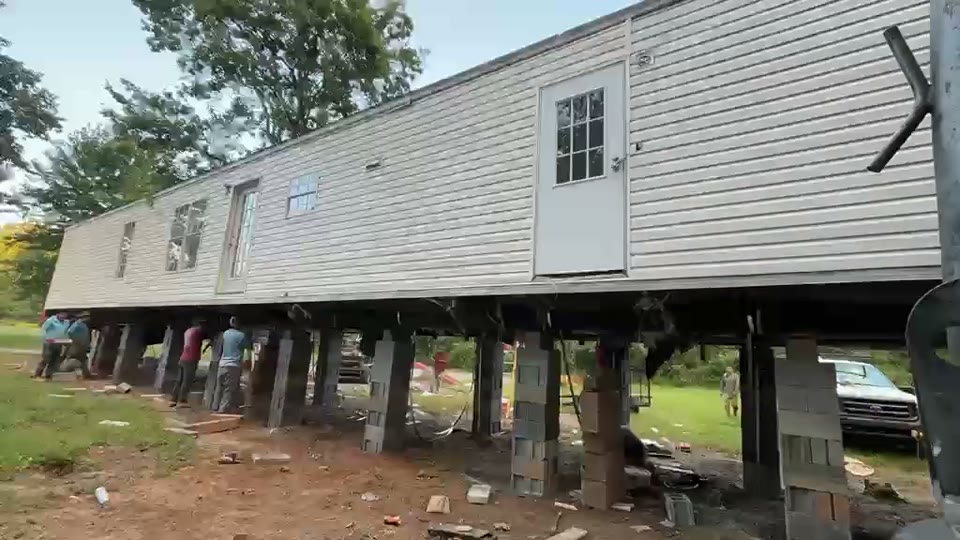
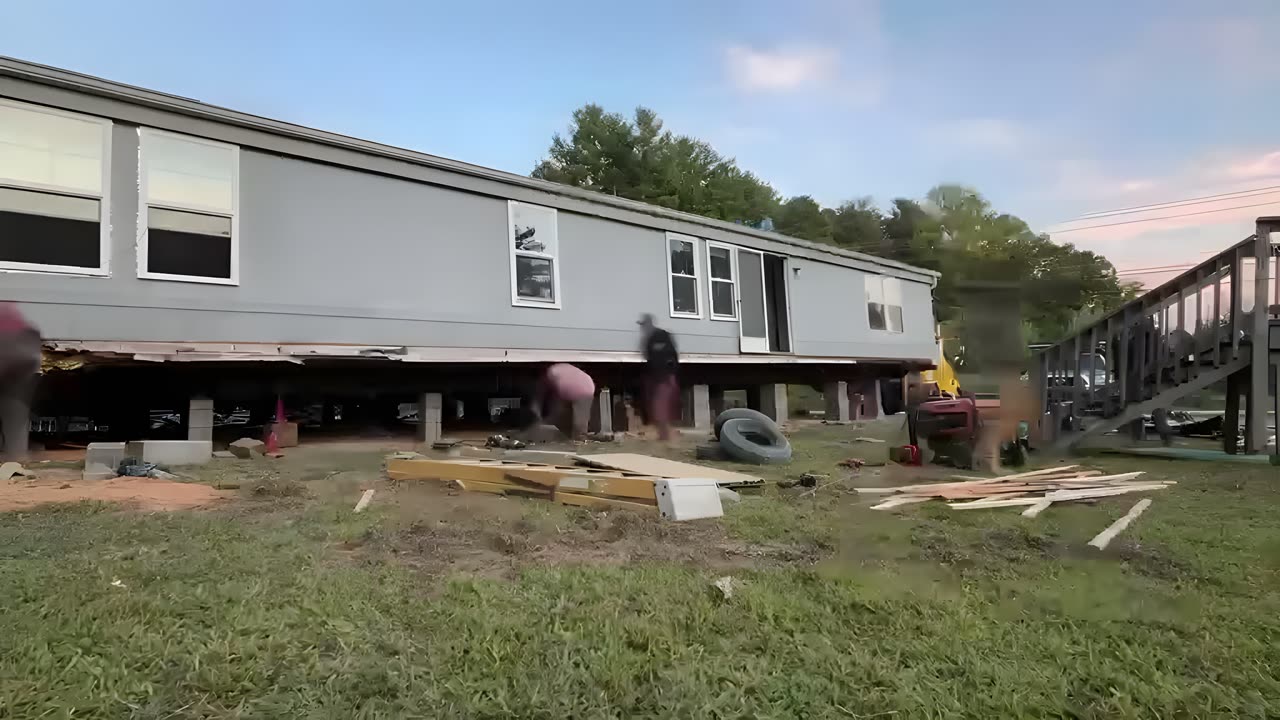
Re-leveling a manufactured home means placing hydraulic jacks under the main steel chassis beams, lifting the home to plumb, then resetting and in some cases replacing the concrete block pier stacks that carry the load. On a slope lot near Brevard, that typically means working from the low end upward, supporting each chassis section before moving to the next pier location.
The tie-down and anchor system often has to be removed and reset during a full re-level. Transylvania County falls in HUD Wind Zone I under 24 CFR 3280.305, and any re-level that disturbs the anchor system requires the full Zone I specification to be met when the anchors go back in. The HUD Office of Manufactured Housing Programs sets these standards nationally; the NC Manufactured Housing Board governs the licensing of contractors who perform installation and re-leveling work in North Carolina. A licensed setup contractor is required for any work that involves the anchor and tie-down system.
While the home is supported on jacks is also the right time to inspect the underside of the floor decking. Scheduling that check as part of the leveling job, rather than a separate visit, avoids the cost of supporting the home a second time if soft-floor work is also needed.
Storm history, soil stability, and what to check before calling
Transylvania County has been covered under 16 federal disaster declarations over 1993-2026, a record that spans Hurricane (2021), Hurricane (2023), Tropical Storm (2024), Fire (2025), and Winter Storm (2026). Repeated storm saturation does not just damage homes directly — it loads and unloads the soil beneath pier pads in cycles, which is a reliable way to move a home gradually off level with no single dramatic event to point to. A home that has gone out of level since 2021 should have soil condition assessed at each pier location, not just the piers themselves.
Western North Carolina sits in one of the wettest zones in the eastern United States. NOAA National Weather Service climate records for the Brevard area show annual precipitation well above the state average, with a disproportionate share arriving in high-intensity events. That rainfall pattern is directly relevant to subfloor longevity, to pier-pad stability over time, and to how quickly a freshly leveled home can shift again if drainage at the pier pads is not addressed in the same job.
Before requesting an estimate, check under the skirting at each pier: note any stack that has tilted, cracked, or separated from the beam above, and check whether any section of ground beneath the home shows wet or soft soil after a stretch of dry weather. Having those observations ready speeds up any on-site evaluation. If the home has already been leveled and has shifted again within a couple of years, the re-leveling guide covers the soil and drainage changes that prevent a repeat.