What Transylvania County Requires Before Your Home Arrives
Brevard and the communities tucked into Transylvania County's mountain hollows frequently sit on steep, wooded lots where a manufactured home placement touches multiple county offices before the first stake goes in the ground. Transylvania County's Manufactured Home Permitting Requirements document sets out four items the county needs before issuing a permit: a completed Manufactured Home Permit Application, written health department sign-off on the septic system or connection, a parcel map or survey showing lot dimensions and setbacks, and a county-assigned 911 address for the site.
The health department step is the one that catches applicants off guard. Mountain lots in Transylvania County frequently rely on septic systems rather than municipal sewer. The county health department reviews or inspects the system before the permit office will issue a permit for a new placement. If the property does not yet have an approved system, that approval must come first. If an existing system is already on the lot, the health department confirms it is appropriately sized for the home being placed. This step has no shortcut and no workaround, regardless of how straightforward the placement looks on paper.
The parcel map requirement also reflects the terrain. Steep slopes and narrow road frontages mean setbacks must be verified before the county signs off. Bring a copy of the county tax map page or a recorded survey. If the lot sits in a mapped floodplain area, an additional elevation inquiry may follow. Transylvania County's ridges channel heavy rainfall into narrow valleys quickly — 16 federal disaster declarations over 1993-2026 include events driven by exactly that hydrology, making floodplain review routine rather than exceptional for new placements near creek bottoms or drainage draws.
Two State Permits the Move Cannot Start Without
Once the county permit is in hand, two state-level requirements must be resolved before any manufactured home can legally move on a North Carolina public road.
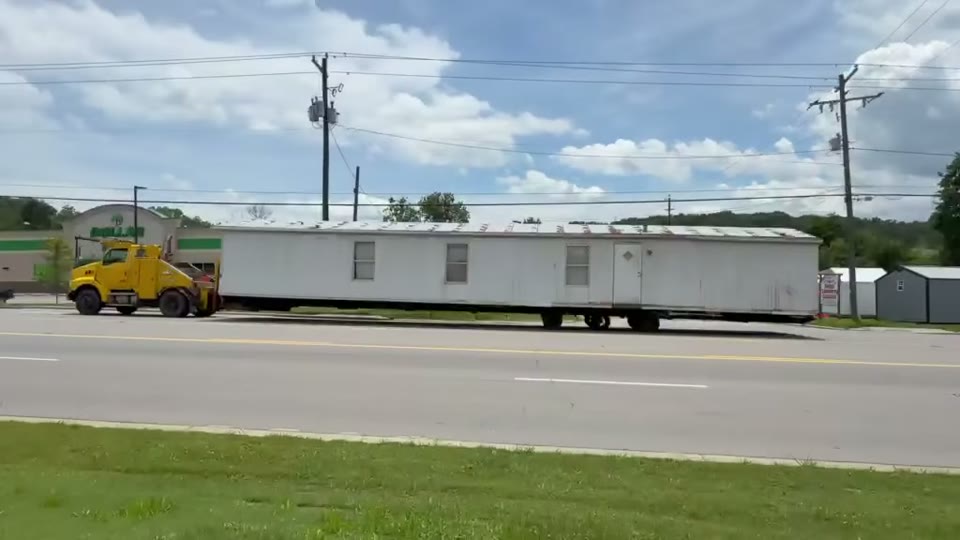
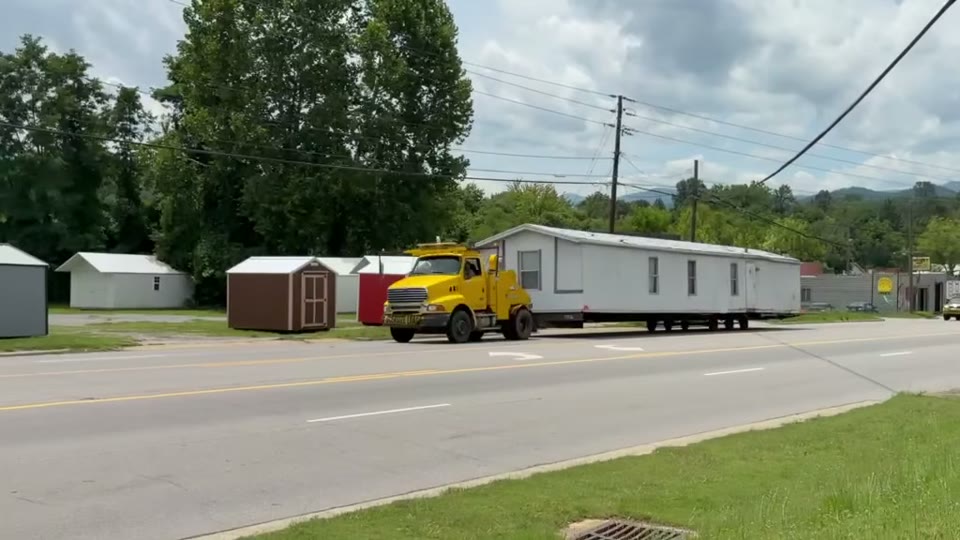
NCDOT oversize permit. A manufactured home is an oversize load under NCDOT rules. The NCDOT Publication MH-2 sets out the permit application process, route restrictions, and requirements for pilot cars, travel hours, and flagging. Single-section and multi-section homes have different requirements, and mountain routes through Transylvania County add routing constraints. Applications must be submitted before the move date — not the morning of. A home on a public road without this permit is a violation for the carrier.
County tax moving certificate (G.S. 105-316.1). Under NCGS Chapter 105, Article 18, no one may move a manufactured home without first obtaining a tax certificate from the county confirming property taxes on the home are current or that none are owed. The county tax office issues it. In Transylvania County, where many manufactured homes are titled as personal property, this step can surface unexpected back-tax situations. Better to discover a lien before move day than at the road.
| Required Item | Issuing Office | Timing | Key Notes |
|---|---|---|---|
| Manufactured Home Permit Application | Transylvania County | Before placement | Requires health dept approval and 911 address |
| Health Department Septic Approval | County Health Dept | Before county permit | New placement and existing system check both required |
| Parcel Map or Survey | Attached to application | Before county permit | Floodplain review may follow for low-lying lots |
| County-Assigned 911 Address | County Addressing Office | Before county permit | Contact planning or 911 addressing office |
| Tax Moving Certificate (G.S. 105-316.1) | County Tax Office | Before move | Confirms property taxes current on home |
| NCDOT Oversize Permit | NCDOT | Before move | Route, hours, pilot car rules vary by section count |
| Final Setup Inspection | County (installer calls) | After installation | Cannot occupy before inspection passes |
Setup Standards: Wind Zone, Anchoring, and What NC Requires
Transylvania County falls in HUD Wind Zone I under 24 CFR 3280.305, the federal standard that governs manufactured home structural design and anchoring loads. Zone I is the baseline designation for inland western North Carolina — lower than the coastal zones, but it does not make anchoring optional. The NC Manufactured Housing Board, administered through the NC Office of State Fire Marshal, oversees the state's manufactured housing installation program and requires that every installation follow the manufacturer's installation instructions or the state's alternate installation standard.
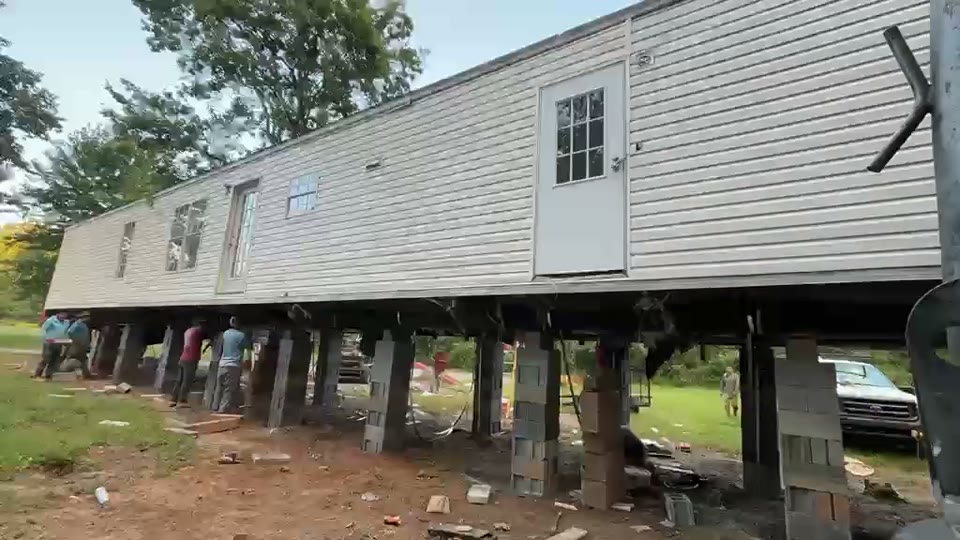
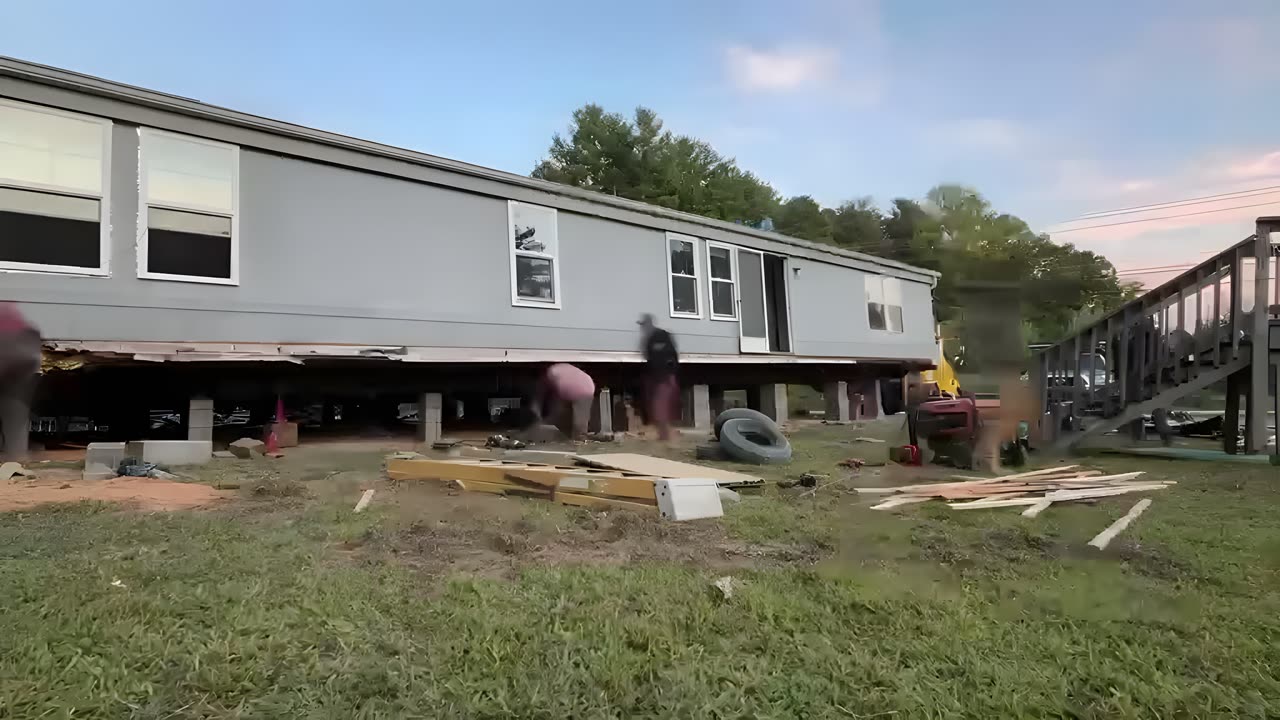
For Transylvania County lots, the practical question is pier configuration and tie-down pattern. A steep hillside lot may require a pier layout and depth that differs from the default flat-lot configuration; the manufacturer's installation instructions specify soil-bearing and slope requirements. The installer is responsible for documenting pier spacing and strap count before calling for the county inspection. That documentation matters — if the inspector can see the work matches the instructions, the inspection passes. If it cannot be verified, corrections cost time and money.
The NC state setup rules and what they mean for specific site conditions are detailed at NC mobile home set-up rules. For the full installation sequence from utility hookup to skirting requirements, see mobile home set-up and installation. These are relevant reading before the installer arrives, particularly on the differences between a temporary and a permanent foundation and whether the home will carry a real or personal property title — a distinction that affects both financing and future transfer.
The HUD manufactured housing program also maintains an oversight role through state monitoring. If a licensed installer departs materially from the approved installation standard, a formal complaint path exists through the state HUD monitoring contact.
The Final Inspection: Who Calls, What Gets Checked
After the home is set, leveled, anchored, and connected to utilities, the installer — not the homeowner — contacts the county to schedule the final installation inspection. This is a deliberate handoff in Transylvania County's process: the county needs the installer's confirmation that the work is ready before sending an inspector to the site. The homeowner does not schedule it; the inspector does not show up unannounced.
County inspectors at a manufactured home site typically review pier configuration and spacing against the manufacturer's instructions, tie-down strap installation and connections, utility connections including water, septic or sewer line, and the electrical service entrance, and site drainage conditions around the foundation. On a mountain lot in Transylvania County, drainage gets particular attention. With 16 federal disaster declarations over 1993-2026 — including a Winter Storm in 2026, a Fire declaration in 2025, a Tropical Storm in 2024, and hurricanes in 2023 and 2021 — county inspectors routinely see what poor site drainage does to a manufactured home foundation after a heavy rain event. Address drainage in the site preparation, not as a correction after the inspection flags it.
Any items the inspector marks as incomplete or incorrect must be corrected before the home can be occupied. Do not schedule utility activation, appliance delivery, or move-in expecting to occupy before the inspection passes. If the inspector finds a correction, the installer schedules a re-inspection; the homeowner waits.
When Permits Are Missing: What It Costs Later
A manufactured home placed in Transylvania County without the required permits is not a minor administrative loose end. It surfaces at every future transaction involving the property.
At resale, a buyer's inspector or lender appraisal will request the permit record. When there is none, the transaction stalls while the seller attempts an after-the-fact permit, or the buyer adjusts the offer to reflect the unresolved liability. In a county where many manufactured homes have changed hands within families over generations, unpermitted placements from prior owners are a known complication at title. At financing, lenders converting a manufactured home to real property typically require a certificate of occupancy tied to a passed county inspection — without it, personal property financing at higher rates may be the only option. At insurance, a claim touching the home or its site invites a review of whether the installation was permitted and inspected.
The tax certificate under G.S. 105-316.1 carries its own consequence: a home moved without it creates a record discrepancy in county tax files that can complicate a future title search or sale. The NCDOT oversize permit issue is more immediate — a carrier on a public road without it is a traffic violation that can stop the move in progress.
If permits were skipped by a prior owner, most counties have an after-the-fact permit path that requires an inspection of the current installation state. Start that process well before listing the property — resolving it during active due diligence is more expensive and more pressured than resolving it in advance. For what the moving permit itself requires before a truck is ever hired, see NC mobile home moving permit.