The cost picture for Haywood County mobile home re-leveling
Canton sits at the confluence of the Pigeon River and US-19/23 inside Haywood County, roughly midway between the ridge communities above Waynesville and the lower river basin stretching toward the Buncombe County line. A notable share of the county's mobile and manufactured homes line the river bottoms and ridge roads between Clyde and Waynesville, and the terrain creates two very different leveling jobs: low, wet floodplain land near the river, and sloped, fill-heavy terrain climbing toward the Blue Ridge. Both shift piers — just for different reasons — and the cost depends on which type of lot you have.
Re-leveling a mobile home in Canton typically runs $400 to $1,200 for a single-wide and $700 to $2,000 for a double-wide. If the crew finds failed piers or deteriorated concrete pads under the home, replacement puts the job in the $2,500 to $5,000 range. See the full NC leveling cost guide for the variables that move a job from the low end to the high end.
| Job scope | Typical market range |
|---|---|
| Re-leveling, single-wide (labor only) | $400 – $1,200 |
| Re-leveling, double-wide | $700 – $2,000 |
| Replacing failed piers or pads | $2,500 – $5,000 |
These are typical market ranges for this area, not quotes. The actual number depends on how many piers need adjustment, how much the home has shifted, and whether the marriage line on a double-wide requires re-alignment. A crew that measures the home and inspects under it before naming a price is worth waiting for.
Symptoms worth taking seriously on a river-bottom or ridge lot
Mobile homes on Haywood County's low-lying lots absorb moisture year-round; homes on the slopes deal with freeze-thaw cycles and fill-soil settling. In both cases, the first symptoms are easy to dismiss: doors in the main bedroom or kitchen that used to latch cleanly now need a shoulder. A soft bounce in the floor near the center of the home. Gaps at the skirting on one end where it was flush the year you moved in. Cracks following the seam between wall panels or opening at the marriage line on a double-wide.
None of these are cosmetic. They are the home signaling that its support has moved. A gap you can slide a quarter into — and that you could not last spring — is structural movement, and waiting for it to grow is waiting for the cost to increase. The re-leveling service page covers what a proper under-home inspection includes and how to tell a straightforward leveling job from one that involves pier replacement.
What the crew actually does under your home
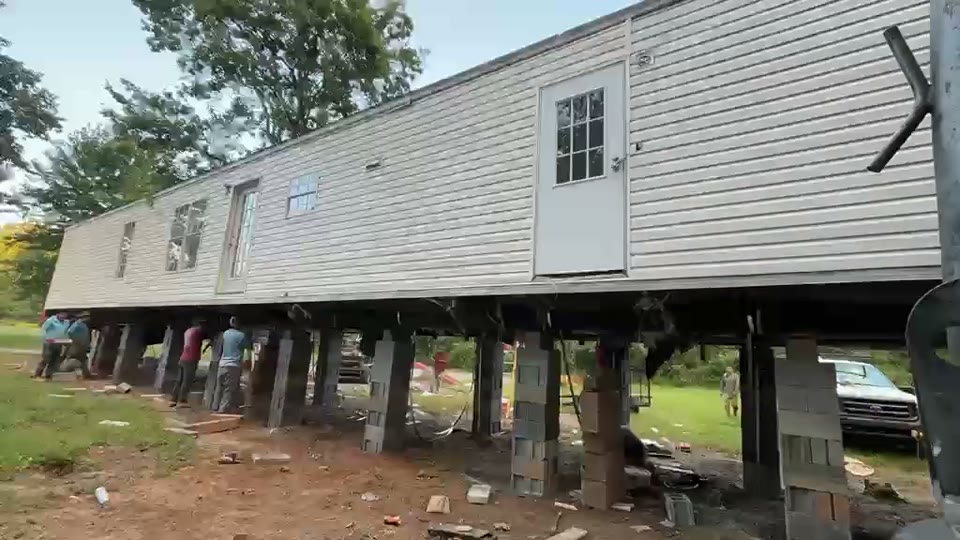
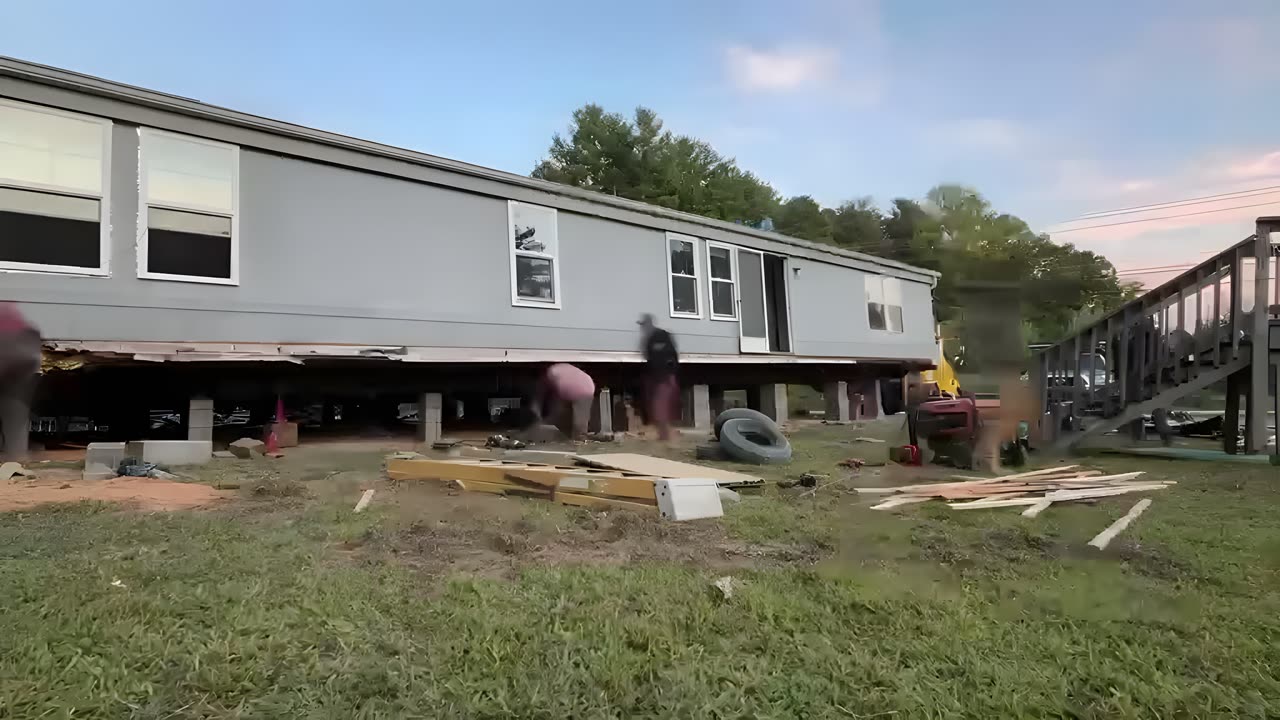
Re-leveling a manufactured home is a precision mechanical job, not a general labor job. A qualified crew crawls the pier field, measures the actual height of every support against a reference point, and maps where the home has moved before touching anything. The outrigger beams on a single-wide and the marriage beam on a double-wide are the critical load paths — those get checked first, and then the crew works outward to the perimeter piers.
Piers are adjusted using hydraulic jacks that raise the beam in increments small enough to avoid cracking interior walls or racking the roof. After adjustment, each pier is inspected for footing integrity: a pier sitting on a rotted wood pad or a spalled concrete block will not hold the correction. Under HUD standards for manufactured homes, the support system — piers, pads, and anchoring — is part of the home's certified installation requirements. Haywood County falls under HUD Wind Zone I (24 CFR 3280.305), so tie-down and anchorage specifications for that zone apply to any new setup work and are worth confirming whenever a home is being re-leveled as part of a complete support review.
On double-wides, the marriage line requires its own check after the pier work is complete. A home that has racked unevenly will show unequal gaps at the center seam, and correcting those requires a sequenced adjustment rather than a single lift at any one point.
Why Haywood County homes shift more than most
Haywood County has 19 federally declared disaster events on record spanning 1973-2026, including Hurricanes in 2020, 2021, and 2023, a Tropical Storm in 2024, and a Winter Storm in 2026. That pattern — back-to-back high-water years punctuated by hard freezes — does cumulative work on manufactured home foundations. Saturated soil loses bearing capacity; freeze-thaw cycles heave piers set in clay-heavy fill; and repeated flooding undercuts the concrete pads that piers rest on.
The Pigeon River corridor through Canton has seen flood stages that reach mobile home parks before they reach the center of town. Homeowners on the lower-lying roads between Canton and Clyde are often dealing with subsidence from repeated wetting and drying cycles — soil that expands when saturated and contracts as it dries, working the piers up and down with each major rain event. That is a different repair than a ridge-lot home that settled once on poorly compacted fill. When you describe your lot to a crew, say whether it has flooded — even once — in recent years. The answer changes the repair conversation.
Permits, licensing, and what to ask before booking
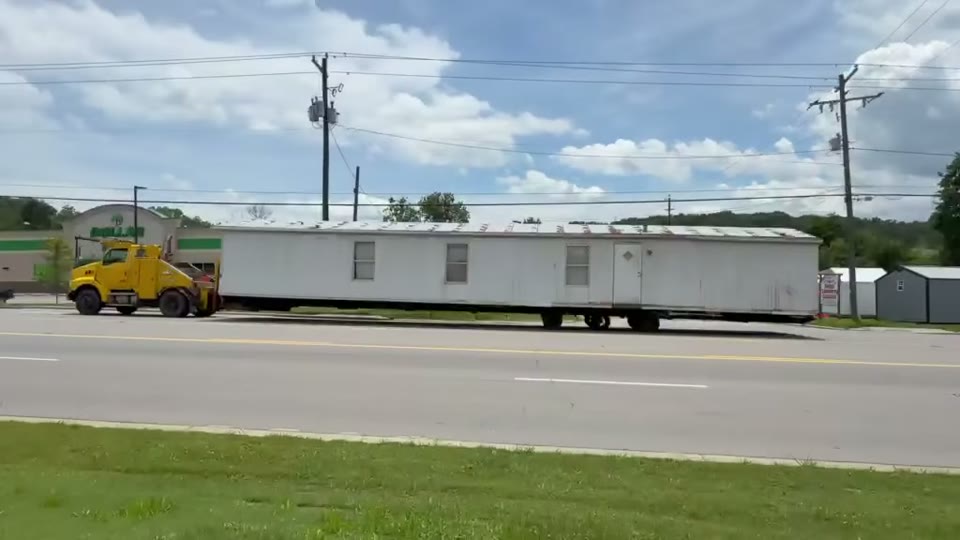
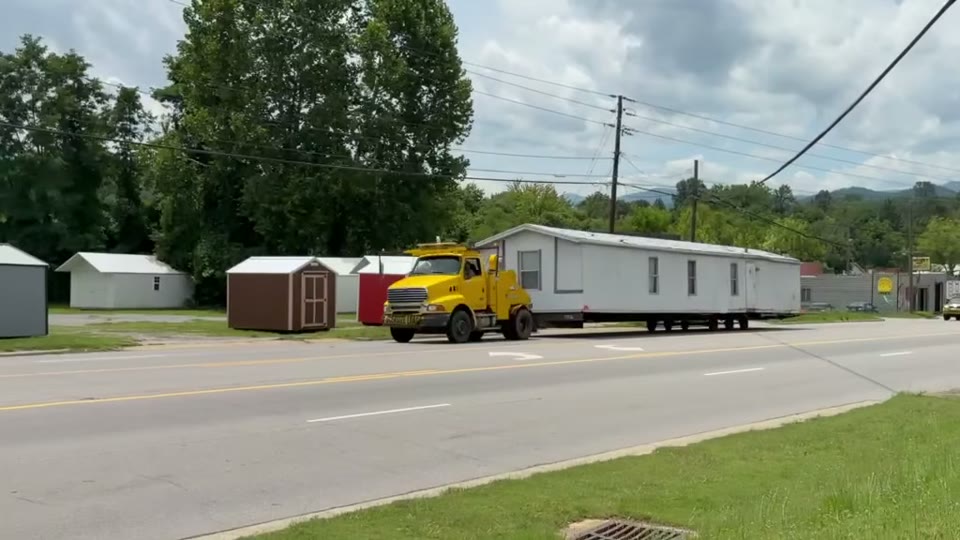
Re-leveling an existing home on its existing site does not typically require a move permit. But if the home is being relocated or repositioned on a new site, Haywood County requires a county permit and NCDOT requires an oversize/overweight permit for any unit moving on public roads. The NCDOT Publication MH-2 governs route approval, escort vehicle requirements, and permit conditions for every mobile or modular home move in the state. Because the Haywood County permit office process was not independently verified, call the county directly before any move day to confirm current requirements.
Any contractor doing setup or leveling work on a manufactured home in North Carolina is subject to oversight by the NC Manufactured Housing Board, which sets licensing and conduct standards for manufactured home contractors statewide. Before booking a crew, ask whether they hold a current NC manufactured housing contractor license and ask for proof of liability insurance. A crew that cannot produce either document is not worth further conversation.
One administrative item worth sorting before any permitted move: North Carolina law under NCGS Chapter 105, Article 18 requires that property taxes on the home be paid and current before a moving permit is issued. Confirm that status early — a tax lien discovered on move day will delay the job. If you are evaluating a full relocation rather than an in-place re-leveling, the Canton mobile home movers page covers what a permitted move involves and what to budget for it.