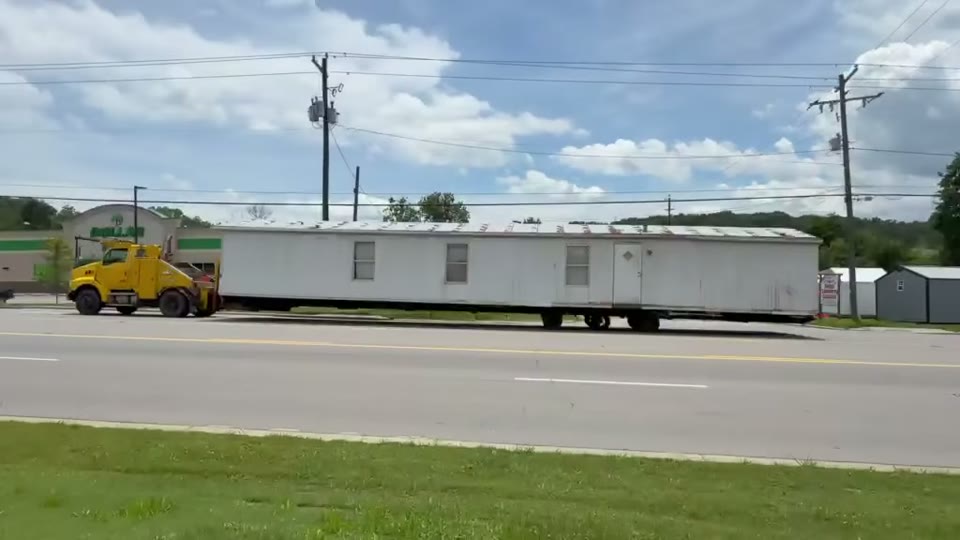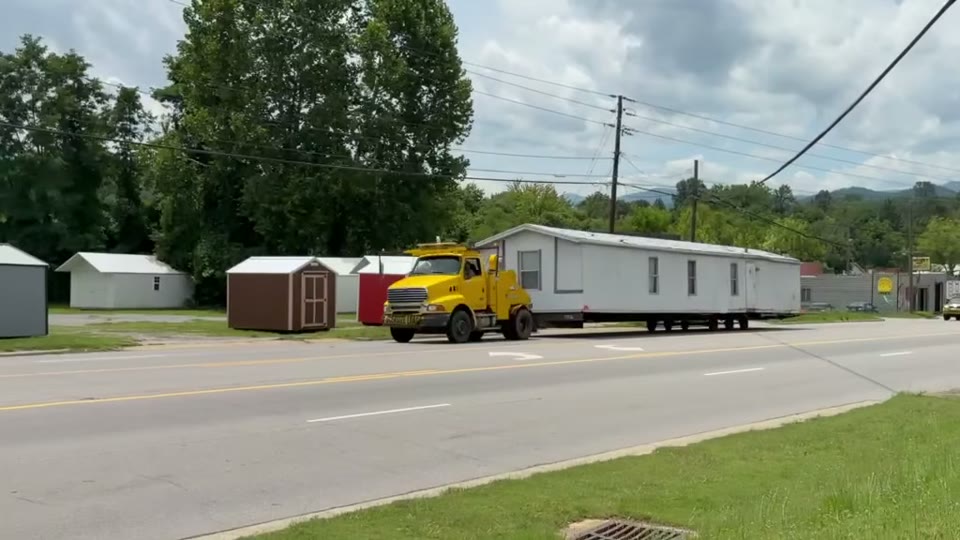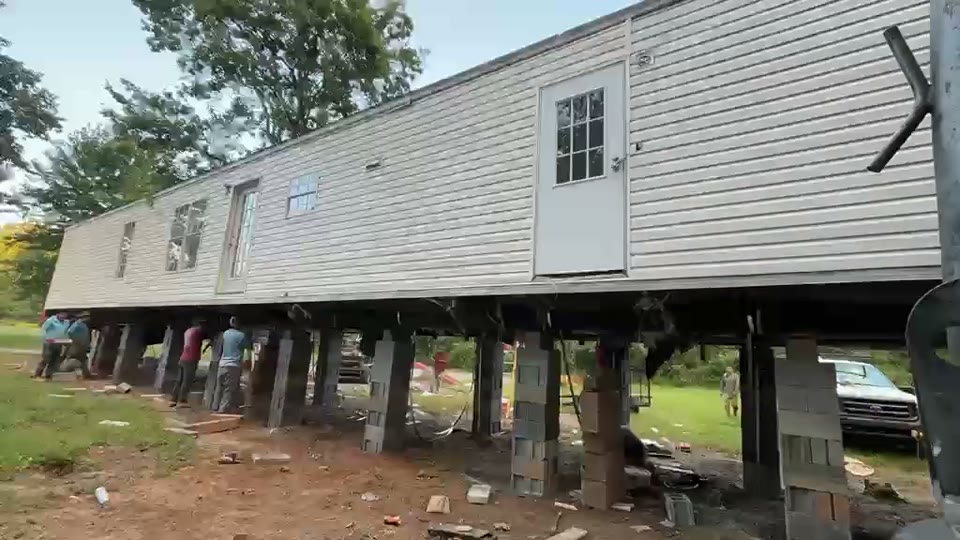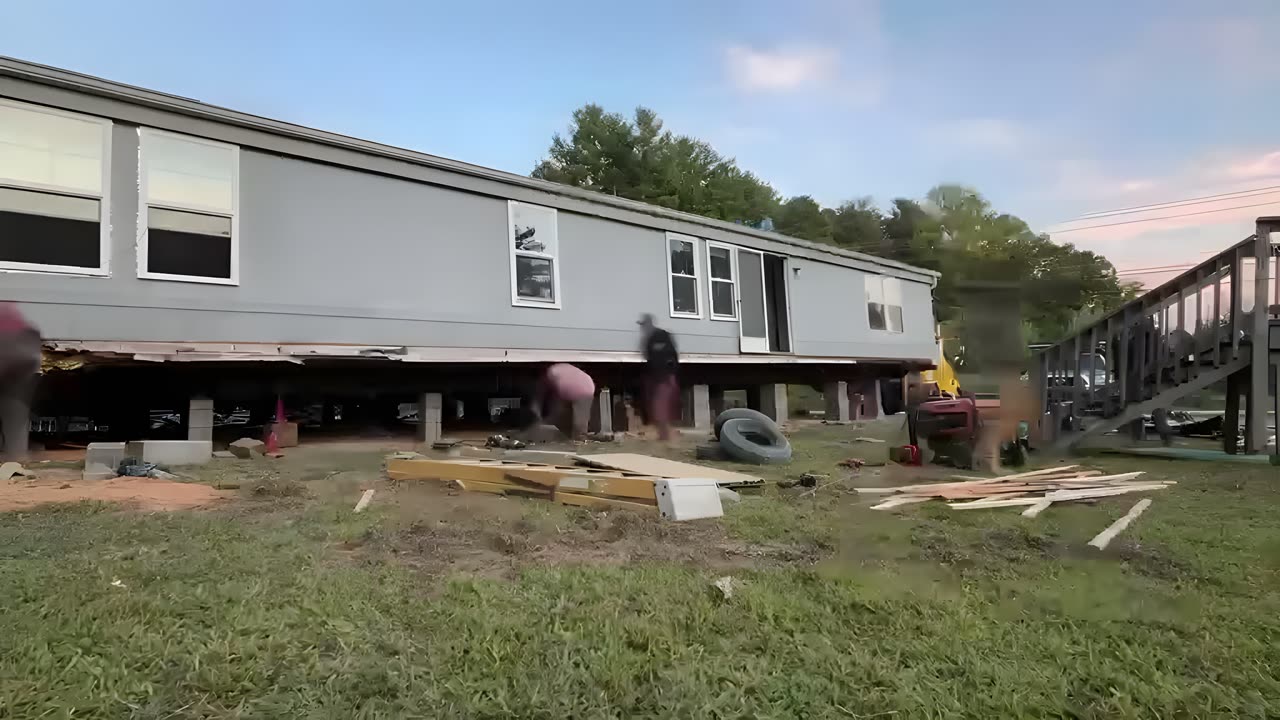
The work that begins when the truck pulls away
Transylvania County sits in a corner of the Blue Ridge where lot grades are rarely flat, soil shifts between clay and decomposed granite from one parcel to the next, and rural placements far outnumber subdivision lots. Getting a manufactured home to its new address in Brevard NC is the transport job; setting it down correctly is a different job — and the one that determines how the home performs for decades.
The installation sequence on any Brevard lot: lay and level the pier pads, set the piers at manufacturer-specified spacing, block and shim to achieve level across the entire frame, install anchor straps, and close the perimeter with skirting. On a double-wide, the marriage wall must be sealed and both units secured before any other work can be finaled. Every step of this sequence is governed by the certification and installation standards administered by the NC Manufactured Housing Board — the state body that licenses installers and defines what a lawful installation looks like in North Carolina. The job is not done when the home looks level; it is done when the county inspector clears it.
What installation runs around Brevard NC
The table below covers the set itself — piers, pads, blocking, leveling, and tie-downs. Utility connections and skirting are separate scope items that most installers quote alongside the set.
| Scope | What's included | Typical range |
|---|---|---|
| Single-wide, level or gentle grade | Piers, pads, blocking, leveling, tie-downs | $1,500 – $2,200 |
| Single-wide, moderate slope | Above plus extra blocking depth and shimming | $2,000 – $3,000 |
| Double-wide, level or gentle grade | Piers, pads, blocking, leveling, marriage wall, tie-downs | $3,000 – $4,500 |
| Double-wide, moderate slope | Above plus extra blocking depth and shimming | $4,000 – $6,000 |
Slope is the main cost driver on a Transylvania County lot. A job that quotes at the low end on flat ground can reach the top of its range when a lot drops several feet across the home's footprint — a common condition on the hollows and ridge parcels around Brevard NC. For a broader look at what drives costs across the state, see the NC mobile home installation cost guide.
What Transylvania County requires for a new placement
Transylvania County's permitting path for a new manufactured home placement moves in sequence, and each gate must clear before the next opens. For lots served by a private septic system — which covers most rural parcels outside Brevard proper — the county Health Department must confirm the system is correctly sized and located before the building permit issues. That sign-off is not a formality; a system designed for one bedroom count may not clear for a larger double-wide without modification.
The Manufactured Home Permit Application itself requires a parcel map or survey showing where the home will sit on the lot, a county-assigned 911 address, and documentation from the home's HUD data plate identifying its wind zone, thermal zone, and roof load rating. Once the permit is in hand and the set is complete, the installer contacts the county to schedule the mandatory on-site inspection. Piers stay exposed and skirting stays off until the inspector clears the work — enclosing the piers before inspection is a code violation, not a time-saver.
For homes being moved into Transylvania County, the transport requires the tax-paid moving permit under NCGS Chapter 105, Article 18. The route and oversize load requirements for the haul itself are governed by the NCDOT MH-2 permit process.
Anchoring, wind zone, and the county's storm record
Under HUD manufactured housing standards at 24 CFR 3280.305, Transylvania County falls in Wind Zone I — the baseline tier for anchor counts and strap angles. Zone I is the lightest federal specification, but a mountain lot in Transylvania County is not a flat coastal plain. Hollows channel wind from unexpected directions; ridge placements create open exposure that manufactured homes on flat ground never encounter. Building to bare minimum anchor count is a different calculation here than it reads on paper.
Transylvania County has 16 federally declared disasters on record spanning 1993-2026, including hurricanes in 2023 and 2021, a tropical storm in 2024, and a winter storm in 2026. Each of those events loaded manufactured home roofs, walls, and anchoring systems in ways that correctly set homes handled — and under-anchored homes sometimes did not. The anchor-and-strap work is not the expensive part of an installation, but it is the consequential part.
Connecting utilities and selecting an installer in Brevard NC
Utility connections — the electric service entrance, water line, and sewer or septic tie-in — each carry their own inspection milestone and are coordinated through the county building department and the relevant utility provider. Most experienced installers schedule the skirting run after utility inspections close, keeping the perimeter open for access and avoiding the cost of pulling it apart for a follow-up visit.
For installer selection, NC Manufactured Housing Board certification is the starting check — verify it before work begins, since uncertified installation voids HUD warranty coverage and creates real problems at the county inspection. Beyond the certificate, ask specifically about experience with poured pads on sloped ground. A lot that drops six to eight inches across the home's footprint requires deeper blocking and more precise shimming than a flat site, and that condition is routine across Transylvania County. A qualified installer asks about lot grade before giving a number.
The mobile home setup and installation guide walks through each stage from transport to final county sign-off. If an existing home needs re-leveling rather than a full new set, mobile home leveling in Brevard NC covers that process separately.