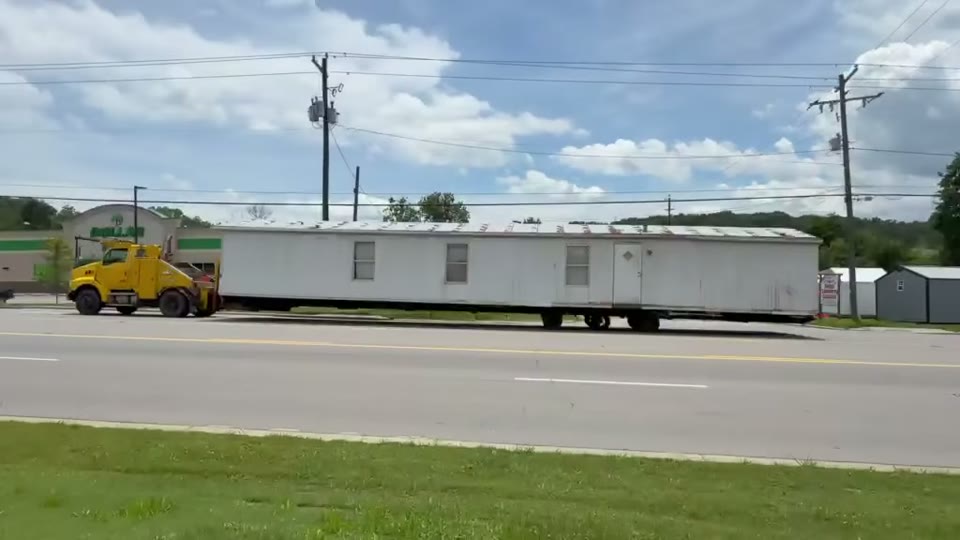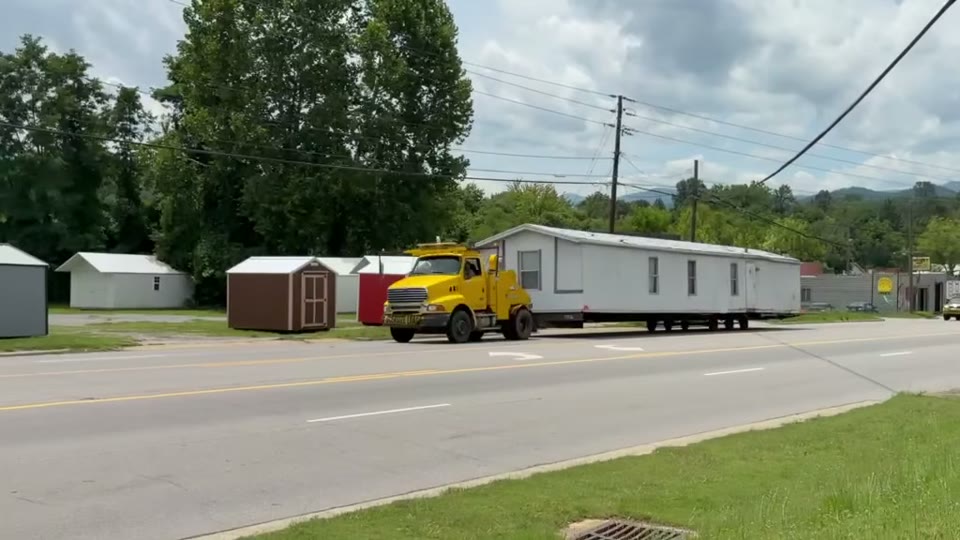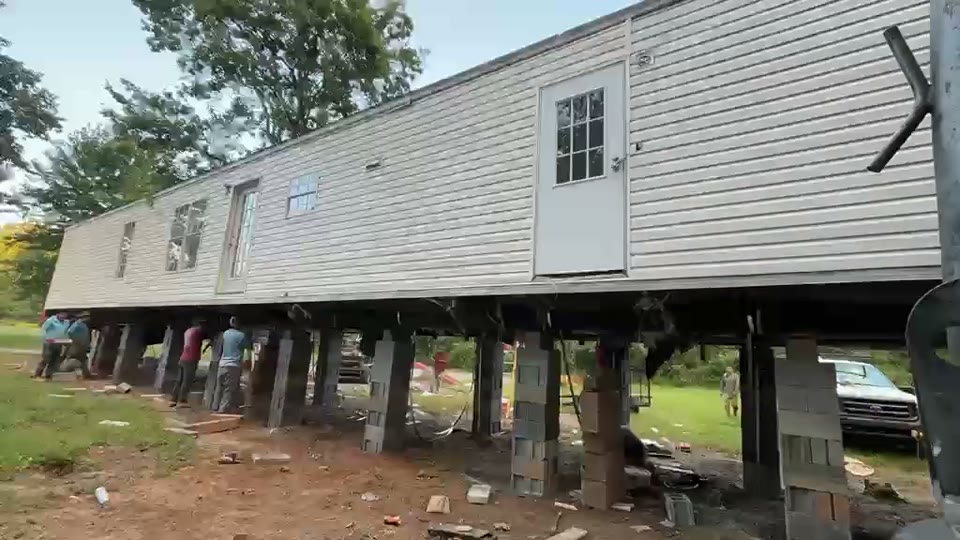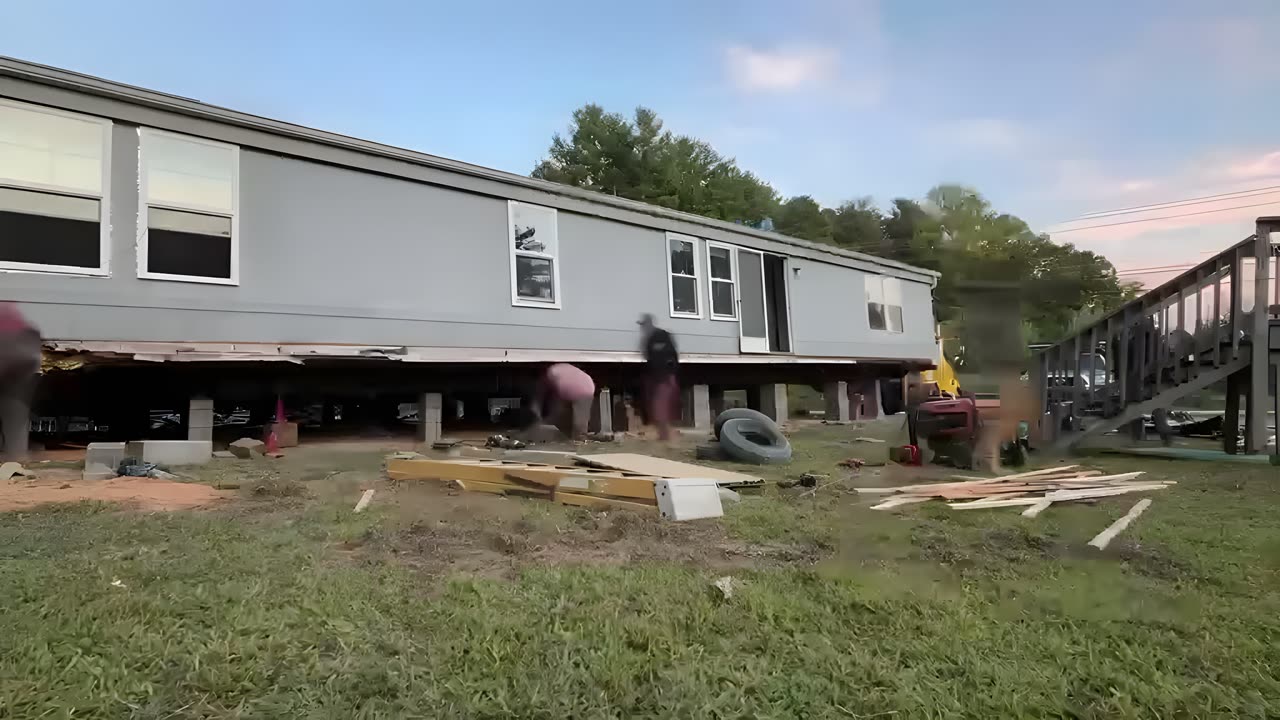
What Buncombe County terrain does to a mobile home move
Moving a mobile home in Buncombe County is not what a flatland company quotes. Asheville NC sits in a bowl of ridges where a straightforward twenty-mile trip can mean the I-26 corridor, a state road with steep grades, or a private driveway that bottoms out a low-loader on the first turn. Most park-to-park moves here cross elevation change that companies pricing from a mileage table never account for — and that difference shows up at invoice, not estimate.
Buncombe County's manufactured housing stock includes older single-wides tucked into wooded hollows, park communities along Highway 70 and the French Broad River corridor, and rural properties where the approach road is the hardest part of the job. That character shapes every step: how a mover surveys the new site, how they sequence the disconnect and reconnect, and whether the crew has actually worked this county or is bidding it from experience gained in the piedmont.
This page answers what matters before you book: what a complete quote should contain, which permits are not optional under NC law, what Zone I tie-down standards require at the new site, and how to spot a full-scope bid versus one that will surprise you at the end.
What a realistic quote covers — and where prices break
The gap between the low bid and the full-scope bid in this market can run several thousand dollars — not because one company is dishonest, but because they are quoting different scopes. The table below shows what each layer of service typically adds in the western NC market.
| Scope | Typical range |
|---|---|
| Local transport only (under 20 miles, no setup) | $1,200 – $2,800 |
| Transport + block and level | $2,500 – $4,500 |
| Transport + block, level, and tie-downs | $3,500 – $6,000 |
| Full-service (permits, transport, complete setup) | $5,000 – $8,500 |
| Difficult access or double-wide surcharge | add $1,500 – $3,500 |
A quote that separates transport from setup is not automatically a problem — as long as every scope element is named and priced before you sign. What is a problem: a quote that makes no mention of permits, tie-downs, or site prep at all. See the full regional cost breakdown at what it costs to move a mobile home in NC.
Double-wides move in two sections and re-marry at the destination — a skilled job that most standard quotes price separately. Steep driveways, soft ground after rain, and utility disconnects that require a licensed contractor are legitimate line items; ask for them explicitly so they appear in writing before work begins.
Permits no legal Buncombe County move skips
Two documents must exist before a mobile home legally leaves its current address in North Carolina. The first is an oversize transport permit from NCDOT. The MH-2 publication details the escort requirements, routing rules, and timing restrictions that apply specifically to mobile and modular home transport. A mover that never mentions this permit is either pulling it without telling you or not pulling it — ask which.
The second document is a tax-clearance certificate. Under NCGS Chapter 105, Article 18, a manufactured home cannot legally move until local property taxes are confirmed paid. The county issues this certificate; a mover unfamiliar with the process is telling you something about how often they actually work in NC.
Setup at the destination requires a separate permit under the authority of the NC Manufactured Housing Board. The setup inspector — not the mover — has final authority over whether the home is blocked, leveled, and anchored to code. Ask whether setup is performed by someone holding a current NC setup certification and whether the destination permit is included in the quote or your responsibility to pull. Our guide to licensed mobile home movers in NC covers how to check credentials before you call.
Four questions to put to every company
These questions are worth asking in the first conversation, not the day before the job.
Can you provide an insurance certificate today? A working mover carries active liability and cargo coverage and can send proof the same day. A verbal assurance is not a certificate, and a company that delays on this request is signaling something.
Who performs setup and leveling at the new site, and do they hold an active NC setup certification? Transport and setup are sometimes handled by different crews. Make sure both scopes are named in writing before you sign.
Does your tie-down plan meet HUD Wind Zone I standards? Buncombe County falls under HUD Wind Zone I (24 CFR 3280.305), the baseline anchor specification for manufactured homes. A company that cannot identify the wind zone they are working in is not positioned to certify a compliant installation.
What is your policy if weather delays the move? Buncombe County has recorded 19 federally declared disaster events over 1973-2026, including storms in 2020, 2021, 2023, 2024, and 2026. A company regularly working western NC should have a clear, written answer on delay, rescheduling, and liability for a home caught mid-transit. The western NC moving guide covers what mountain weather adds to scheduling and site prep.
Reading two competing bids side by side
When you have two quotes in hand, three line items reveal the most: whether permits are included or excluded, whether setup and tie-downs are itemized or collapsed into a vague total, and whether there is a written clause addressing access difficulty. A bid that omits all three may be cheaper on paper and is almost always more expensive at invoice.
The honest comparison method: list every scope item from the more detailed quote and ask the second company to price each line individually. Bids that unravel under that question — the company suddenly needs to check on a few things before matching a number — are telling you the original figure was incomplete.
A well-structured written contract for a Buncombe County move should name the origin and destination addresses, which party is responsible for the NCDOT permit, which party handles the tax-clearance certificate, the full setup scope (block, level, skirt, tie-downs), the payment schedule, and a delay and damage clause. If any of those items are missing, add them before you sign — or take note of why a company resists including them.