What re-leveling costs in the Cullowhee area
Around Cullowhee, most mobile and manufactured homes sit within a mile of the Tuckasegee River — on valley-floor lots prone to saturated ground, on slope lots off side roads where fill and grade affect drainage, or in the rental corridors near Western Carolina University where deferred maintenance is the norm. Those three conditions show up in the quote. Pricing for mobile home leveling in Jackson County follows from what is actually failing, not the home's size alone:
| Scope of Work | Typical Range |
|---|---|
| Single-wide re-level — shim, adjust, and confirm | $400 – $1,200 |
| Double-wide re-level — both sections, marriage-line check | $700 – $2,000 |
| Pier or pad replacement (partial or whole-home, when pads have failed) | $2,500 – $5,000 |
Homes that have served as rentals for multiple years often land toward the higher end of each range. High turnover means the small signs that an owner-occupant would catch go unreported until they become structural problems. Homes on valley-floor lots with poor surface drainage, or on cut lots where fill was placed uphill, tend to shift more than homes sitting on solid bottomland or level cleared ground.
The full NC cost breakdown covers what drives individual line items, from pier count to the access fees that apply on roads limiting equipment size.
What settling looks like from inside the home
Cullowhee sits in the Tuckasegee River valley, with the ridges of the Balsam Range rising on either side and NC-107 running the valley floor. Mobile and manufactured homes in the area occupy both the flat bottomland and the steeper slope lots off side roads — two different ground conditions, two different failure modes, but often the same signs from inside the house.
The tells worth acting on: a door that latched reliably last year and now sticks or won't catch; floors that feel like they tilt toward one wall; gaps that have opened at the skirting where it once sat flush to the ground; and on double-wides, cracking or visible separation along the marriage line where the two sections meet. Any of these means the pier support has shifted. Movement that begins slowly does not reverse on its own.
Jackson County's federal disaster record spans 17 declared events across 1973-2026, including Winter Storm (2026), Tropical Storm (2024), and hurricanes in 2023, 2021, and 2020. Every one of those events put sustained water against pier pads and eroded the soil beneath them. A home that came through those events without visible interior damage may still be sitting on pads that are quietly failing. What a storm begins, the next wet winter tends to finish.
How the work actually gets done
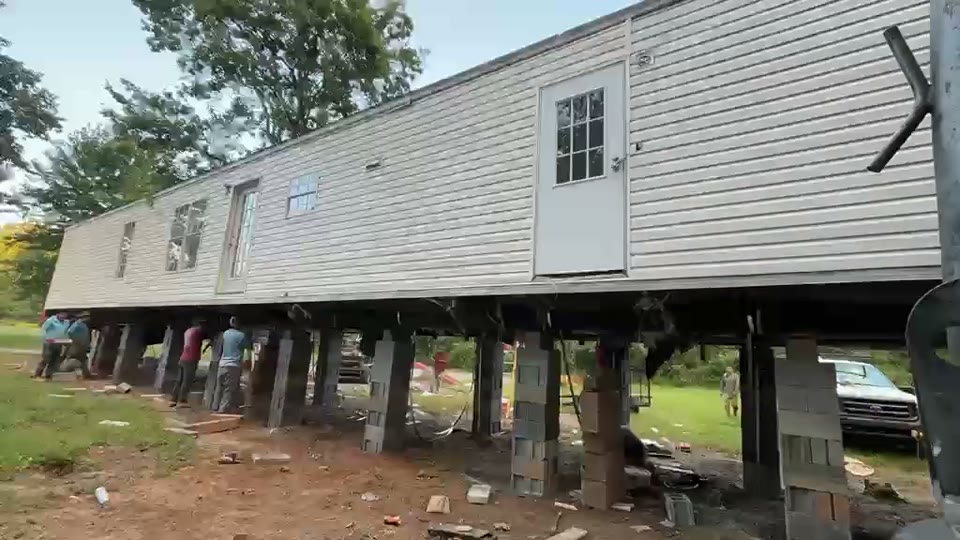
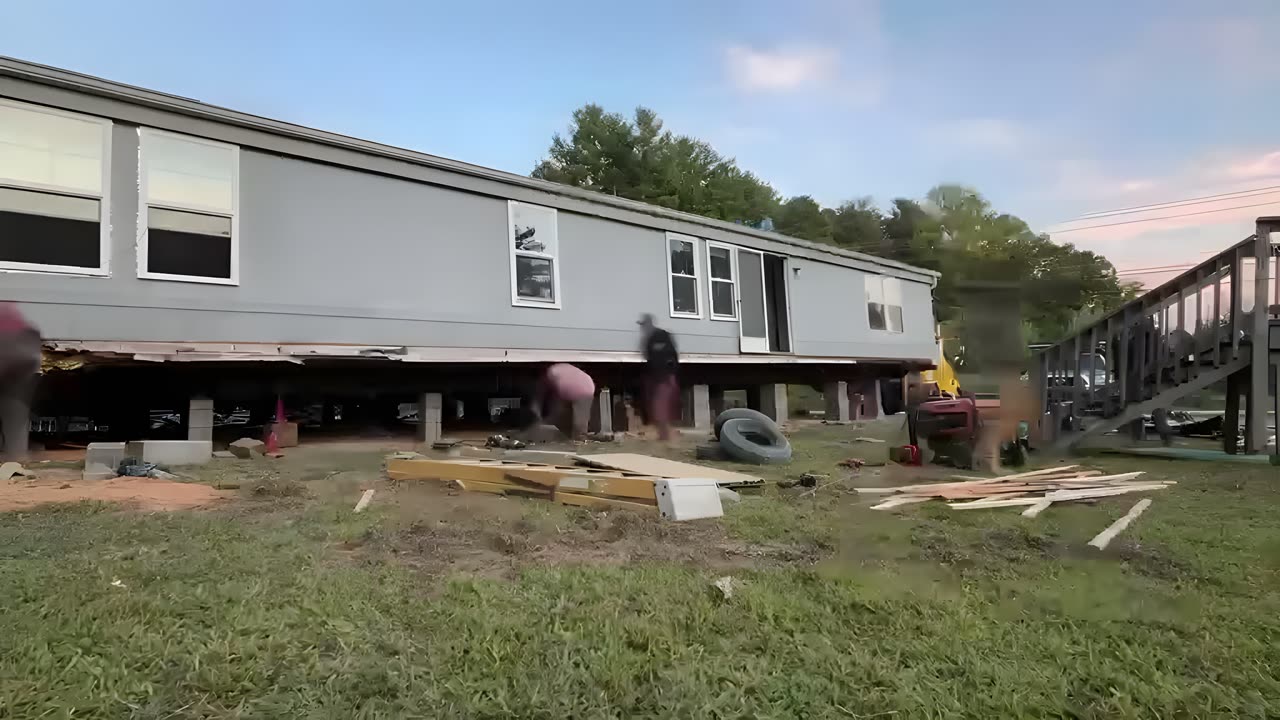
Re-leveling a manufactured home starts with a full walk of the perimeter — every pier block checked for cracking, every pad examined for tilt, sunken corners, and erosion at the base. Once the crew understands what is failing and where, they use hydraulic jacks to lift the home in a controlled sequence that avoids twisting the frame. Shimming brings each support stack to level; the jack comes down and the load transfers back through the corrected position. Done in the right order, a proper re-level shows up only in the doors and floors that return to where they belong.
Jackson County falls in HUD Wind Zone I under 24 CFR 3280.305, which governs how the anchoring and tie-down system for homes in this area must be engineered. A re-level that ignores the anchor system is incomplete: if straps or ground anchors were damaged by soil movement or storm loading, a level floor over failed anchors is a problem waiting for the next wind event. The NC Manufactured Housing Board sets the installation standards that apply statewide and defines what a proper post-leveling inspection must include.
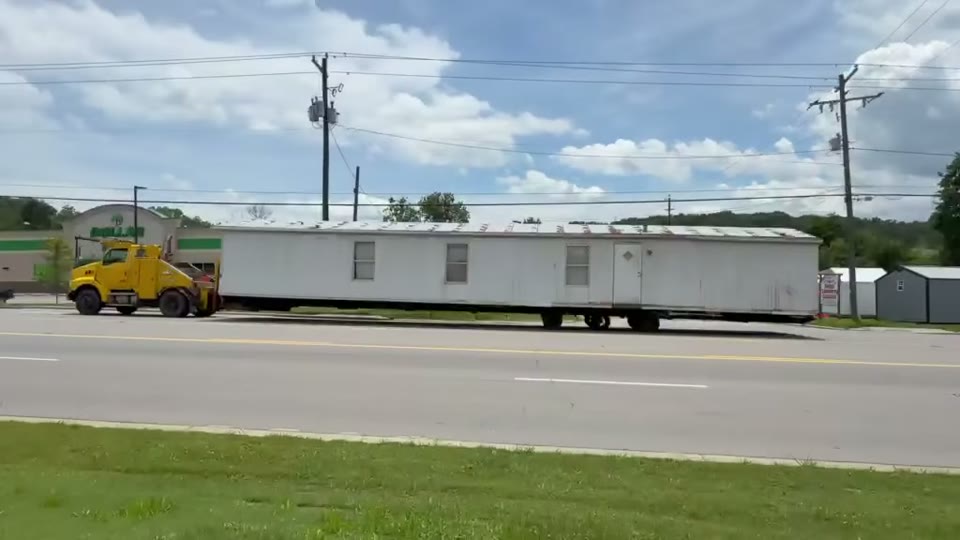
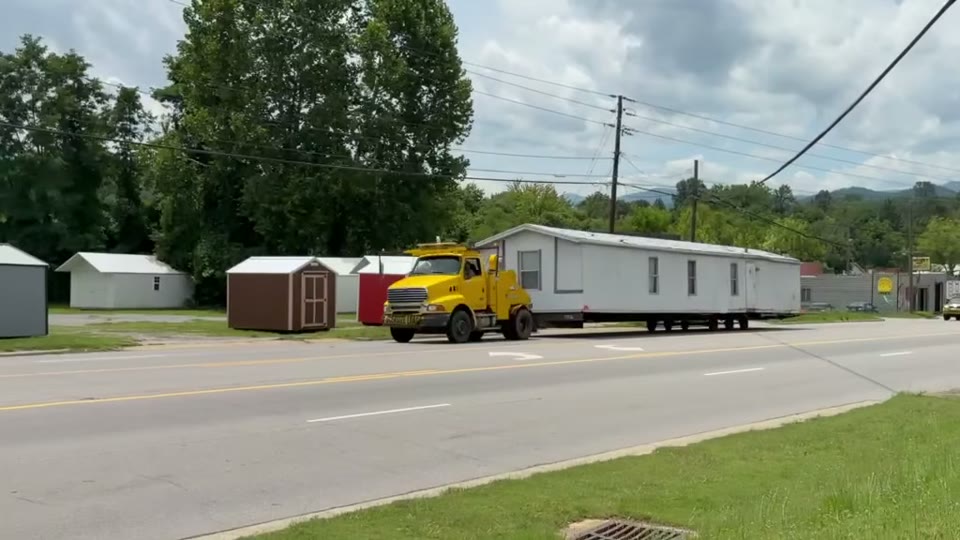
For homes that need to move to a new lot before setup, the scope broadens considerably. See mobile home movers serving Cullowhee for what transportation and full site setup together involve.
Permits and approvals in Jackson County
A re-level on an established lot that stays in place generally does not require a new moving permit. The picture changes as soon as the home is transported. Any manufactured home moving on a public road in North Carolina requires an NCDOT Publication MH-2 oversize and overweight permit before it rolls — this covers the move itself, not the setup at the destination lot.
Jackson County requires a land development permit before a home is placed on a lot, an approved sewage disposal method on record, and a utility letter where a community water or sewer system serves the lot. Inside any zoning district, zoning sign-off comes first — before permits and before moving. Sylva, Dillsboro, Webster, and Forest Hills each maintain their own overlay requirements on top of the county baseline. What clears the county process cleanly may require separate steps inside those municipalities; treat the specific town's office as the first call, not an afterthought.
If ownership or title is changing as part of the relocation, NCGS Chapter 105, Article 18 requires a tax-paid moving permit — evidence that property taxes on the home are current — before the home can legally leave its current site. A title transfer and an active tax lien on the same home will stop the move at the county level.
Questions worth asking before the crew shows up
The roads that reach many manufactured home lots in the Cullowhee area — narrow side roads off NC-107 climbing to slope lots or winding into the valley hollows — are not equipment-friendly. A leveling crew that has not worked these roads may arrive with gear that cannot reach the home, or may not account for the access difficulty in their quote. Ask specifically whether the contractor has completed re-level jobs along the NC-107 corridor or the Tuckasegee valley, not just somewhere in Western North Carolina generally.
The questions that separate a real scope from a flat-rate guess: Do you walk the full perimeter before quoting? What is your lifting sequence on a double-wide where the marriage line has cracked? What happens if you start jacking and find a pad has completely failed? A contractor who answers with a specific process has done this work before. One who offers a price before seeing the home likely has not thought it through.
Before the crew arrives, know where every pier is located — a layout sketch from the original installation if one exists, or a walk with the contractor beforehand. The re-leveling process guide covers what a proper first visit includes and what to do when the quotes you receive vary more than you expected.