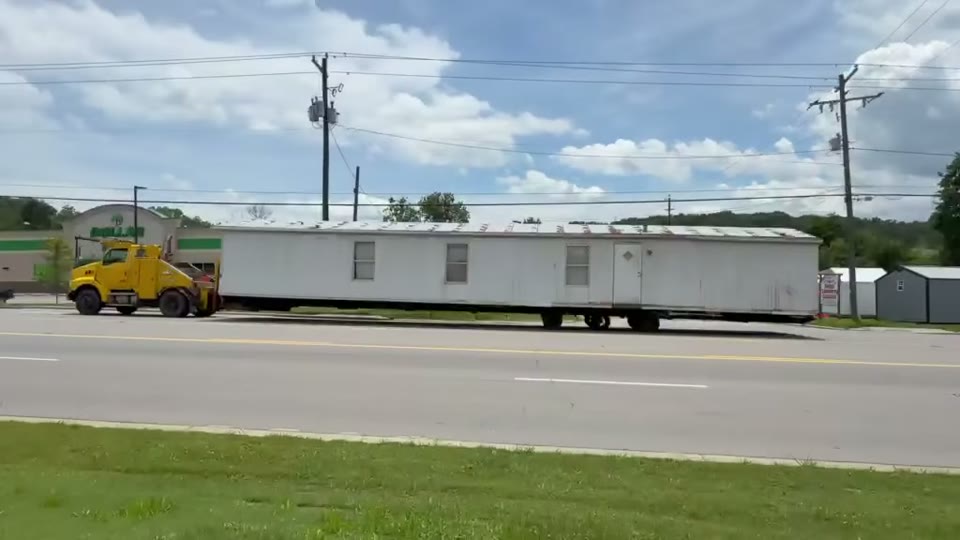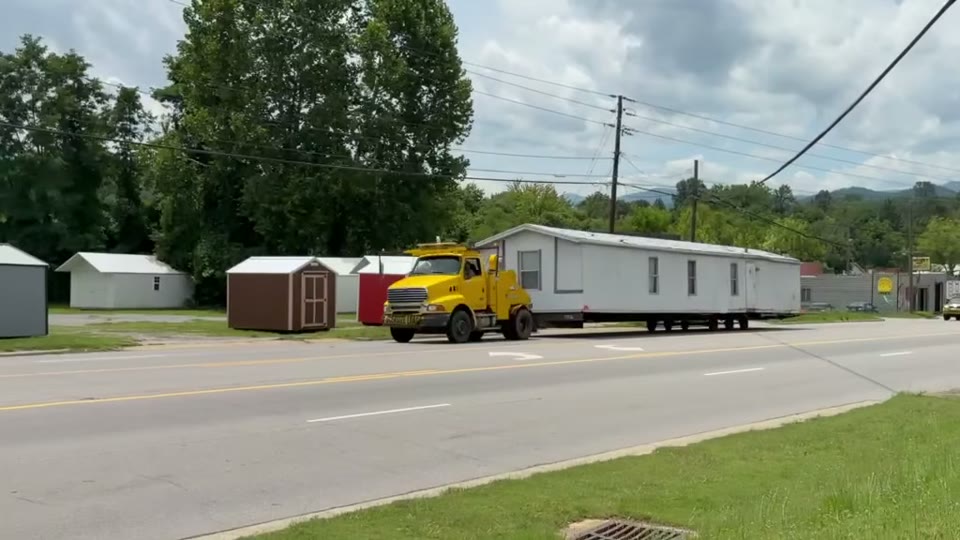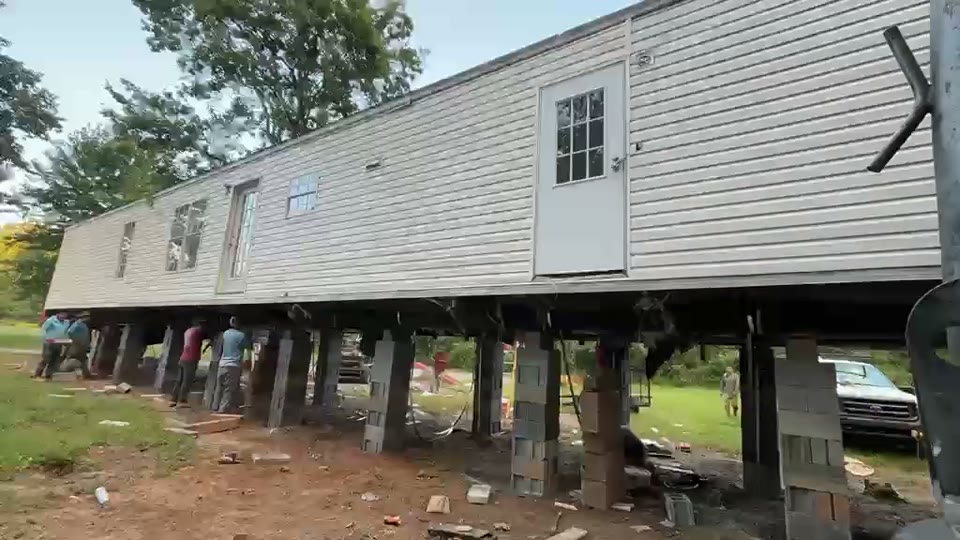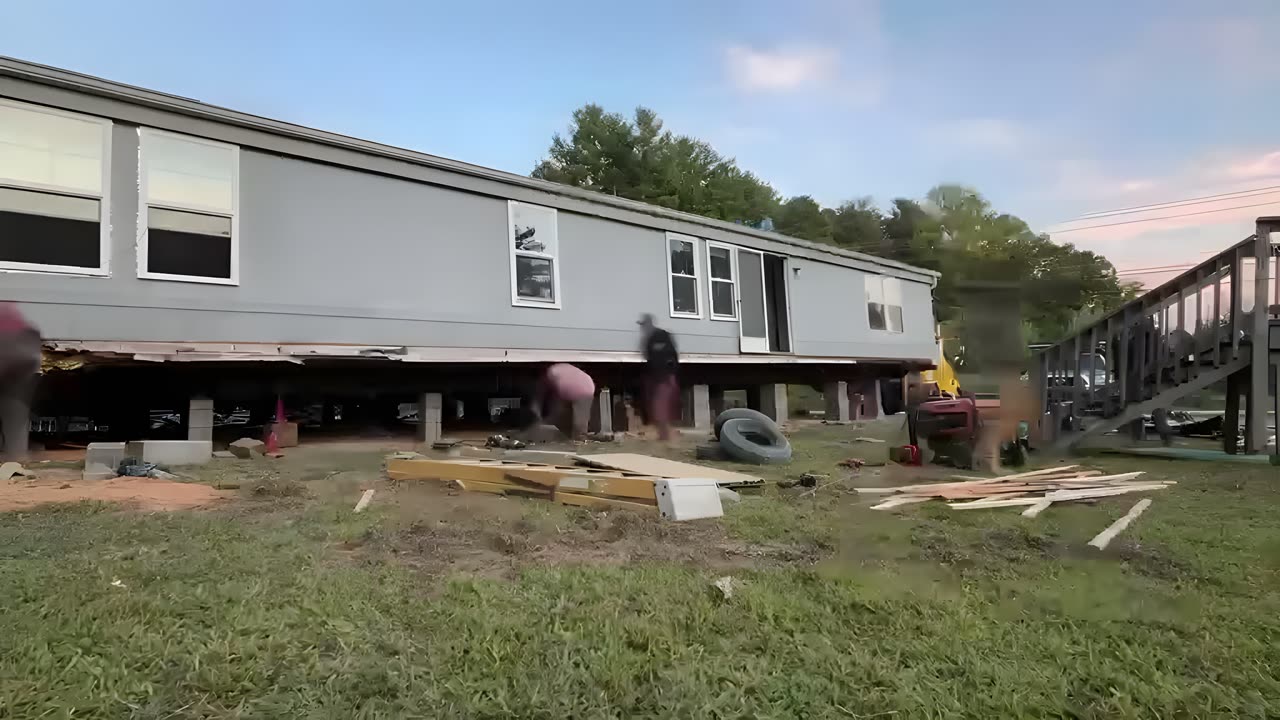
Two ways a mobile home leaves a lot
Buncombe County's mix of aging rural lots, creek-side properties, and homes tucked behind narrow mountain roads means that mobile home demolition and removal in NC rarely follows a flat-rate script. Most owners clearing a lot are clearing it for something — a replacement manufactured home, a site-built structure, or land that needs to be ready for an heir. The first question is never the cost; it's whether the home can still travel.
A home with structural integrity and a driveway that a wide-load transport can reach is a candidate for haul-off — it leaves intact under an oversize permit, gets resold, donated, or retired elsewhere, and the lot is cleared without a landfill run. A home with rotted floors, collapsed sections, or a lot that no transport rig can navigate is a demolition job: it comes down in sections, metal and aluminum get sorted for recycling where scrap value justifies it, and the rest goes to a licensed facility. Mountain routes through communities like Fairview, Leicester, and Barnardsville can rule out haul-off for a structurally sound home simply because the road can't take a loaded transport rig. Before settling on either path, review what the moving process in western NC actually involves — transport costs, route constraints, and permit requirements are distinct from demolition costs, and knowing both prices is the only way to make a real comparison.
The goal for most owners is a cleared lot ready for what comes next. That means the removal scope goes beyond the home itself. Old concrete runners, piers, utility stubs, and any attached structures all need to be defined in the scope before work begins. What crews consider standard cleanup varies enough to produce real surprises on the final invoice — agree on what "cleared" means before a shovel moves.
What the work actually costs, scope by scope
Pricing varies with home size, site access, demolition method, and the presence of hazardous materials in older homes. The ranges below reflect typical market costs for western NC jobs; steep driveways, tight lots, and pre-1985 homes push toward the upper end of each range. Utility disconnection and pad grading are typically quoted separately because they depend on the replacement home's requirements.
| Scope | Typical range |
|---|---|
| Single-wide, haul-off intact | $3,000 – $5,500 |
| Single-wide, demolition and removal | $4,000 – $7,000 |
| Double-wide, haul-off intact | $6,000 – $10,000 |
| Double-wide, demolition and removal | $8,000 – $15,000 |
| Utility disconnection (add-on, estimated) | $500 – $1,500 |
| Rough pad grading after removal (add-on) | $1,500 – $3,500 |
Metal recycling is a partial offset on demolition jobs. Mobile home frames are steel, and aluminum siding, copper wiring, and structural steel all carry scrap value. In practice the offset ranges from a few hundred to a few thousand dollars depending on current market prices and the labor required to sort materials — it rarely eliminates demolition cost, but it meaningfully narrows the gap on jobs where haul-off isn't an option.
Utilities, the title, and the paper trail before work begins
North Carolina treats mobile homes as titled personal property — the certificate functions like a vehicle title and must be resolved before or during removal. If the home is being demolished, the title has to be formally retired with the state rather than simply abandoned. If it's moving to a new site, a title transfer follows the transaction. The NC Manufactured Housing Board, administered through the Office of State Fire Marshal, governs manufactured housing titling and can confirm current procedures for title retirement and transfer.
Utility disconnection comes before any demolition work. Water, sewer, electric, and gas connections must be physically cut and sealed by licensed contractors — not just switched off at the meter. In Buncombe County, many rural lots run on private well and septic systems rather than municipal utilities, and the physical cutoffs are not always visible without a locate. Natural gas disconnection typically requires coordination with the utility provider and may involve a scheduled crew visit that adds lead time to the overall timeline. Plan for utility work as a parallel track, not an afterthought that surfaces the week before demolition.
If the home is moving rather than coming down, the permit requirements are entirely distinct. NCDOT's MH-2 publication covers oversize-load permit requirements for mobile and modular home transport. Mountain routes through Buncombe County require route surveys before a loaded transport can be authorized — bridge clearances, weight limits, and intersection geometry all get checked. The full permit picture is on the NC mobile home moving permit page.
Leaving the pad ready for the replacement home
A cleared lot and a move-in-ready lot are not the same thing. Most owners removing a mobile home are putting a replacement on the same property, and what the pad looks like after removal determines how much site work the new home needs before it can be set. The foundation grading and footers page covers what compliant setup requires in this county — the core constraint is that Buncombe County falls in HUD wind zone I under 24 CFR 3280.305, which specifies pier placement, anchor patterns, and tie-down geometry for any manufactured home installed here. A new setup that doesn't meet zone I requirements won't pass inspection.
After demolition, the existing pad may or may not carry forward. Concrete runners in sound condition with the right footprint for the new home are a usable starting point. A pad with settlement damage, water infiltration, or dimensions that don't match the replacement typically needs to be broken out and reset rather than patched. Positive drainage away from the pad is both a code requirement and a practical necessity in a county that sees western NC rainfall volumes — grading left in poor condition after removal is how moisture problems begin before the new home even arrives.
Older homes, hazardous materials, and storm-damaged lots
Mobile homes built before the early 1980s may contain asbestos in floor tile, ceiling tile, and roof coatings, and formaldehyde-based resins in pressed-wood paneling and cabinetry. The EPA's guidance on formaldehyde and indoor air quality addresses exposure in occupied homes, but those same compounds are present during teardown and require handling protocols. Asbestos-containing materials trigger state notification requirements and licensed abatement before general demolition can begin — adding lead time and cost to any job on a pre-1985 home. A pre-demolition hazmat assessment is the standard first step; skipping it risks a mid-job shutdown that costs more than the assessment would have.
Demolition crews in North Carolina operate under the NC DOL OSH Construction Safety Program, which sets hazard communication and worksite safety requirements. If a contractor dismisses hazmat questions on an older home without investigation, that is a signal worth taking seriously before any contract is signed.
Buncombe County's storm history adds another dimension to lots affected by recent events. The county has recorded 19 federal disaster declarations over 1973-2026, including hurricane events in 2020, 2021, and 2023, a tropical storm in 2024, and a winter storm in 2026. Water events in mountain terrain shift foundations, deposit debris under floors, and saturate soils in ways that affect both structural assessment and equipment access long after the water recedes. A home that experienced significant flooding may have hidden structural damage that changes whether haul-off is feasible, and a lot with poor drainage may have limited scheduling windows for heavy demolition equipment.