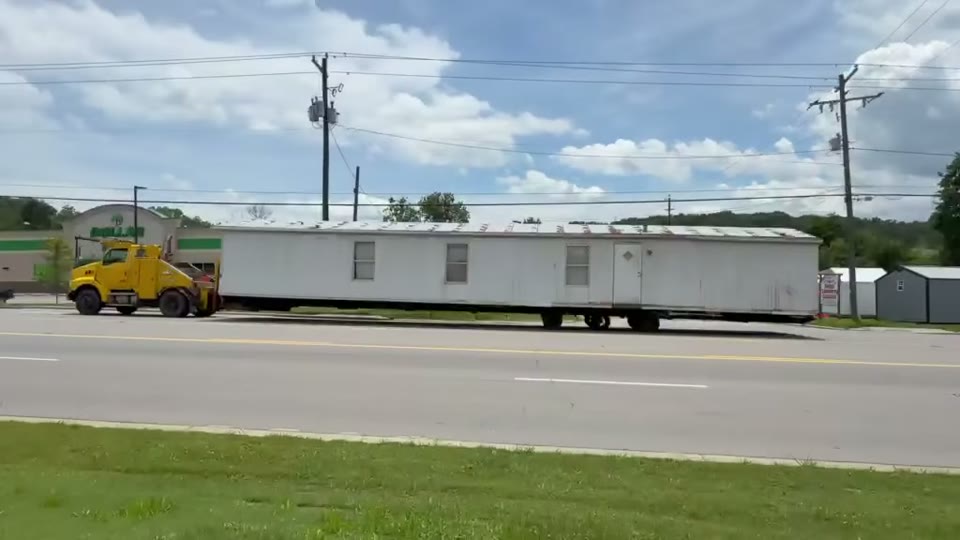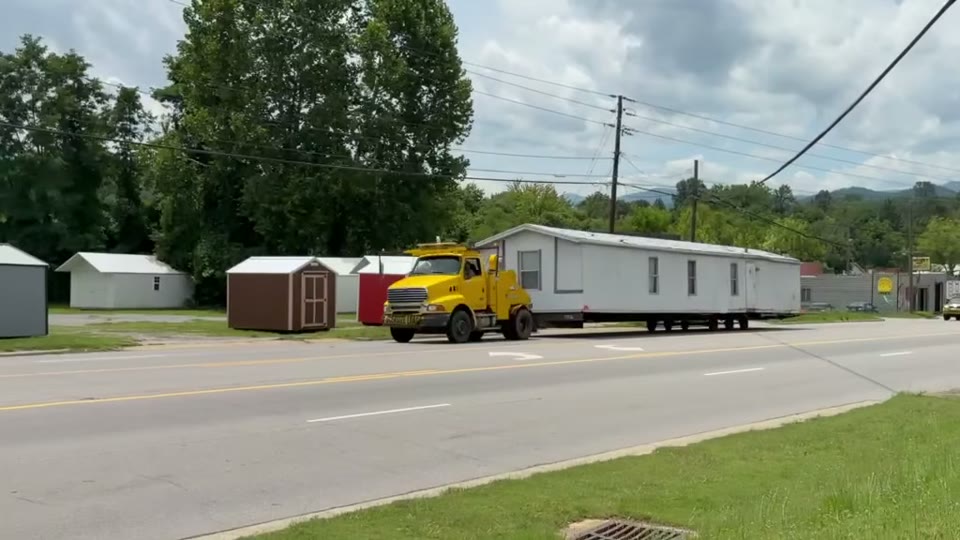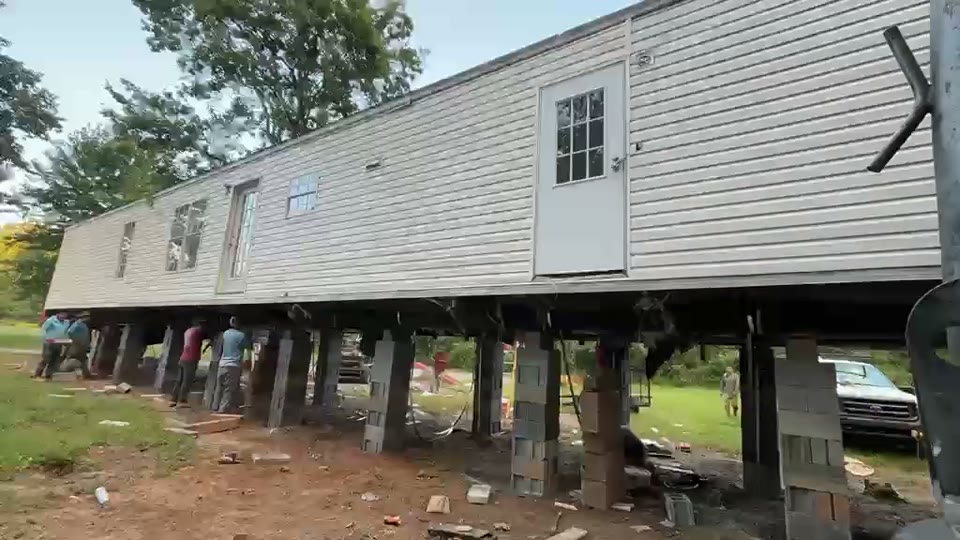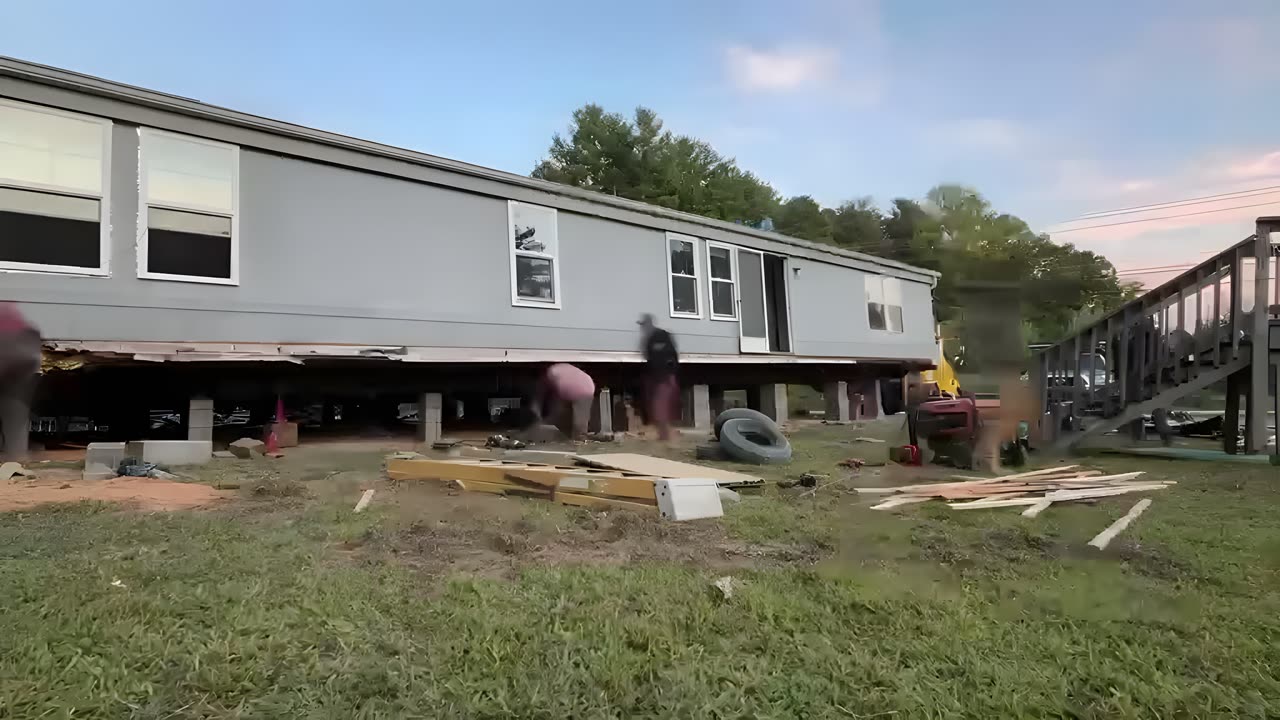
What the set work covers once the home reaches your Candler lot
Candler's parcels split roughly between near-flat river-bottom ground along Hominy Creek and pitched hillside lots that climb toward the ridgelines above Smoky Park Highway. That terrain difference shapes everything that happens after the transporter leaves: how many piers go in, how tall they run, and whether the lot needs grading before blocking begins.
The set sequence runs the same steps regardless of slope, though the time and material at each step change. Concrete pier pads go down first, placed at the spans the manufacturer's data plate requires and the NC setup standards enforced by the NC Manufactured Housing Board allow. Main beam supports and outrigger piers follow. The home comes down level, not close to level, before anything else is connected. Out-of-level framing binds doors, keeps windows from sealing, and opens floor seams over a few seasonal cycles. If your home has settled since its original set and needs correction, the Candler leveling guide covers that work separately.
On a double-wide, the set includes marrying the two sections: the halves are positioned, pulled together, and bolted at the ridge beam and the floor before interior finish work continues. The marriage connection is where double-wides most often develop problems when the original installation was hurried or the home has shifted. Pier spacing is set by the manufacturer's installation manual, not the installer's judgment; an inspector from Buncombe County will check that the installed layout matches those requirements, and a missed pier means corrections before the inspection closes.
Typical costs for a Candler installation
The ranges below reflect typical market pricing for setup work on a Buncombe County parcel. Slope, soil conditions, and pier count move a job within each range; flat lots come in lower, sloped hillside lots push toward the top. For a statewide line-item comparison, see the NC installation cost guide.
| Setup scope | Typical range |
|---|---|
| Single-wide set: piers, pads, blocking, leveling | $1,500 – $3,000 |
| Double-wide set: piers, pads, blocking, leveling, marriage wall | $3,000 – $6,000 |
| Anchor and tie-down system | Included in most set quotes; confirm before signing |
| Utility stub-in connections (water, sewer, electric) | Quoted separately by trade |
| Vinyl skirting, supply and install | Quoted separately |
Anchoring is sometimes bundled into the set price and sometimes billed as a separate line item; always clarify before signing. Utility connections and skirting are separate scopes with their own permits in most cases.
The Buncombe County permit path from a Candler lot
Because Candler is an unincorporated community inside Buncombe County, your installation permit runs through the county, not a town hall. Buncombe County Permits and Inspections, at 35 Woodfin St. in Asheville NC, processes manufactured-home installation permits. Homes placed inside Asheville's or Black Mountain's town limits fall under those towns' own permit offices instead.
Water and sewer documentation is required before a permit is approved. On a county well, that is a county-issued well authorization. On MSD service, the application needs an MSD approval letter or confirmation of an active meter. A county septic system requires a county septic authorization. Having these documents in hand before you submit avoids the most common permit delay in a Candler installation.
North Carolina regulates manufactured housing installation through the NC Manufactured Housing Board. Ask for the installer's license before any work begins. The NC State Building Code Council sets the adopted residential code that permit inspections run against. Before the home moves, North Carolina requires a tax-paid moving permit under NCGS Chapter 105, Article 18; the transporter files it, but the permit must be in place before the haul. The transporter also pulls the oversize/overweight haul permit under NCDOT Publication MH-2.
Permit processing time in Buncombe County varies by workload. Starting the application as soon as you have a confirmed delivery date, rather than waiting until the home arrives, keeps the schedule from compressing. The post-installation inspection checks blocking, leveling, anchoring, and utility rough-in against NC setup standards; a failed inspection requires corrections before occupancy is allowed.
Zone I anchoring and Buncombe County's weather record
Buncombe County is designated HUD Wind Zone I under 24 CFR 3280.305 — the baseline tier, not the coastal Zone II or Zone III exposure. Zone I still requires a complete anchor and tie-down system: over-the-top straps on single-wides and frame ties meeting the manufacturer's anchor plan on both home types. The HUD Office of Manufactured Housing Programs publishes the federal installation standard these requirements derive from.
The Zone I designation should not be read as a low-risk label. Buncombe County has recorded 19 federal disaster declarations over 1973-2026, including a Winter Storm in 2026, a Tropical Storm in 2024, and hurricanes in 2023, 2021, and 2020. Mountain terrain channels wind differently than open coastal ground; a ridge above Candler can see gusts the valley floor does not, and an anchor system installed to the full manufacturer's specification is the one that holds through those events.
Clay-heavy soil is common on Buncombe County hillside lots, and it matters for anchor performance. Clay expands in wet seasons and contracts in dry ones; a shallow anchor can work loose over several wet winters. Driven anchors sized and spaced to the manufacturer's data plate, with the tip set past the active clay zone, stay put across seasonal cycles.
Utility connections, skirting, and closing out the job
Utility connections are the last mechanical sequence: water to the home's supply line, drain to the sewer or septic stub-out, and electric to the service entrance. Each runs under its own contractor and permit, separate from the set permit. Confirming which water and sewer system serves your Candler parcel before the home is delivered prevents the scheduling gap between drop-off and move-in.
MSD serves portions of the Candler area; lots outside MSD service rely on county septic. Well water requires a county authorization and typically a pressure test before the county closes the permit. Neither utility path moves quickly if the paperwork starts late, which is why county permit applications ask for utility documentation at the front end of the process.
Skirting is the final physical closure. Vinyl skirting reduces wind uplift under the floor, blocks animal access into the crawl space, and keeps pipes above freezing during Buncombe County winters. Many Buncombe County lots also require a ground moisture barrier under the home as a condition of the set permit; that layer goes down before skirting is installed and is an easy step to miss when multiple trades are running on overlapping schedules. For a complete walkthrough of every setup phase from site prep through final inspection, the mobile home setup and installation guide covers each step in sequence.