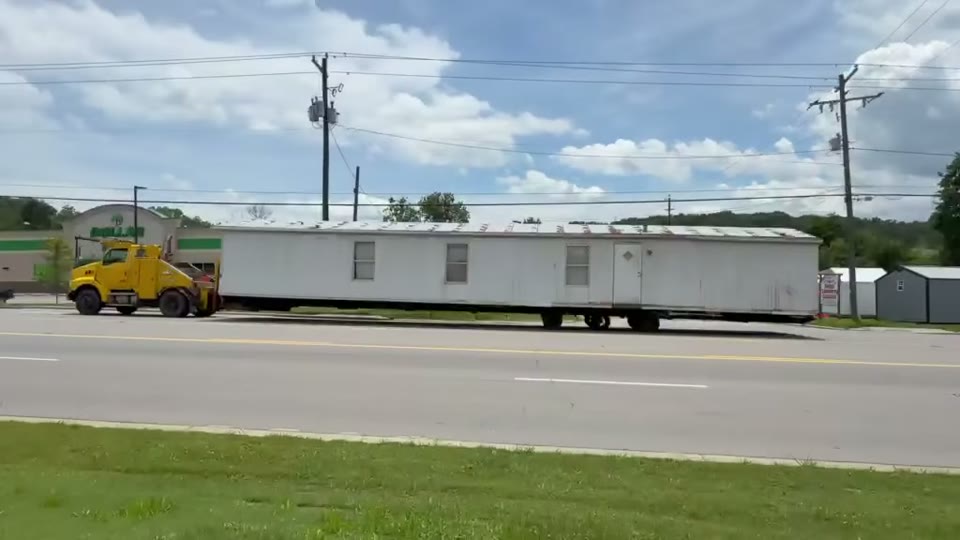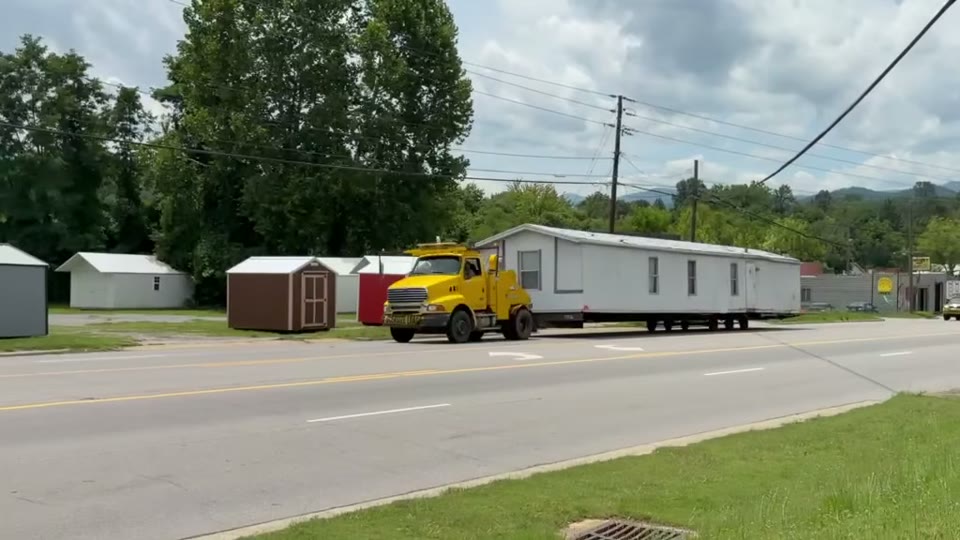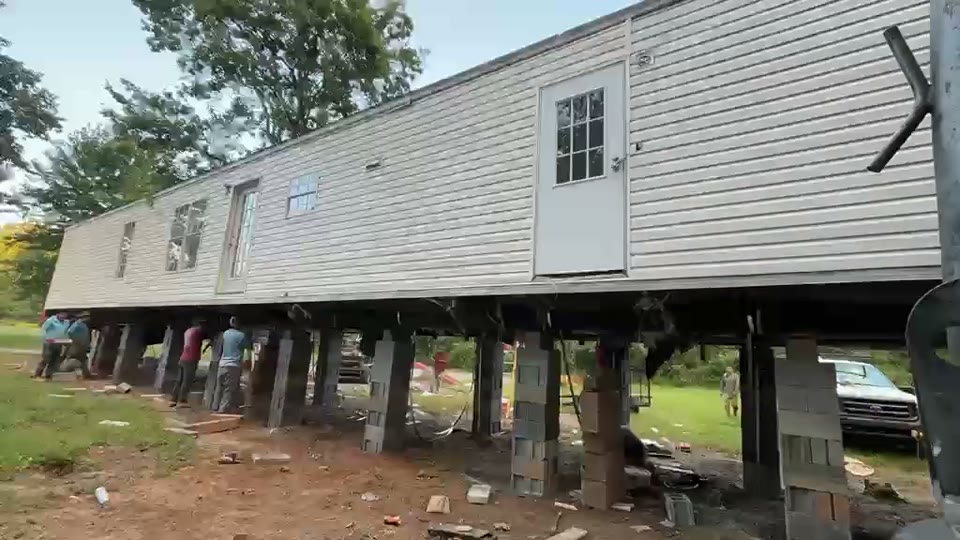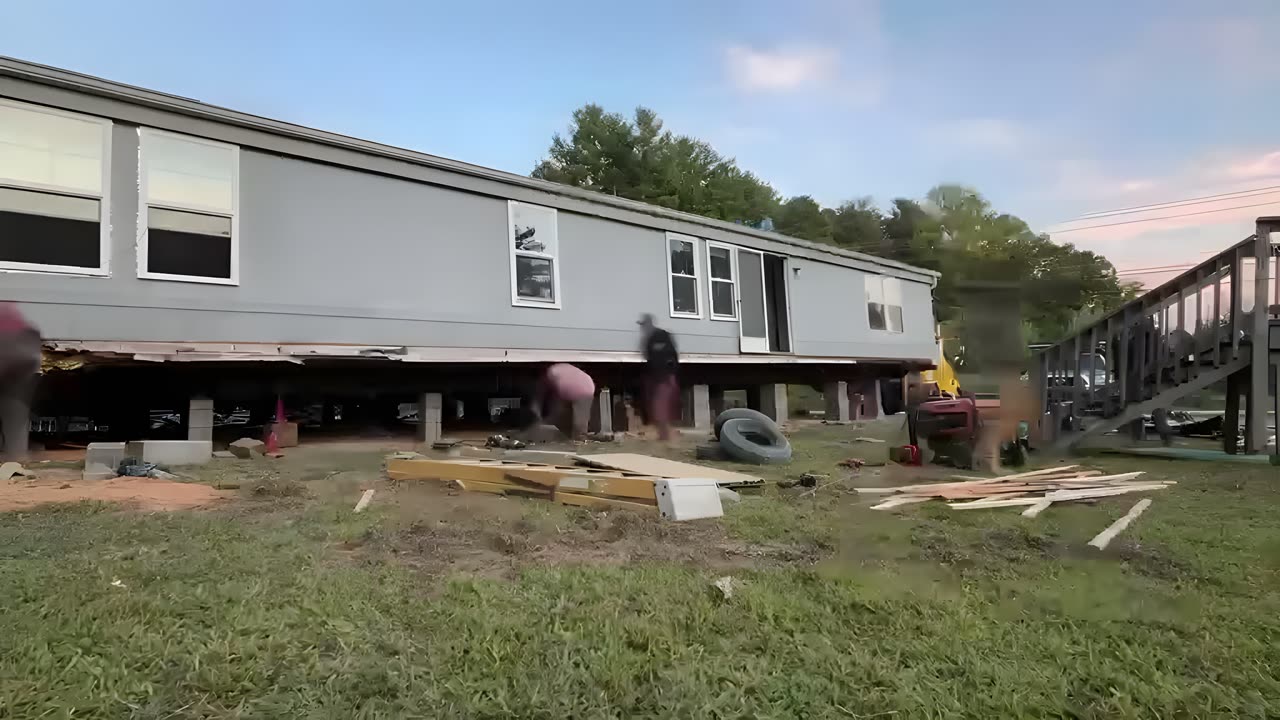
When the frame decides what leaves and what stays
Waynesville sits at roughly 2,600 feet, where US-23/74 and US-276 converge before climbing toward the Smokies. Manufactured homes here range from single-wides on flat Pigeon River bottomland parcels to double-wides on hand-cut bench lots in the hollows above town. That elevation and terrain spread shapes every removal job: a home that could roll off a flatland lot in Henderson County may need a machine staged on the slope just to reach the road in Haywood County.
Haywood County is not a small-lot suburban market. Rural parcels on former timber land, long-occupied bottomland tracts along Richland Creek or Jonathan Creek, and steep ridge properties near the Blue Ridge Parkway corridor all appear in the mix. A home that had its best years on a flat river lot faces different challenges than one blocked up at an angle on a cove property and never fully leveled. Age and site conditions together — not age alone — determine what a job costs and how it goes.
The frame is the deciding factor. A home with an intact chassis, solid floors, and a title that can be released will often leave in one piece: a cheaper outcome and a second life for the unit. A home that sat off-level for years, whose outriggers corroded from hillside contact, or whose floor system took repeated moisture damage is not a candidate for highway travel. That home becomes demolition and debris work.
When the home can still move, the Waynesville mobile home movers page covers the transport side. This page is for jobs where the home goes away for good.
What removal costs in Haywood County
Price follows scope more than square footage here. The table below captures typical ranges for the job types most common around Waynesville.
| Scope | Typical Range |
|---|---|
| Single-wide haul-off (rolls intact, clear lot access) | $3,000 – $5,500 |
| Single-wide full teardown and debris removal | $4,500 – $7,000 |
| Double-wide haul-off (rolls intact) | $6,000 – $10,000 |
| Double-wide full teardown and debris removal | $9,000 – $15,000 |
| Concrete pad removal (separate scope) | $800 – $2,500 |
| Site grading after removal (separate scope) | $1,200 – $3,500 |
The terrain premium is real. Moving equipment to a lot above the highway — staging a lowboy on a switchback driveway, clearing overhead limbs on a ridge road — adds mobilization cost that a flatland job in the Piedmont never carries. Contractors who primarily quote work in Charlotte or the Triangle may not have their Haywood County rates calibrated to mountain access realities. Ask specifically whether the site visit included the driveway and approach, not just the footprint of the home.
Pre-1980 units add another variable: asbestos-containing materials in floor tile, ductwork tape, or roofing material. The U.S. Environmental Protection Agency sets abatement requirements for demolition that disturbs ACM — any teardown of a pre-1980 home should confirm testing before work begins. For a statewide breakdown of what drives the number, the NC mobile home removal cost page covers it in detail.
Title, utilities, and the permit call before move day
Three items need clearing before any machine touches the property.
The first is the tax release. North Carolina law under NCGS Chapter 105, Article 18 requires a tax-paid moving permit before any manufactured home can be transported off a property. Deferred taxes are resolved at the county tax office first. Any lien on the title requires the same treatment — encumbrances must be cleared before transport is legally permissible.
The second is utility disconnection. Power, water, and septic all need to be confirmed clear at the service point, not just at the home's main hookup. Haywood Electric Membership Corporation serves most of rural Haywood County; Duke Energy covers portions closer to the valley corridor and toward the county line. Disconnects are scheduled with the utility, not self-performed.
The third is the permit call to Haywood County. The county has its own permit office governing demolition and grading work; the factory team has not verified its current form set, and requirements change with code cycles. Call the county before committing to a schedule. For transport on state roads, oversize loads follow the NCDOT Mobile and Modular Home Permits publication (MH-2) — a home pulled down US-19 or US-276 needs that permit in hand before moving day.
What Haywood County's storm record means for removal jobs
Haywood County has recorded 19 federally declared disasters over 1973-2026, including hurricanes in 2020, 2021, and 2023, a tropical storm in 2024, and a winter storm in 2026. Mountain systems carry more severity here than their names sometimes suggest — the coves and ridge drainages that define Haywood County's topography funnel wind and water in ways that open valley geography does not.
That storm record matters for removal work in a specific way. A home that took multiple wind events over a decade may have chassis damage not visible from the exterior or interior. A unit that survived a hurricane but sat off-plumb afterward, or one whose skirting was repeatedly breached in successive storm seasons, can develop concentrated corrosion or rot at the outrigger connections — exactly where transport loads apply stress. An inspection before quoting is standard practice for this reason. A price given without a site walk is not a reliable number.
Haywood County is designated HUD Wind Zone I (24 CFR 3280.305) for manufactured housing. That classification applies to anchoring and setup requirements for new installations — it does not mean older homes in this county were spared storm damage, only that new manufacturing and tie-down engineering standards are calibrated to this wind load zone.
Hiring the right contractor for this work
Mobile and manufactured home work in North Carolina is regulated through the NC Manufactured Housing Board, administered by the Office of State Fire Marshal. A contractor performing manufactured home transport holds a separate state license from a general residential demolition contractor. Both credential types are relevant depending on scope — confirm the crew holds the right one for the specific work on your property.
For a full teardown, ask how the contractor handles material sorting. Steel framing, aluminum siding, and copper are recyclable and are sometimes sorted separately from general debris, occasionally offsetting part of the disposal cost. Haywood County has its own solid waste facilities; ask where debris is going and whether a disposal receipt is provided at close-out.
The NC manufactured home demolition and removal guide covers what a complete scope looks like across the state. The differences on a Haywood County lot come down to terrain, access, and storm exposure more than process.