What a Macon County move costs, line by line
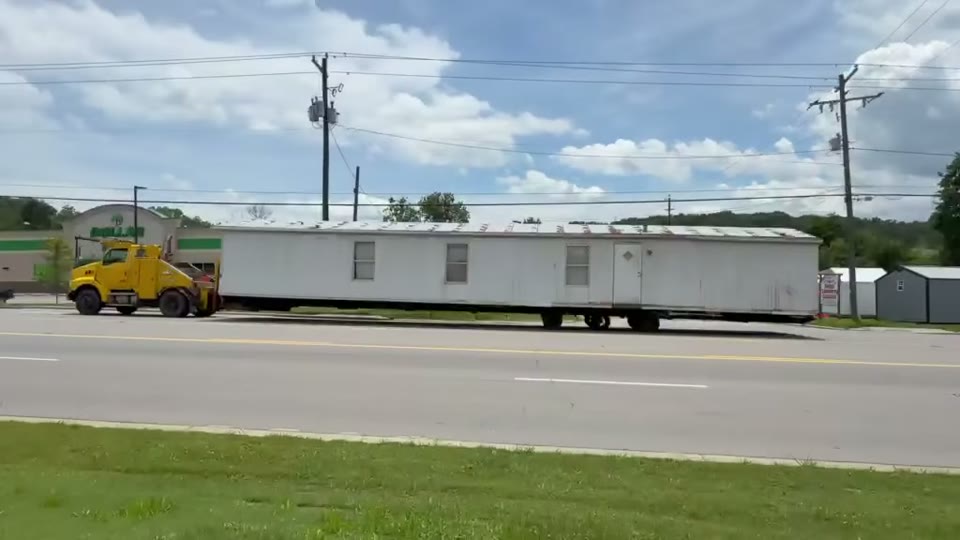
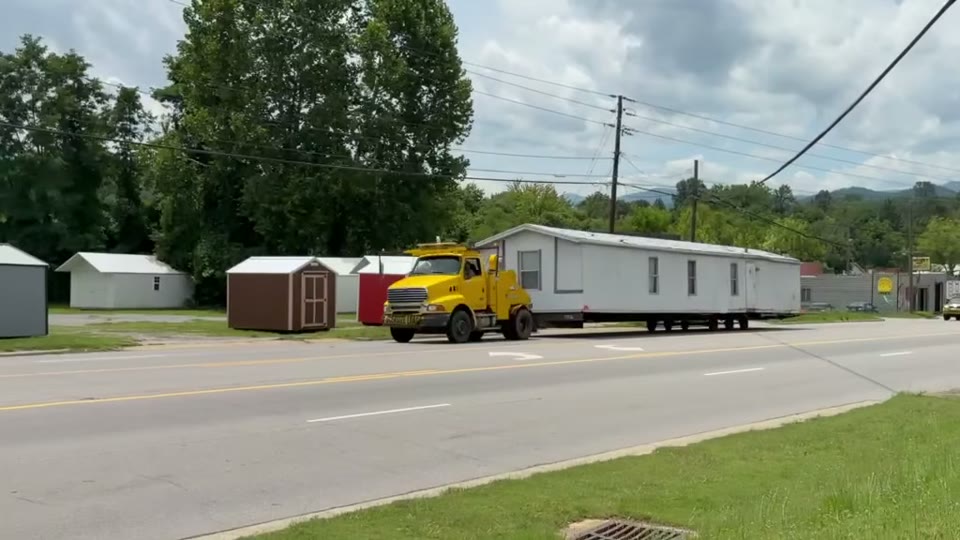
Franklin is the county seat of Macon County, sitting at roughly 2,100 feet in the Little Tennessee River valley where US-441/23 and US-64 converge. That geography is the reason a mobile home move here prices differently than one in the piedmont: mountain roads, elevation changes, and rural secondary approaches all add scope that a flatland quote never includes. The table below reflects honest market ranges for moves originating or landing in the Franklin area. Transport figures cover the road haul only; setup, permits, and site work are separate line items.
| Scope | Typical range |
|---|---|
| Single-wide, local haul under 10 miles, prepared flat site | $3,000 – $5,000 |
| Single-wide, longer haul or secondary mountain roads | $5,000 – $8,000 |
| Double-wide (two sections), local haul, prepared site | $7,000 – $10,000 |
| Double-wide, longer haul or difficult site access | $10,000 – $15,000 |
| Blocking and leveling at destination | $800 – $2,500 |
| Tie-down installation (HUD Zone I compliance) | $500 – $1,500 |
| Site prep: grading or pad work | $1,000 – $4,000 |
Two variables move the transport number more than anything else: total haul distance and site grade at the destination. A short haul to a level cleared lot is the low end of these ranges. A longer haul ending at a steeply terraced lot off a narrow county road pushes toward the high end. A job quoting at the bottom of the single-wide range is almost always moving a home already disconnected from utilities to a flat prepared pad within a few miles — add any one complication and the number climbs. See the full NC mobile home moving cost guide for how each line item is calculated statewide.
Route access and what mountain roads add to the quote
Every permitted mobile home transport in North Carolina runs under NCDOT Publication MH-2, which governs oversize and overweight loads for mobile and modular homes. For most Franklin-area moves, the highway portion follows US-441/23 or US-64 without issue. The complications arise on the final approach: county roads and private drives in Macon County can be narrow, steeply cambered, or lined with tree canopy and utility drops that a 16-wide cannot clear without coordination.
Before a permit application goes in, the mover needs the home's total hitched length and width, the axle configuration, and a clear picture of every route segment that involves a tight turn or a low overhead obstacle. A double-wide transported as two sections reduces the width problem but doubles the permitted haul count and the setup labor at the destination. Power line clearance on secondary roads sometimes requires the utility company to temporarily drop a line — that coordination is not always included in an initial quote. Ask specifically whether route assessment and utility clearance work are covered in the bid or billed separately. Flag any switchback, bridge with a posted weight limit, or low overhead line in the route before signing anything.
Permits: the two tracks every Macon County move needs
North Carolina requires two separate permit tracks for most mobile home moves, and missing either one can stop the job on move day. The first is the NCDOT oversize-load permit under Publication MH-2 — your mover applies for this and it covers the road haul itself. The second is a tax-paid moving permit under NCGS Chapter 105, Article 18 — the county tax office verifies that property taxes on the home are current before it can be legally moved off a parcel. If taxes are outstanding, the permit does not issue and the move cannot proceed legally.
Macon County also has its own destination-site permit requirements for the new placement. We were not able to verify the county's current exact steps, so call the Macon County permit office directly before move day. Do not assume the process mirrors what is required at the origin county if the move crosses county lines. Some lots require confirmation of approved septic capacity or a utilities inspection before a manufactured home placement is permitted. Building your schedule around confirmed permit timelines at both ends of the move reduces the chance of a last-minute hold.
Setting up at the new lot: blocking, leveling, and tie-downs
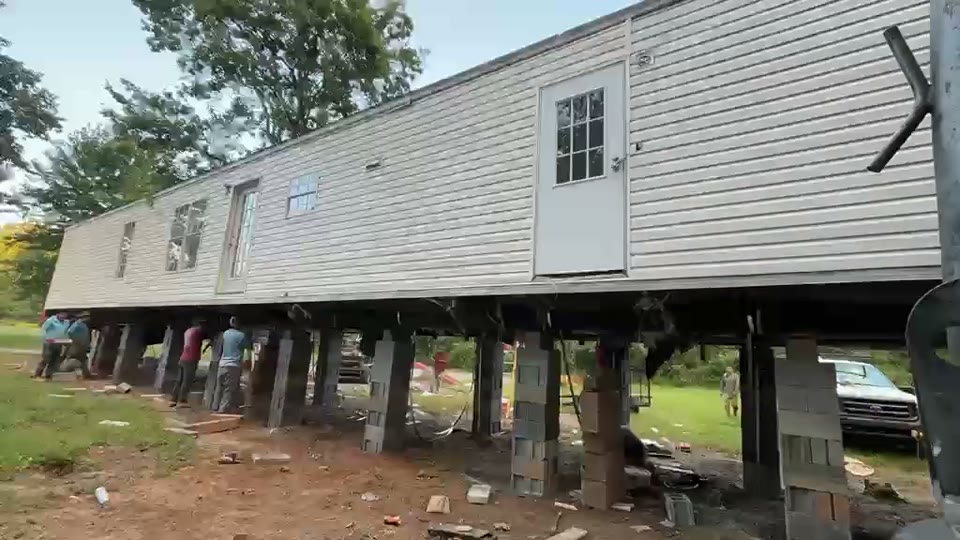
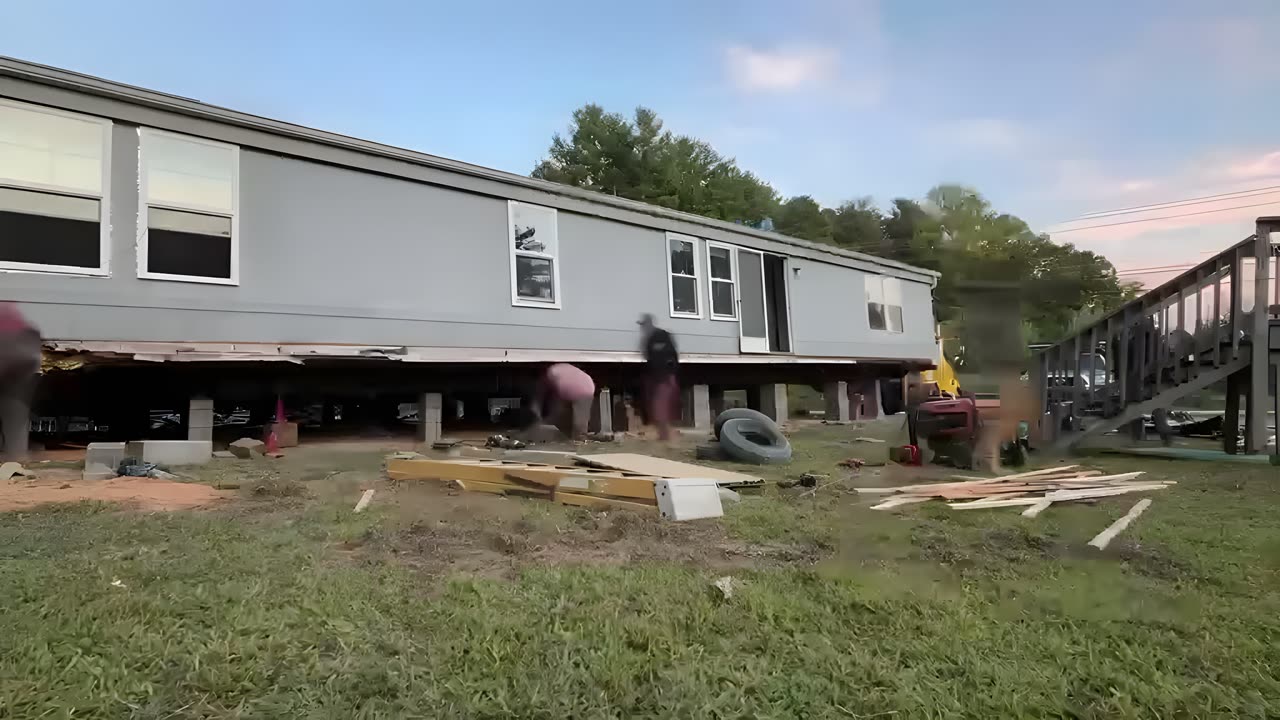
Once the home reaches the destination, the job shifts to site work: blocking to grade, leveling, and tying down. Macon County falls within HUD Wind Zone I under 24 CFR 3280.305, which sets the minimum anchor and tie-down requirements for manufactured housing in this area. Zone I is the baseline, but a hillside lot adds load vectors that a standard flat-lot tie-down layout does not account for. Talk through the anchoring plan with your installer before blocking begins, not after the home is already in place.
The NC Manufactured Housing Board licenses the setup contractors who install manufactured homes in this state. Ask any installer for their board license before work starts. If the home has been moved before, have the existing tie-down system inspected against current spacing and strap-angle requirements; older installs often met the standards of their time but do not meet today's. Leveling is also a mechanical requirement under NC's installation standards, not just an aesthetic concern: a home more than a specified tolerance out of level puts abnormal stress on the frame and, on a double-wide, on the marriage wall. The western NC moving page covers how setup practices and site conditions vary across the region.
Macon County's storm record and what it means for your anchor plan
Macon County's position in the southern Blue Ridge puts it in the path of both Atlantic storm systems and mountain weather events. The federal disaster record for this county includes 15 declared events over 1973-2026, with documented impacts from hurricanes in 2023, 2020, and 2019, a tropical storm in 2024, and a winter storm in 2026. River-corridor flooding along the Little Tennessee and high-wind events during named storms are both part of the local pattern here.
That history matters for every manufactured home in the county, moved or not. A home anchored to current Zone I standards with a site-specific tie-down layout can withstand conditions that shift an improperly secured unit off its blocks. If you are purchasing a home that was placed before or during any of those storm years, request documentation of any post-event inspection before you move it. A home that looks level and plumb from the outside may have blocking damage or compromised strapping that only becomes visible when a mover lifts it off the piers.