Rolling out or tearing down: the call on a Transylvania County lot
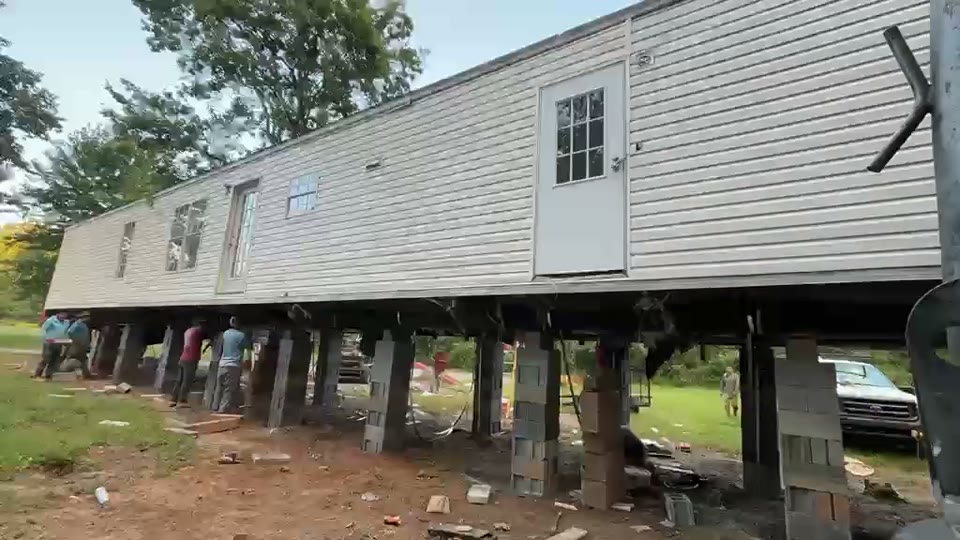
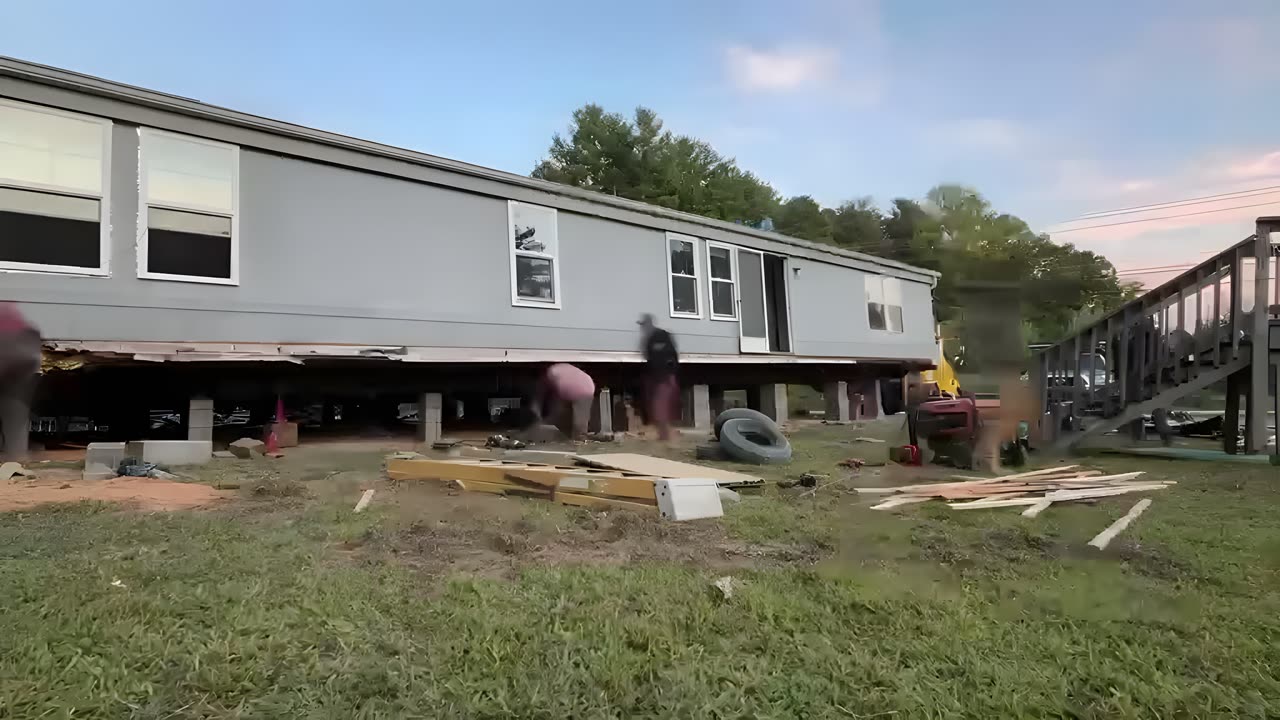
Brevard is the county seat of Transylvania County, sitting in the valley where US-64 meets US-276 and the French Broad River begins collecting tributaries from the surrounding Blue Ridge slopes. The county draws some of the highest annual rainfall in North Carolina — among the wettest in the eastern half of the country — and a manufactured home parked on its silt-and-clay lots through multiple hurricane and tropical storm seasons reflects that history: softened floor decking, surface rust along the steel chassis, marriage walls that no longer close square. A removal crew working this county assesses that damage before quoting a number, because the damage determines which job they are doing.
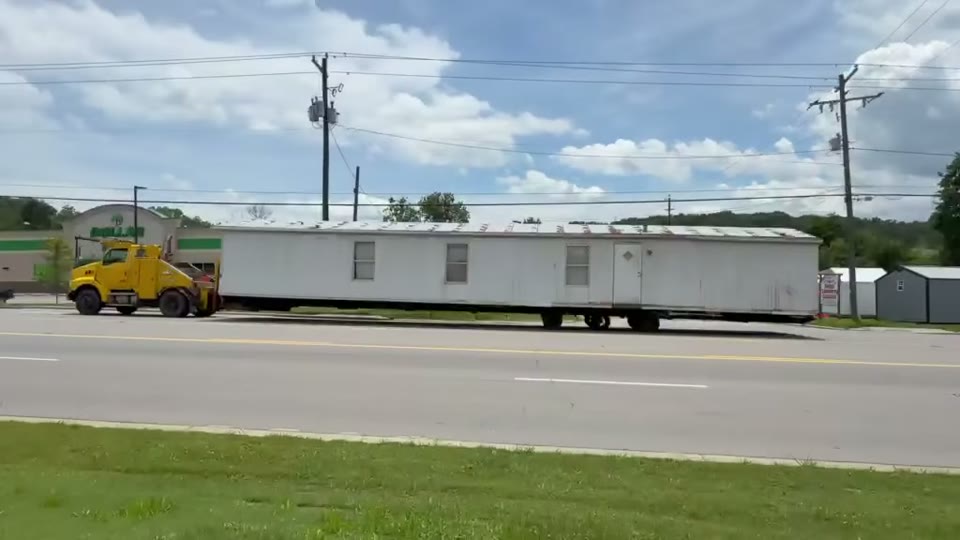
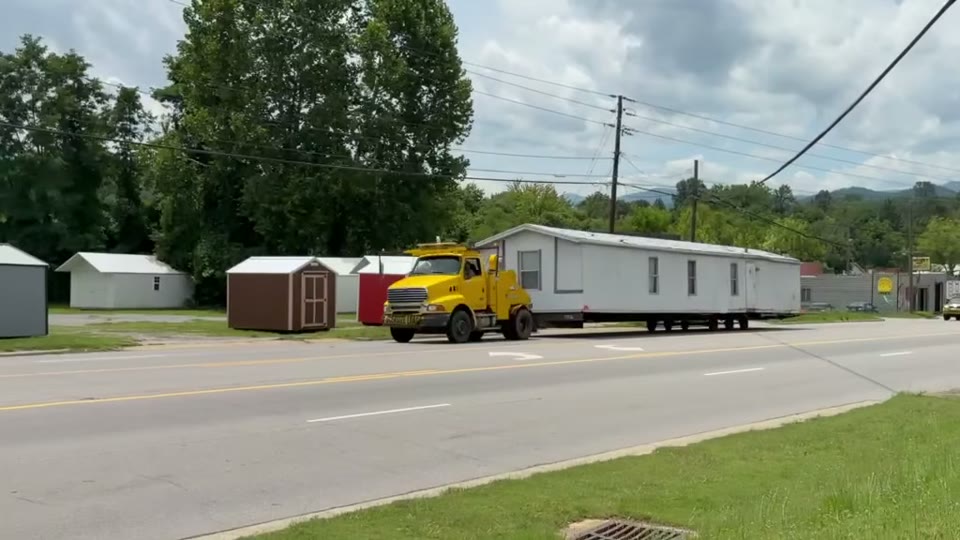
A home that can still travel needs a clear title, an NCDOT oversize-load transport permit under Publication MH-2, disconnected utilities, and road access wide enough for the hauling truck. A home that cannot travel needs a county demolition permit, a debris removal plan, and — if built before 1980 — an asbestos assessment before demolition begins. Both paths are covered in full at mobile home demolition and removal; this page focuses on the cost and permit sequence specific to the Brevard area.
What mobile home removal typically costs near Brevard
Around Brevard, removing a mobile home typically costs $3,000 to $7,000 for a single-wide and $6,000 to $15,000 for a double-wide. Lot access is the dominant variable in Transylvania County: a unit parked near a paved road on a level site is a straightforward one-day job; one at the end of a narrow gravel road cut into a hillside, with soft shoulders after a wet spring, may need additional equipment and extra time to position the home where the transport truck can hook up. Demolition jobs in this range often cost comparably to haul-offs because labor shifts from transport logistics to debris sorting and landfill runs. The difference between the low and high end of each range is almost always access and ground conditions. The full line-item breakdown, including comparisons with neighboring counties, is at mobile home removal cost NC.
| Scope | Typical range |
|---|---|
| Single-wide haul-off, good lot access | $3,000 – $5,000 |
| Single-wide haul-off, steep grade or soft soils | $4,500 – $7,000 |
| Double-wide haul-off, good lot access | $6,000 – $9,500 |
| Double-wide haul-off, difficult access or slope | $9,500 – $15,000 |
| On-site demolition, single-wide | $3,500 – $7,000 |
| On-site demolition, double-wide | $6,500 – $14,000 |
Pre-1980 units may contain asbestos in floor tile, ceiling panels, or duct tape at seams. EPA regulations require a licensed abatement contractor to remove confirmed asbestos-containing materials before demolition work begins. Any bid on an older unit that does not address this possibility is incomplete, not cheap.
The permit and title checklist before wheels turn
Two permit threads run in parallel for any haul-off. The transport thread: NCDOT's Publication MH-2 specifies oversize-load routing, escort requirements, and move-window restrictions; the contractor pulls this permit before the truck arrives. The tax thread: NCGS Chapter 105, Article 18 requires a tax-paid moving permit confirming that all property taxes on the unit are current. The county tax office issues it, and processing typically takes a few business days — start this early, because the home cannot legally leave the lot without it, and this step often controls the schedule more than the physical work does.
For demolition rather than transport, the permit path shifts: a county demolition permit, formal utility disconnection documentation from each provider, and notification to the county health department if the home sits on a private septic system. Depending on whether the tank will serve a future placement, it may need to be pumped and capped or simply preserved — the health department advises on which applies to the parcel.
Any contractor moving a manufactured home on a North Carolina road must hold a current mover's license through the NC Manufactured Housing Board under the NC Office of State Fire Marshal — the license covers both the business entity and the individual operators on the job. Verifying that license before signing a contract takes thirty seconds and is worth the time.
Storm history and wet-lot conditions along the river corridors
Transylvania County has 16 federally declared disasters on record (1993-2026). The pattern reflects geography: a county flanked by two river drainages and receiving more annual rainfall than most of North Carolina will see repeated storm events, and it has — declared hurricanes in 2021 and 2023, a tropical storm declaration in 2024, a winter storm declaration in 2026. Manufactured homes that stood through those cycles absorb moisture in the chassis and underbelly first, and that cumulative moisture is what a crew is reading when they evaluate whether a unit can travel or has to come apart on the lot.
The practical effect at removal time is ground conditions. Soils along the French Broad and Davidson river corridors can hold saturation well into spring, and lots that drain adequately in August may have standing moisture in March. Scheduling removal during a drier window — late summer into early fall, before the wet season resumes — gives crews the most predictable working conditions and reduces the chance that a wet-lot premium applies. A contractor who works the Transylvania County watershed year-round knows how to read a lot; one arriving from the piedmont for a single job may not price those conditions accurately.
Clearing the pad and preparing for the next placement
Most removals in Transylvania County are step one of a placement project. When the cleared lot is the destination for a new manufactured home, the county's permit process begins before the new unit is ordered. A placement permit requires: a county health department sign-off confirming the septic system has adequate capacity for the incoming unit, a parcel map or survey showing that all required setbacks are met, a county-assigned address if the parcel does not already have one on record, and a completed Manufactured Home Permit Application submitted to the county building department. Once the installer anchors and sets the home, they call the county to schedule a setup inspection before utility connections are made.
Transylvania County is in HUD wind zone I under 24 CFR 3280.305, as defined by the HUD Office of Manufactured Housing Programs. Zone I governs the anchor and tie-down specifications for every new manufactured home set in the county — pier spacing, strap rating, and footing dimensions must all match the installation instructions for that wind exposure class. This is not a negotiable detail; it is what the setup inspection checks. An installer who sets homes in Transylvania County every season knows this; one who primarily works in other regions may not arrive prepared for it.
Contractors who handle both the removal and the new placement as a single project are listed at mobile home movers in Brevard NC.